
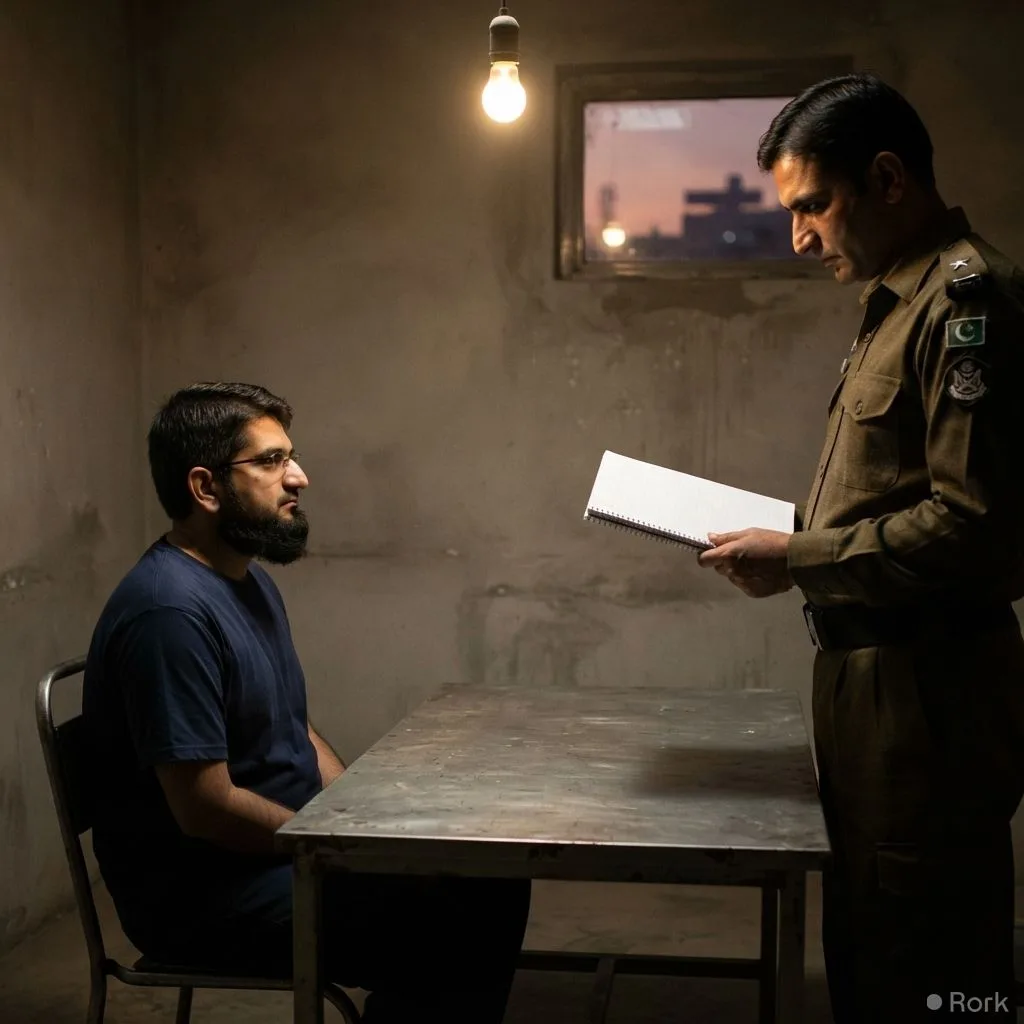
The detained housekeeper Zeeshan has now offered three entirely different versions of Hina Javed’s murder.
The 34‑year‑old businesswoman was found lifeless in her Rawalpindi residence on 23 August, prompting a rapid police operation that led to the arrest of Zeeshan, a domestic worker employed by the victim’s family. Investigators initially presented him as the sole suspect, citing his presence at the house on the night of the killing and a recovered weapon matching his fingerprints.
Since his detention, Zeeshan has supplied three conflicting narratives to the investigating team. In his first statement he claimed the death was an accidental fall while he was cleaning the staircase; a second account shifted blame to an unknown intruder who forced his way in, and a third version suggested he acted in self‑defence after a violent confrontation with the victim. Each story diverges sharply on the sequence of events, the presence of other individuals, and Zeeshan’s own involvement.
Police have begun cross‑checking the testimonies against forensic data. Preliminary DNA analysis of the blood stains on the weapon, as well as CCTV footage from a nearby market, do not corroborate Zeeshan’s later claims of an external attacker. Moreover, timestamps from the home’s smart lock indicate the door remained locked throughout the alleged intrusion, raising doubts about the plausibility of his second version. Detectives are now re‑examining the crime scene to reconcile the timeline and determine whether the inconsistencies stem from deliberate deception or genuine confusion.
The shifting statements have heightened public anxiety in Rawalpindi, where high‑profile murders often trigger concerns over personal security and the reliability of law‑enforcement investigations. The case also spotlights the precarious position of domestic workers, many of whom fear retaliation or wrongful accusation when involved in household disputes. Rights groups are urging authorities to ensure Zeeshan’s legal rights are upheld while the probe proceeds.
Authorities have confirmed that Zeeshan will appear before the Rawalpindi Sessions Court next week, and the investigation remains active. Forensic experts continue to analyse trace evidence, and investigators are interviewing neighbours and family members for additional leads. The outcome will not only determine the fate of the accused but also shape public confidence in the justice system’s handling of violent crimes in the capital’s suburbs.