
Summer heatwaves are tightening their grip across South Asia, pushing households and businesses to run air‑conditioners at full blast and inflating electricity bills to record levels. As power grids strain under the soaring demand, researchers worldwide are racing to find alternatives that can keep indoor spaces comfortable without draining the grid.
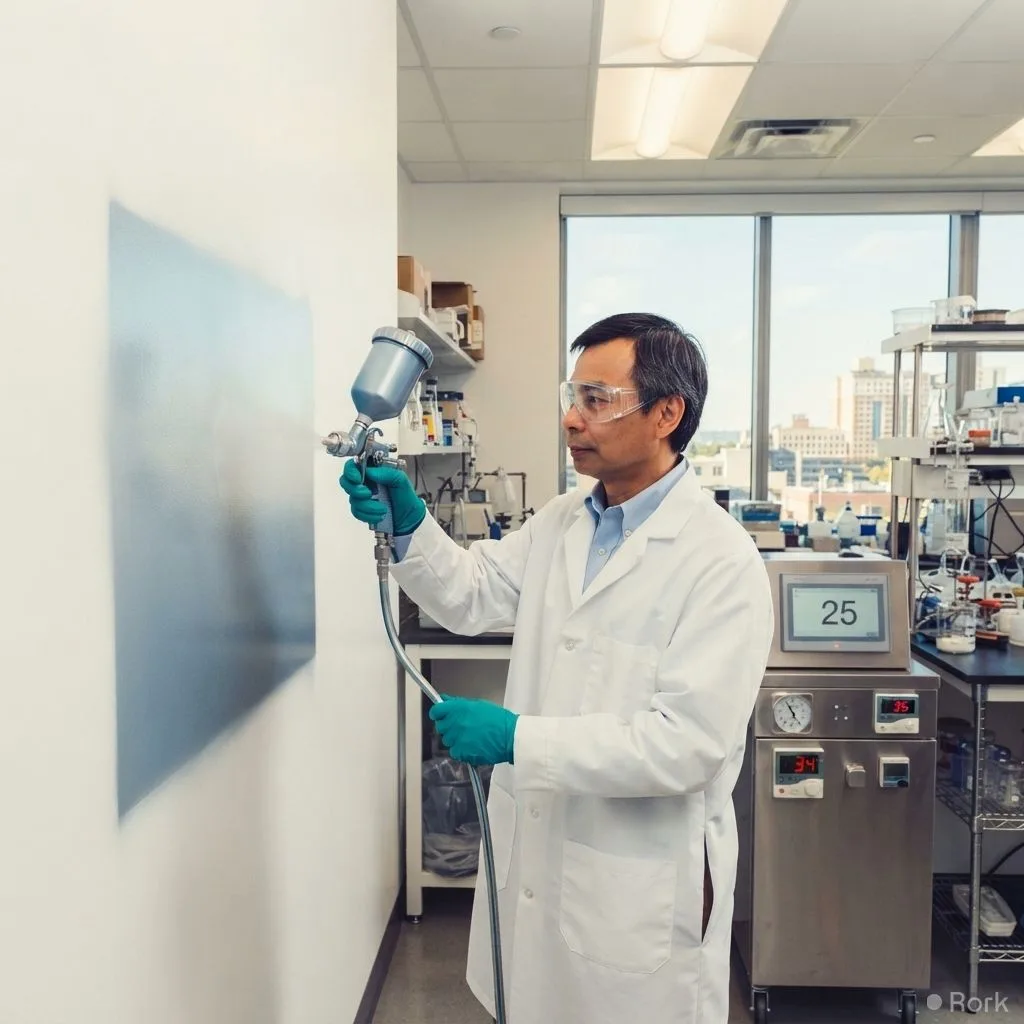
A team of Chinese scientists has now unveiled a breakthrough: a super‑cooling paint that can hold room temperatures at a steady 25 °C, even when the outside air sizzles far above that mark. The coating incorporates microscopic particles engineered to reflect a large portion of infrared radiation while simultaneously radiating absorbed heat back into the atmosphere, effectively turning walls and ceilings into passive cooling surfaces.
Laboratory experiments demonstrated that rooms coated with the new paint stayed comfortably cool while adjacent, unpainted spaces experienced a sharp rise in temperature. The researchers estimate that widespread adoption could slash the need for conventional air‑conditioning by up to 40 % in hot climates, translating into substantial savings on electricity bills and a lighter load on national power grids.
For Pakistan, where summer temperatures routinely exceed 45 °C and electricity consumption spikes dramatically, the technology could be a game‑changer. If local manufacturers secure licensing rights, the paint could be rolled out in new constructions and retrofits across Karachi, Lahore, and the arid interior provinces, offering an affordable, low‑maintenance cooling solution for both residential and commercial properties.
While the paint is still awaiting large‑scale commercial production and regulatory approval, its promise aligns with the country’s push toward energy‑efficient building practices and its commitments under the Paris Agreement. Experts suggest that, combined with existing measures such as green roofing and improved insulation, the super‑cooling paint could become a vital tool in curbing the nation’s soaring energy demand and mitigating the impacts of a warming climate.