
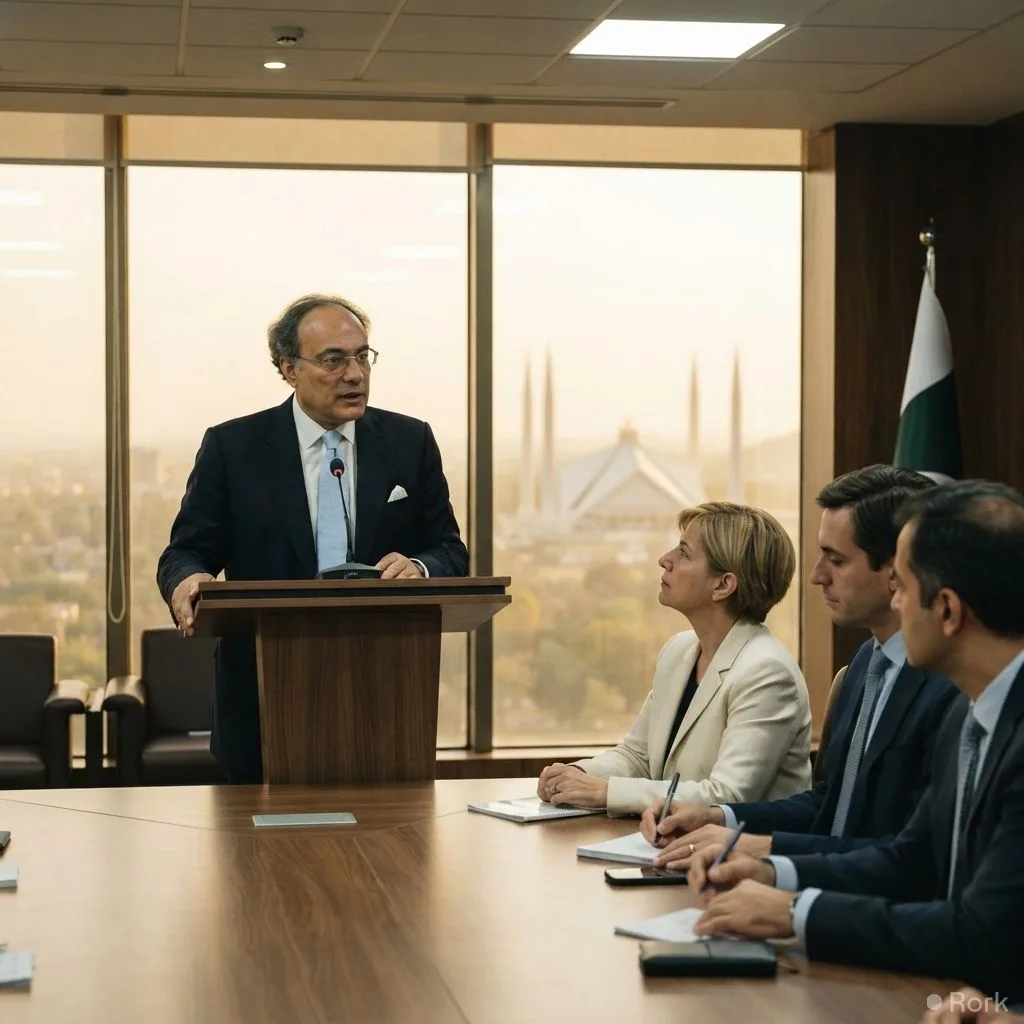
Pakistan’s fiscal outlook has been under intense scrutiny for months, with policymakers racing to meet the benchmarks set by the International Monetary Fund while the public watches closely for signs of economic stability. In that fraught atmosphere, Finance Minister Senator Muhammad Aurangzeb convened the first formal session with an IMF delegation, signalling the launch of a new review cycle for the country’s Economic and Financial Framework (EFF) and the accompanying Resilience and Sustainability Framework (RSF).
The IMF team, headed by senior economist Iva Petrova, touched down in Islamabad on Tuesday and was welcomed at the Finance Ministry’s headquarters. Over the next few days the mission will conduct a detailed assessment of Pakistan’s progress on structural reforms, ranging from energy pricing and tax collection to public‑sector wage rationalisation. The outcome of these reviews will shape the next tranche of disbursements under the $6 billion programme that the fund extended to Pakistan in 2023.
Alongside the diplomatic overture, Aurangzeb announced a parallel domestic measure: a deadline of 30 October for roughly 10,000 federal employees to submit comprehensive asset declarations. The list includes senior officials from ministries, the civil service, and state‑run enterprises, whose holdings have long been a focal point for anti‑corruption watchdogs. By making the data public, the government hopes to bolster transparency, curb illicit wealth accumulation and restore confidence among both donors and local investors.
The twin initiatives are aimed at reinforcing Pakistan’s fiscal credibility at a time when the country is still grappling with high inflation, a widening current‑account deficit and a volatile exchange rate. If the IMF mission finds the reforms on track, it could unlock further financing that would ease pressure on the Treasury and help stabilise the rupee. Conversely, any shortfall in meeting the fund’s expectations may delay future disbursements, prolonging the strain on public finances and potentially prompting stricter austerity measures. The coming weeks will therefore be critical for assessing whether Pakistan can translate policy promises into tangible economic recovery.