
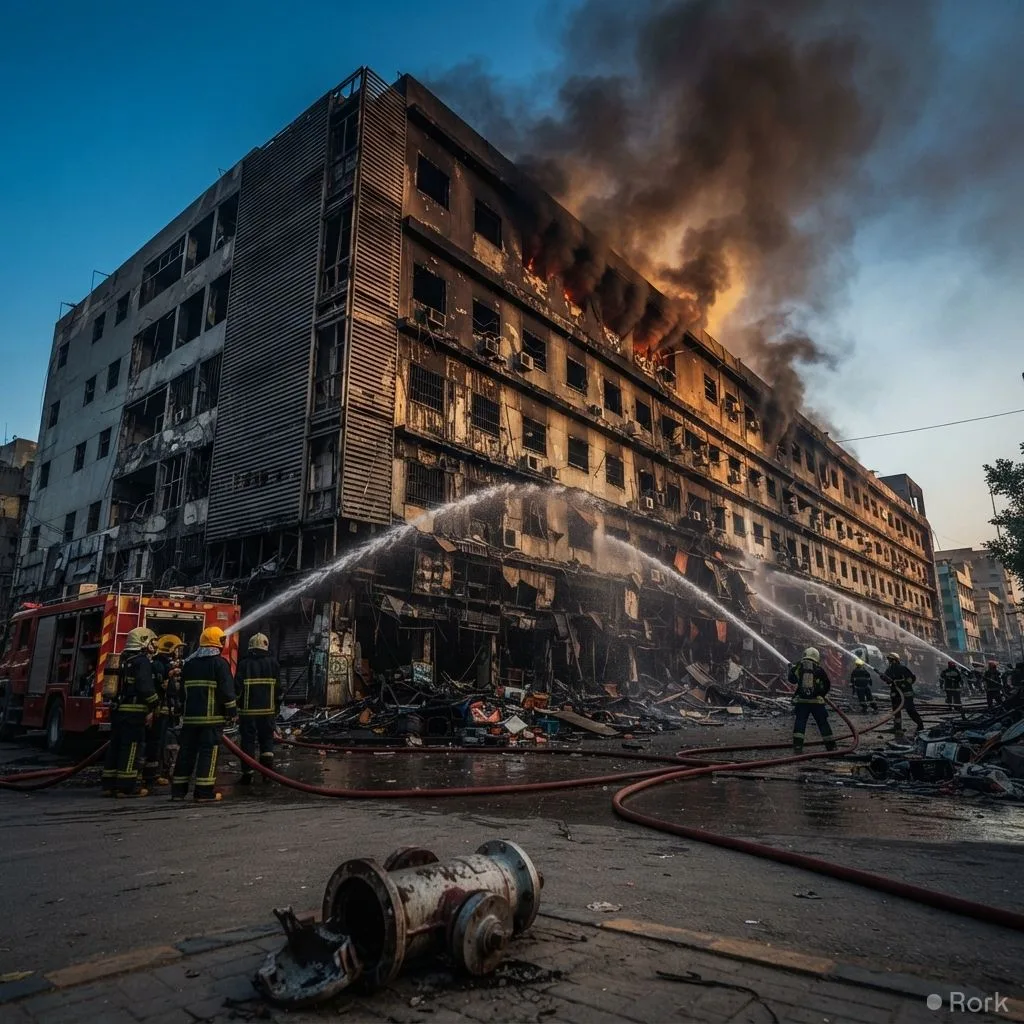
A massive fire ripped through the nine‑storey Gul Plaza commercial building in Karachi last week, killing dozens and leaving the neighbourhood in shock. A Commission of Inquiry has now revealed that the owners were repeatedly warned about glaring fire‑safety gaps but failed to act.
Background
The Civil Defence department carried out two inspections of Gul Plaza during the 2024‑25 fiscal year. Both reports highlighted the absence of essential fire‑suppression infrastructure – there were no external hydrants, the sprinkler network was never installed, and the alarm system that should have warned occupants was either broken or completely missing.
These deficiencies were not new. A 2021 audit conducted by the Karachi Metropolitan Corporation (KMC) had already identified the same fundamental safety lapses, recommending immediate remedial work. The audit’s findings were forwarded to the building’s management, yet no corrective steps were recorded.
According to the Commission of Inquiry, internal communications obtained from the plaza’s management show that senior officials were fully aware of the Civil Defence warnings. Minutes of meetings and email exchanges indicate that the owners discussed the cost and logistical challenges of installing the required systems but ultimately decided to postpone the work indefinitely.
When the inferno broke out on a busy weekday, the lack of hydrants meant fire‑fighters could not connect hoses to a municipal water supply, and the non‑functional alarm left tenants and shoppers unaware of the danger until flames were already visible. The building’s structural design, lacking fire‑resistant compartments, allowed the blaze to spread rapidly across all floors.
What it means
For Karachi’s dense commercial districts, the tragedy underscores a systemic failure to enforce fire‑safety regulations. Buildings that house hundreds of workers and shoppers are legally required to meet Civil Defence standards, yet enforcement has historically been weak, allowing owners to prioritize profit over public safety.
The loss of life and property will have immediate economic repercussions: families of the victims face loss of breadwinners, and dozens of small businesses that operated from the plaza are now displaced. Insurance claims are expected to surge, putting further strain on an already burdened claims market in Pakistan.
More broadly, the incident is likely to erode public confidence in municipal oversight bodies. Residents may become reluctant to patronise older commercial complexes, pressuring landlords to upgrade safety measures or risk vacancies. The government could also face heightened scrutiny from provincial and federal ministries tasked with urban safety.
What happens next
The Commission of Inquiry has ordered a full forensic audit of the building’s design, construction records, and management decisions. Its interim report recommends that the Karachi Metropolitan Corporation suspend the operating licences of any structure found to be non‑compliant with fire‑safety norms until corrective work is verified.
Civil Defence officials have announced a city‑wide audit of high‑rise commercial buildings, aiming to identify similar safety gaps before another disaster occurs. If the audit uncovers widespread violations, the KMC may be compelled to issue mandatory retrofitting deadlines, with penalties for non‑compliance.
Legal experts anticipate that families of the victims will file civil suits against the plaza’s owners and possibly against the municipal authorities for negligence. The outcomes of these cases could set precedents that force stricter adherence to safety codes across Pakistan’s rapidly expanding urban landscape.
The tragedy at Gul Plaza serves as a stark reminder that warnings alone are insufficient; decisive action and robust enforcement are essential to protect citizens in Pakistan’s crowded cities.