
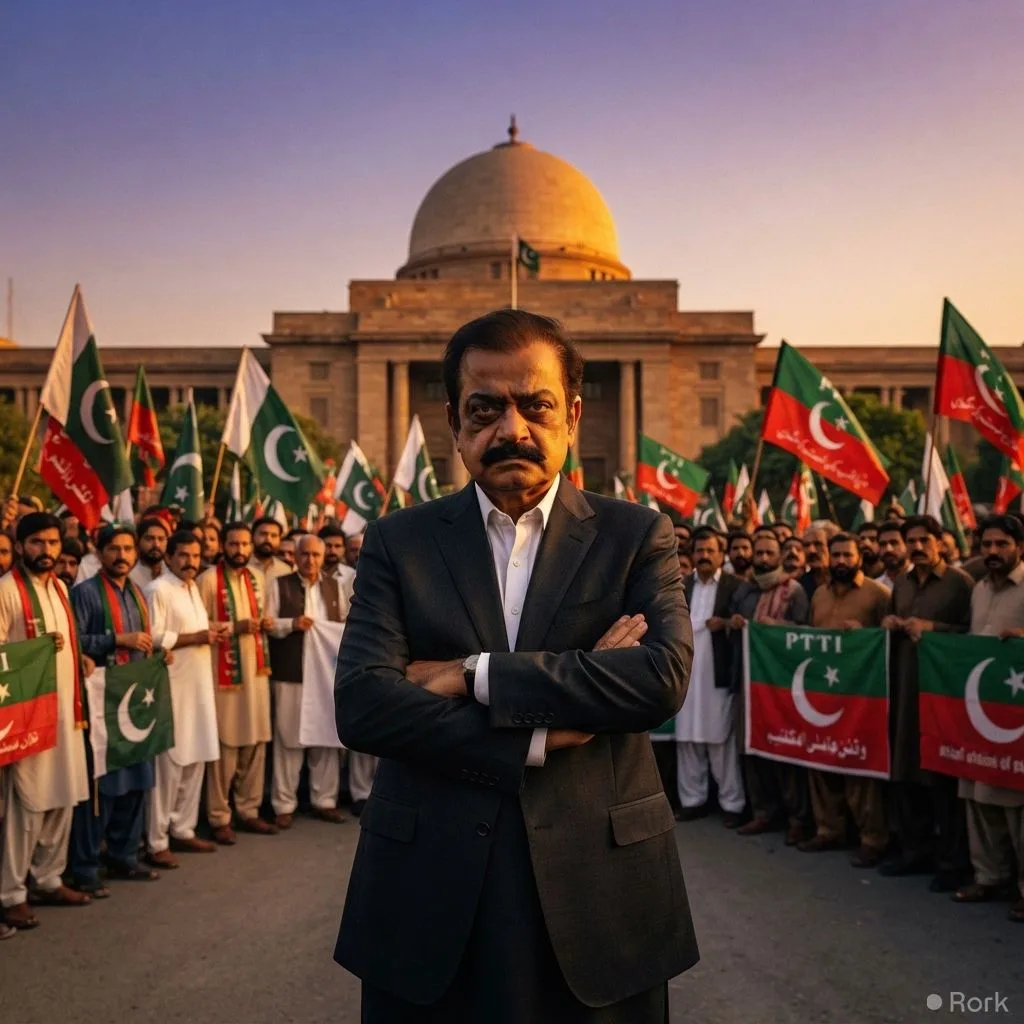
Interior Minister Rana Sanaullah announced on Monday that he will not set foot in Islamabad while the Pakistan Tehreek‑e‑Insaf (PTI) rally proceeds, underscoring the government’s hard line amid the growing street protest. The decision was made as PTI supporters began a mass march toward the capital, and Sanaullah said any future dialogue remains possible only if the opposition provides a written guarantee of cooperation on anti‑terrorism matters, a responsibility he described as both constitutional and a legal obligation.
Sanaullah explained that earlier attempts to resolve the standoff through government‑PTI negotiations had collapsed because the PTI refused to assure the ministry that it would cooperate fully with anti‑terror operations. He noted that the draft agreement was revised two or three times, yet fundamental disagreements persisted, leading the talks to stall.
By refusing entry into the capital, Sanaullah signalled that he will not be present for any on‑the‑ground discussions while the protest continues, but he left the door ajar for renewed talks should the PTI meet the stipulated security conditions. “The door is not shut forever,” he told reporters, adding that any future engagement must respect the state’s duty to combat terrorism and protect citizens.
The interior minister’s stance comes at a time when the PTI, led by former prime minister Imran Khan, has been mobilising nationwide demonstrations demanding the resignation of the current coalition government and the release of detained party members. The protests have already strained law‑enforcement resources and raised concerns of potential clashes in key districts of Islamabad, where security forces have deployed additional personnel.
Political analysts warn that the stalemate could hamper forthcoming parliamentary negotiations, which are expected to address a range of issues from economic reforms to electoral reforms ahead of the next general election. If the PTI continues to withhold a security guarantee, the government may be forced to adopt stricter measures to maintain public order, potentially escalating tensions further.
Meanwhile, civil‑society groups have called for calm and urged both sides to return to the negotiating table, emphasizing that sustained unrest could jeopardise Pakistan’s already fragile economic recovery and undermine the country’s commitments under international counter‑terrorism frameworks. Sanaullah’s firm but conditional approach reflects the delicate balance the interior ministry seeks to strike between upholding security imperatives and avoiding a broader political confrontation.