
Key points:
- Iran launched a missile barrage at U.S. installations in Jordan in retaliation for an American strike on Larak Island.
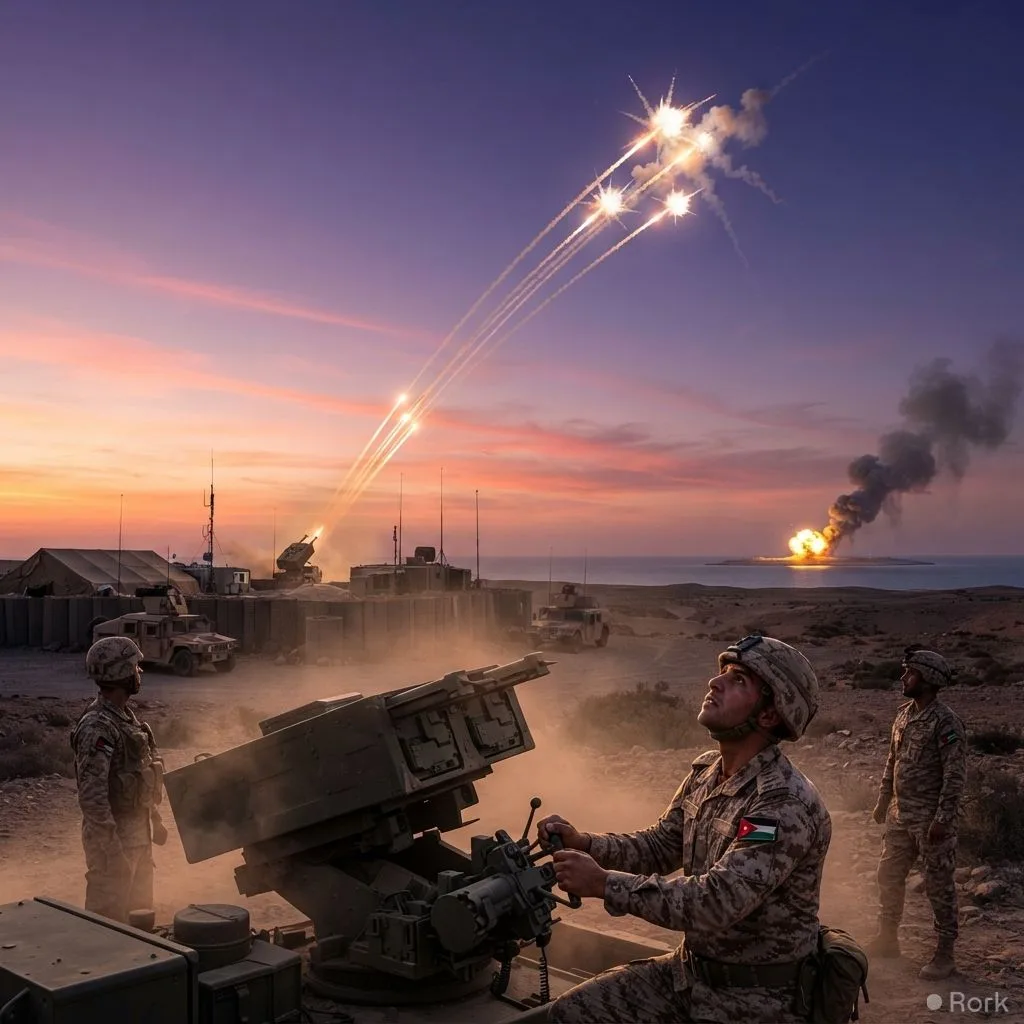
- Jordanian air defenses shot down eight of the incoming missiles, while the United States claims it had already hit Iranian rocket launchers on the island.
- Former President Donald Trump publicly declared that Iran’s Kharg Island was being “blown to smithereens.”
- Analysts warn the tit‑for‑tat exchange could widen the U.S.–Iran confrontation and destabilise the wider Middle East, with possible spill‑over effects for Pakistan.
In the early hours of Monday, Iran fired a salvo of short‑range missiles toward two U.S. forward operating bases near Amman. Jordan’s air force, using its Patriot and Skyguard systems, reported successful interception of eight projectiles, preventing any casualties on the ground. The United States, meanwhile, confirmed that a few days earlier it had carried out a precision strike on Larak Island – a strategic outpost in the Persian Gulf – targeting Iranian rocket launchers that it said posed a threat to commercial shipping and allied naval vessels.
The Iranian response, framed by Tehran as a defensive measure against “aggression,” follows a pattern of reciprocal strikes that have escalated since the 2020 U.S. withdrawal from the Joint Comprehensive Plan of Action. Washington’s statement emphasised that the Larak operation was limited to neutralising launch sites, whereas Tehran’s missile launch aimed at “deterring further American interference.” Former President Donald Trump, speaking on a news channel, amplified the rhetoric by claiming that Iran’s Kharg Island, a key oil‑export hub, was being reduced to “smoke and ash,” a comment that inflamed diplomatic tensions further.
For Pakistan, the flare‑up carries several implications. Islamabad maintains a delicate diplomatic balance, cooperating with the United States on counter‑terrorism while also preserving economic ties with Tehran, especially in the energy sector. A broader regional conflict could disrupt oil supplies that affect Pakistan’s import bills and raise security concerns for the sizable Pakistani expatriate community employed in Jordan’s construction and services sectors. Moreover, heightened U.S.–Iran hostilities may compel Pakistan to reassess its own strategic posture in a region where great‑power rivalries increasingly shape security calculations.