
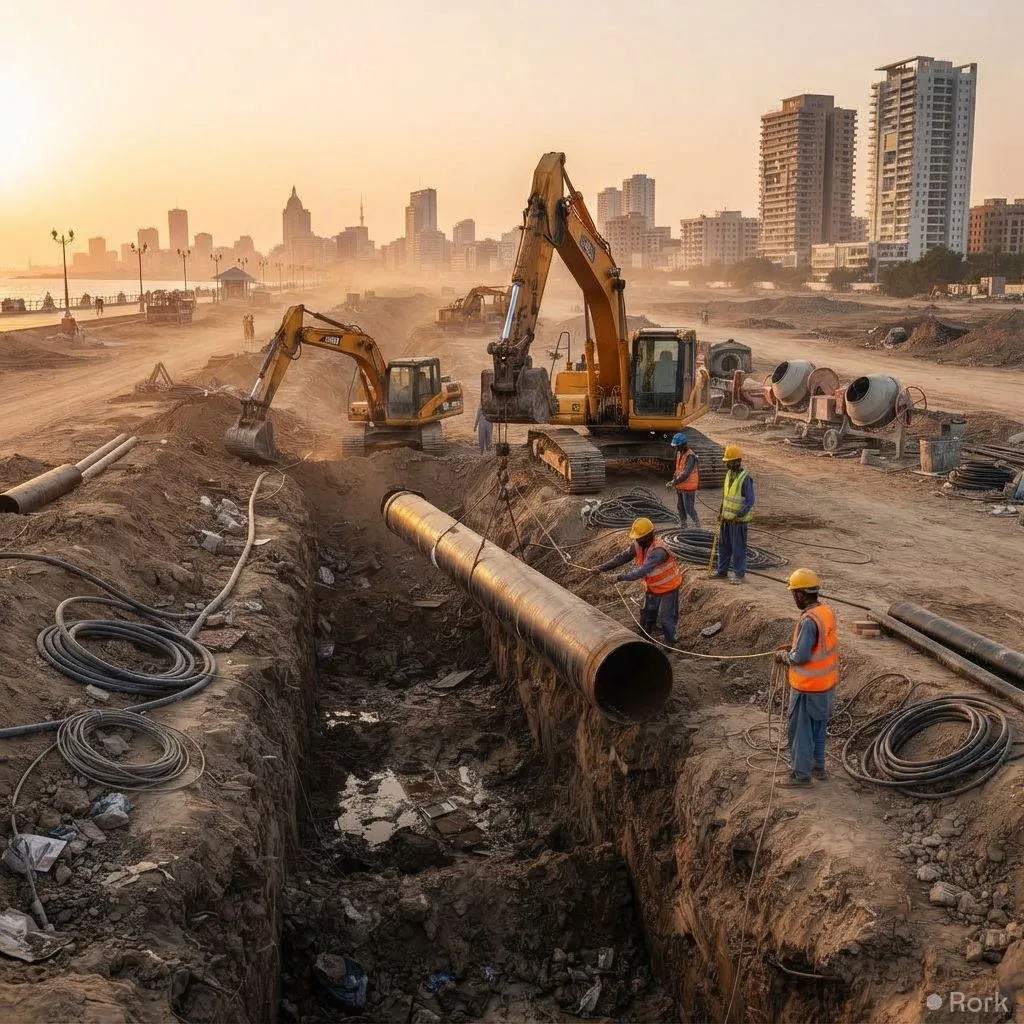
Karachi Water and Sewerage Corporation (KW&SC) and the Frontier Works Organization (FWO) signed a Rs 14.2 billion contract on 12 September 2026 to build a dedicated water transmission pipeline that will draw supply from the Dumlottee reservoir and feed directly into the DHA and Clifton neighbourhoods.
The agreement outlines a multi‑phase construction programme that will start later this year. Engineers will excavate a trench stretching several kilometres, install high‑capacity pumping stations and equip the line with real‑time monitoring and control systems to ensure a steady flow of treated water. The project is slated for completion within 24 months, subject to weather and site‑access conditions.
By routing water through a separate conduit, the new pipeline is expected to alleviate chronic shortages that have plagued even Karachi’s most affluent districts. Residents and commercial establishments in DHA and Clifton, long beset by intermittent supply and low pressure, will gain a more reliable source, while the existing municipal network will experience reduced strain, potentially cutting the frequency of outages city‑wide.
Karachi, home to more than 15 million people, has struggled with an over‑stretched water infrastructure for decades. Aging pipes, illegal connections and rapid urban expansion have left many parts of the metropolis dependent on intermittent tanker deliveries. The Dumlottee‑to‑DHA/Clifton line represents one of the most substantial capital injections into the city’s water sector since the early 2000s, signaling a shift toward targeted, high‑capacity solutions.
KW&SC’s managing director, Abdul Qadir, stressed that the pipeline “will not only improve service levels for the residents of DHA and Clifton but also create a buffer that benefits the wider Karachi water grid.” FWO’s chief engineer, Major (Ret.) Saad Iqbal, added that the project incorporates state‑of‑the‑art anti‑corrosion coatings and remote‑diagnostic tools, reducing maintenance costs and downtime.
Funding for the venture comes from the federal budget’s water‑infrastructure allocation, supplemented by a modest loan facility from the State Bank’s development arm. The Rs 14.2 billion outlay reflects both the technical complexity of the work and the strategic importance the government places on stabilising water supply to the city’s economic hubs.
If delivered on schedule, the dedicated pipeline will bolster confidence among investors and residents, supporting Karachi’s broader urban growth agenda, which includes new housing schemes, commercial districts and industrial parks. The initiative also sets a precedent for similar dedicated supply lines to other water‑deficient zones, potentially reshaping the city’s approach to managing its most vital resource.