
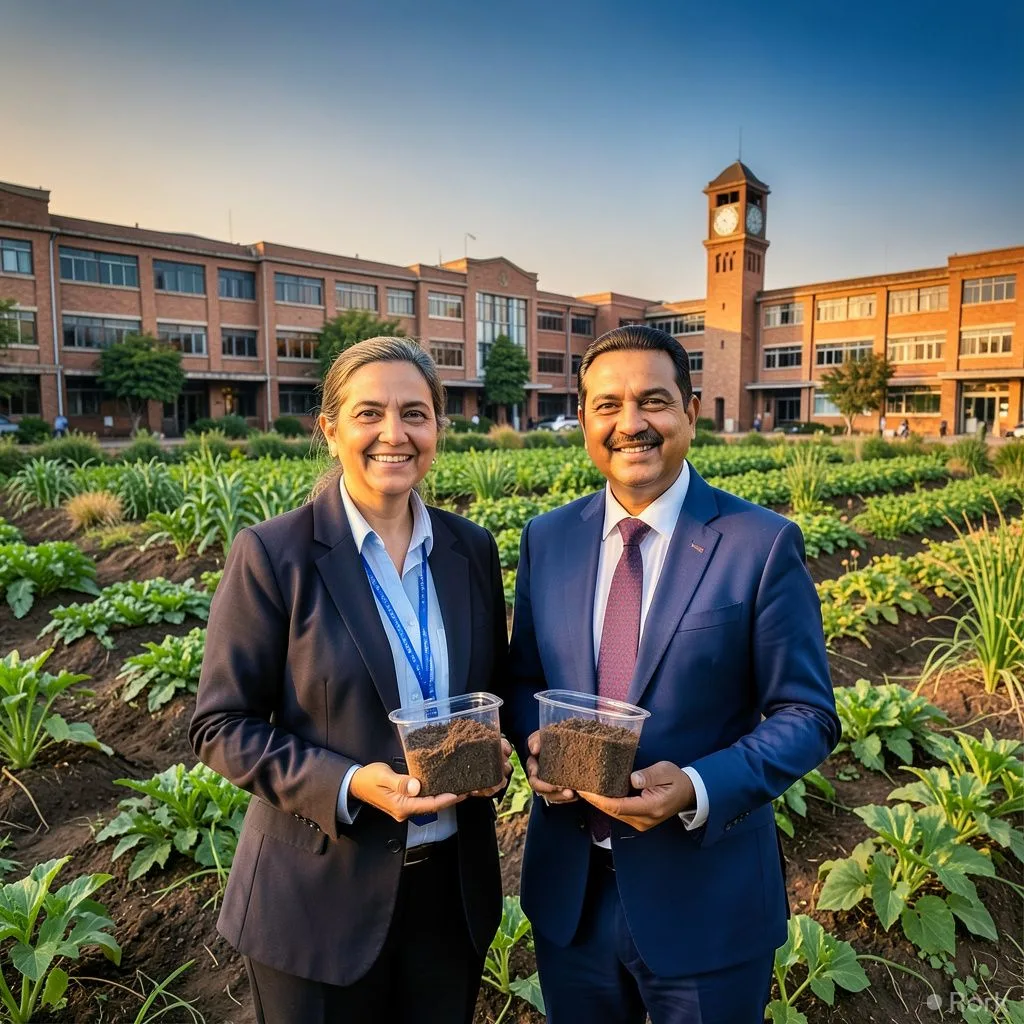
Nestlé Pakistan and the University of Agriculture Faisalabad (UAF) have officially launched a joint research programme aimed at advancing regenerative agriculture and building a more sustainable food system in Pakistan, an initiative announced on 9 October 2026. The collaboration will combine the multinational’s resources with the university’s academic expertise to develop farming practices that enhance soil health, increase crop resilience and support long‑term food security across the country’s agrarian regions.
Under the partnership, Nestlé and UAF will conduct a series of field trials on representative farms, testing cover‑cropping, reduced tillage, composting and other regenerative techniques that can restore degraded soils and improve water retention. The results will be shared through a series of knowledge‑exchange workshops targeting farmers, extension officers, graduate students and researchers, creating a platform for hands‑on learning and rapid dissemination of best practices.
Both parties will pool technical know‑how, laboratory facilities and funding to generate scalable solutions that can be adopted by Pakistan’s roughly 30 million smallholder growers, who produce the bulk of the nation’s staple crops. By integrating industry‑driven innovation with scientific research, the programme seeks to bridge the gap between laboratory findings and real‑world farming, offering practical tools that can be rolled out in Punjab, Sindh, Khyber Pakhtunkhwa and Balochistan.
The initiative reflects a broader shift in South Asia toward private‑public collaborations to tackle climate‑related challenges. Pakistan’s agriculture sector, contributing about 20 percent to GDP, is increasingly vulnerable to erratic rainfall, rising temperatures and nutrient‑poor soils. Regenerative agriculture promises to mitigate these threats by sequestering carbon, reducing dependence on synthetic inputs and bolstering farmer incomes, thereby aligning with national objectives outlined in the Pakistan Climate Change Policy and the Sustainable Development Goals.
Nestlé Pakistan, which has pledged to achieve net‑zero emissions by 2050, views the partnership as a cornerstone of its sustainability strategy in the region. UAF, the country’s premier agricultural university, brings decades of research on crop genetics, soil science and agronomy, positioning it to guide evidence‑based interventions. Together, they aim to publish findings in peer‑reviewed journals and develop policy recommendations for provincial agricultural departments.
If successful, the programme could serve as a model for similar collaborations across the subcontinent, demonstrating how corporate investment and academic rigor can jointly drive the transition toward resilient, climate‑smart food systems that safeguard livelihoods and nutrition for millions of Pakistanis.