
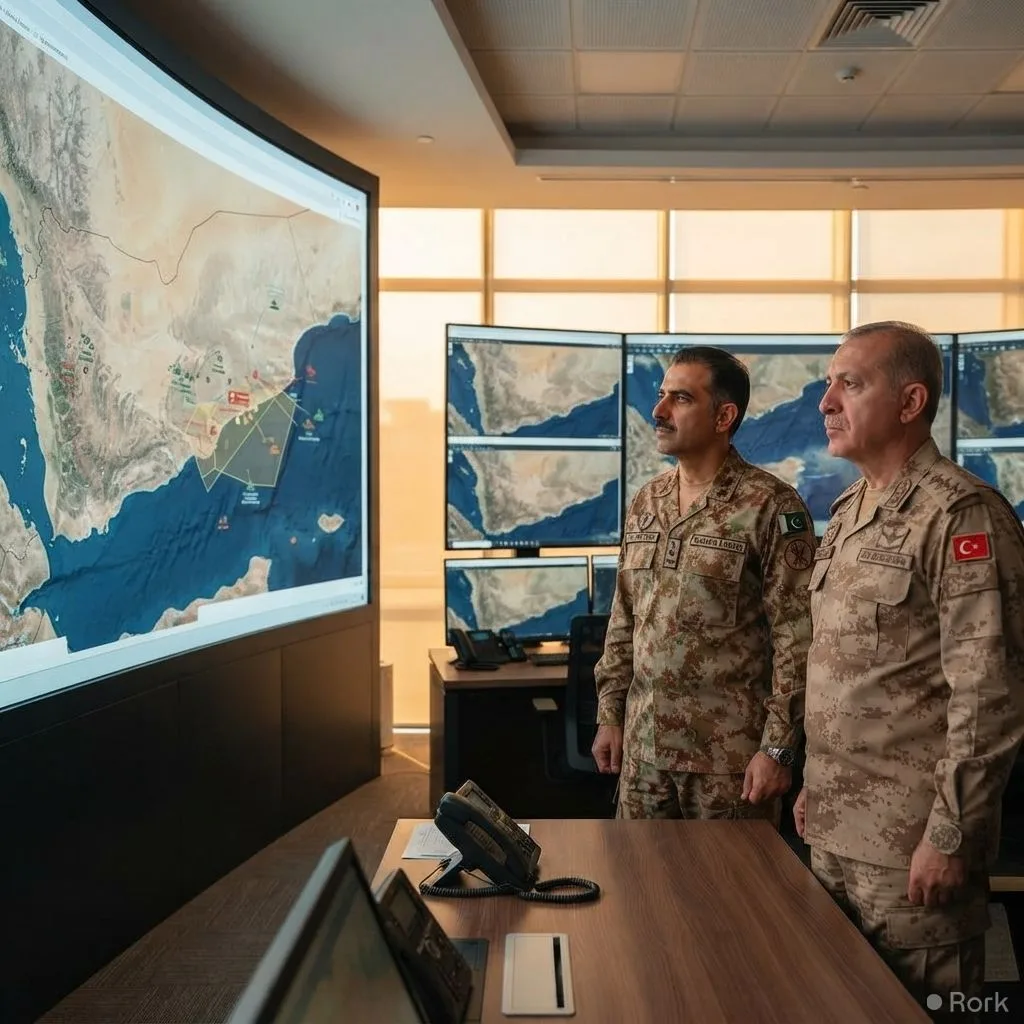
Pakistan’s defence minister, Khawaja Asif, confirmed on Thursday that Pakistani troops, together with Turkish units, are actively assisting Saudi Arabia in a fresh round of anti‑Houthi operations across Yemen. The joint effort, which began in early October, involves aerial and ground‑based reconnaissance as well as coordinated strike missions aimed at recapturing districts the Houthi rebels seized in the previous month. According to the minister, the combined presence of Pakistani and Turkish forces has already forced the Houthis to withdraw from several contested localities, giving the internationally recognised Yemeni government a tactical edge.
Speaking at a press briefing in Islamabad, Asif highlighted that the collaboration reflects the deepening strategic partnership among Riyadh, Ankara and Islamabad, all of which share concerns over the growing influence of Iran‑backed militias in the Red Sea corridor. He noted that Pakistani pilots and intelligence teams are operating alongside Turkish Special Forces under the umbrella of the Saudi‑led coalition, providing real‑time surveillance that has helped Yemeni troops retake key supply routes in the Al‑Hodeidah and Marib governorates.
The minister’s remarks come as the Yemeni front sees a shift after the Houthis’ rapid advance in August, when they captured a string of towns along the coast and threatened the main highway linking the capital, Sana’a, to the port of Aden. Saudi Arabia, which has been financing and equipping the Yemeni army since the 2015 intervention, welcomed the additional support, saying the Pakistani‑Turkish contribution enhances the coalition’s operational reach and reduces the reliance on purely Saudi air power.
For Pakistan, the deployment marks one of the most visible overseas engagements of its armed forces since the Afghan withdrawal, signalling Islamabad’s intent to maintain a foothold in Gulf security affairs. Analysts note that participation could open avenues for the Pakistani defence industry to secure further contracts with Saudi Arabia and Turkey, while also offering combat experience to its pilots and intelligence personnel. Domestically, the move is likely to be framed as a demonstration of Pakistan’s commitment to its long‑standing ally, the Kingdom of Saudi Arabia, and a reinforcement of the broader “strategic depth” doctrine that underpins Islamabad’s foreign‑policy calculus.
Turkey’s involvement, meanwhile, underscores Ankara’s growing role as a regional security actor willing to operate beyond its immediate neighbourhood. Since 2022, Turkish forces have conducted limited deployments in Yemen, primarily in advisory and training capacities; the current joint operations represent an escalation that aligns with Turkey’s ambition to project power alongside fellow Muslim-majority states. The coordination with Pakistani units also reflects the deepening defence‑industry ties between the two countries, which have recently concluded several arms‑sale agreements.
The Yemeni government, buoyed by the recent successes, has announced plans to launch a broader offensive to clear remaining Houthi strongholds in the south. While the coalition’s renewed momentum offers a glimmer of hope for a stalled peace process, experts caution that the conflict’s humanitarian toll remains severe and that any military gains could be short‑lived without a parallel diplomatic push. Nonetheless, the Pakistani‑Turkish support for Saudi Arabia marks a notable development in the ever‑evolving security dynamics of the Gulf and South‑Asian theatres.