
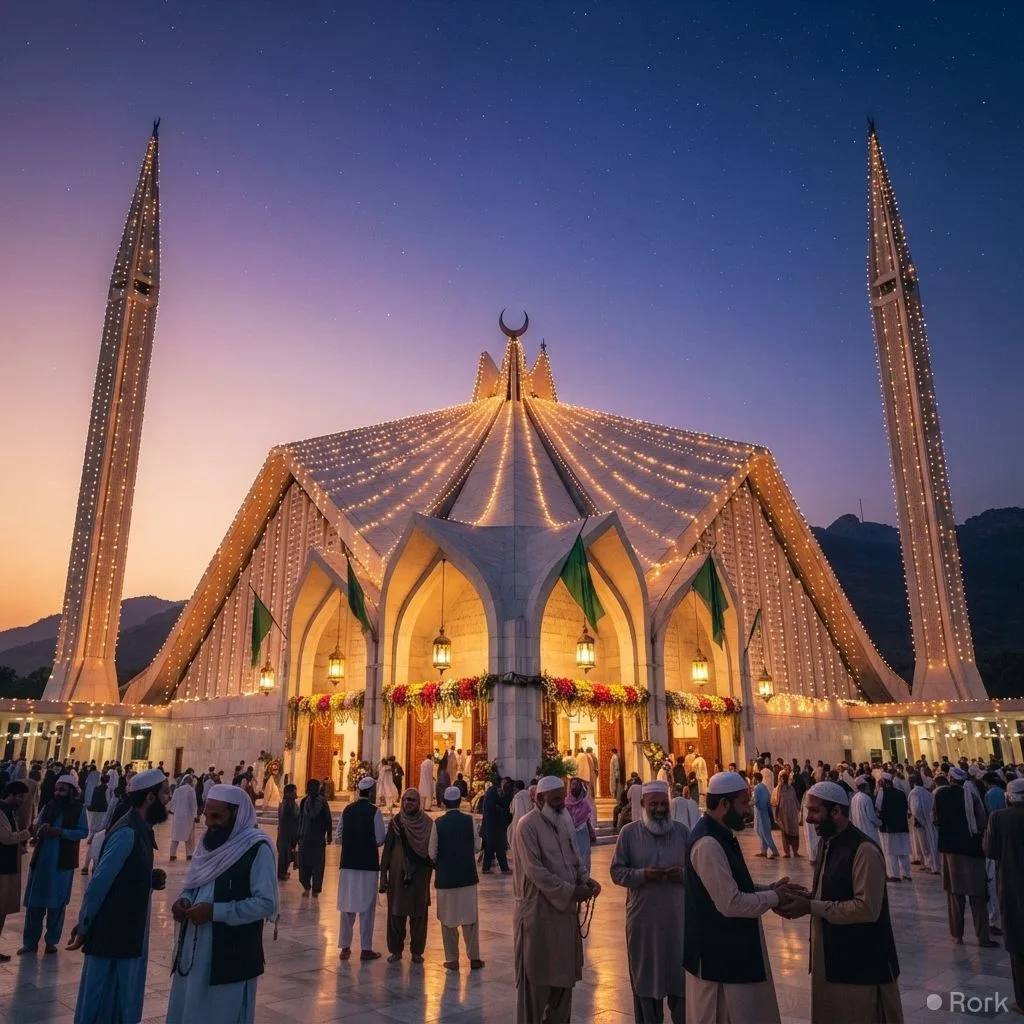
Wednesday, 26 August 2026 has been officially declared a public holiday across Pakistan to mark the 12th Rabi‑ul‑Awwal, the day Muslims commemorate the birth of the Prophet Muhammad (peace be upon him). Across major cities and smaller towns, streets are being adorned with illuminated banners, lanterns and floral arrangements in anticipation of the nationwide festivities.
Background
The Islamic month of Rabi‑ul‑Awwal, the third month of the Hijri calendar, is traditionally observed by many Muslims as the occasion of Eid Milad‑un‑Nabi. While the date of the Prophet’s birth is a matter of scholarly debate, the majority of Sunni and Shia communities in Pakistan have long celebrated the event with prayers, sermons and charitable distribution. The current year marks the 12th occurrence of the holiday since the Pakistani state began officially recognizing it with a public holiday in the early 2010s, a move aimed at acknowledging the cultural and spiritual significance of the day for the nation’s 220‑million‑strong Muslim majority.
In recent decades, the celebration has evolved from modest mosque gatherings to large‑scale public events. Local governments often coordinate with religious organisations to arrange processions, lighting displays and free food stalls, while the federal Ministry of Religious Affairs issues guidelines for security, traffic management and the conduct of special prayers. This year’s declaration follows a pattern of previous administrations using the holiday to promote social cohesion and reinforce Pakistan’s identity as a “land of the pure” (Islamic Republic).
The preparation phase has already begun in provincial capitals such as Islamabad, Lahore, Karachi and Peshawar. Municipal authorities have issued permits for decorative lighting on main arteries, and police have announced heightened patrols to ensure safety during the anticipated evening processions. Schools, banks and most private enterprises have been instructed to close, allowing employees and students to take part in the observances.
What it means
For the average Pakistani, the holiday translates into a day off from work and study, giving families the chance to gather for communal meals and attend special congregational prayers at mosques and larger venues like the Faisal Mosque in Islamabad. Retail outlets, especially those dealing in clothing, sweets and religious paraphernalia, anticipate a surge in sales as people purchase new attire, sweets such as sewai and gulab jamun, and gifts for neighbours and the less‑fortunate.
The public holiday also has tangible implications for the transport sector. Inter‑city bus services and Pakistan Railways have published adjusted timetables, with many routes reduced or temporarily suspended to accommodate the influx of worshippers traveling to their hometowns. Urban commuters can expect altered traffic patterns, as several major thoroughfares will be partially closed for processions and lighting installations.
Charitable initiatives receive a noticeable boost during Milad‑un‑Nabi. NGOs and community groups often organise free food distribution (langar), clothing drives and medical camps, aligning with the Prophet’s teachings on generosity. The government’s endorsement of the holiday encourages corporate social responsibility programmes, with several private firms announcing special donations and volunteer activities on the day.
From a security perspective, the large gatherings demand coordinated efforts between federal and provincial police, the Rangers and local municipal bodies. Past celebrations have occasionally been marred by isolated incidents, prompting authorities this year to deploy additional personnel, install temporary surveillance cameras and conduct risk assessments in high‑traffic areas.
What happens next
As the sun sets on 26 August, major mosques will host Salat al‑Waqf (the special Eid prayer) followed by sermons reflecting on the Prophet’s life and the moral lessons relevant to contemporary Pakistan. In the evening, streets illuminated with colourful lanterns will become venues for cultural programmes, including nasheed performances and poetry recitals that celebrate Islamic heritage.
The momentum generated by the holiday is expected to spill over into the following days, with charitable campaigns extending into the first week of September. Community leaders have urged citizens to sustain the spirit of giving beyond the celebration, emphasizing that the true legacy of Eid Milad‑un‑Nabi lies in ongoing acts of compassion and social welfare.