
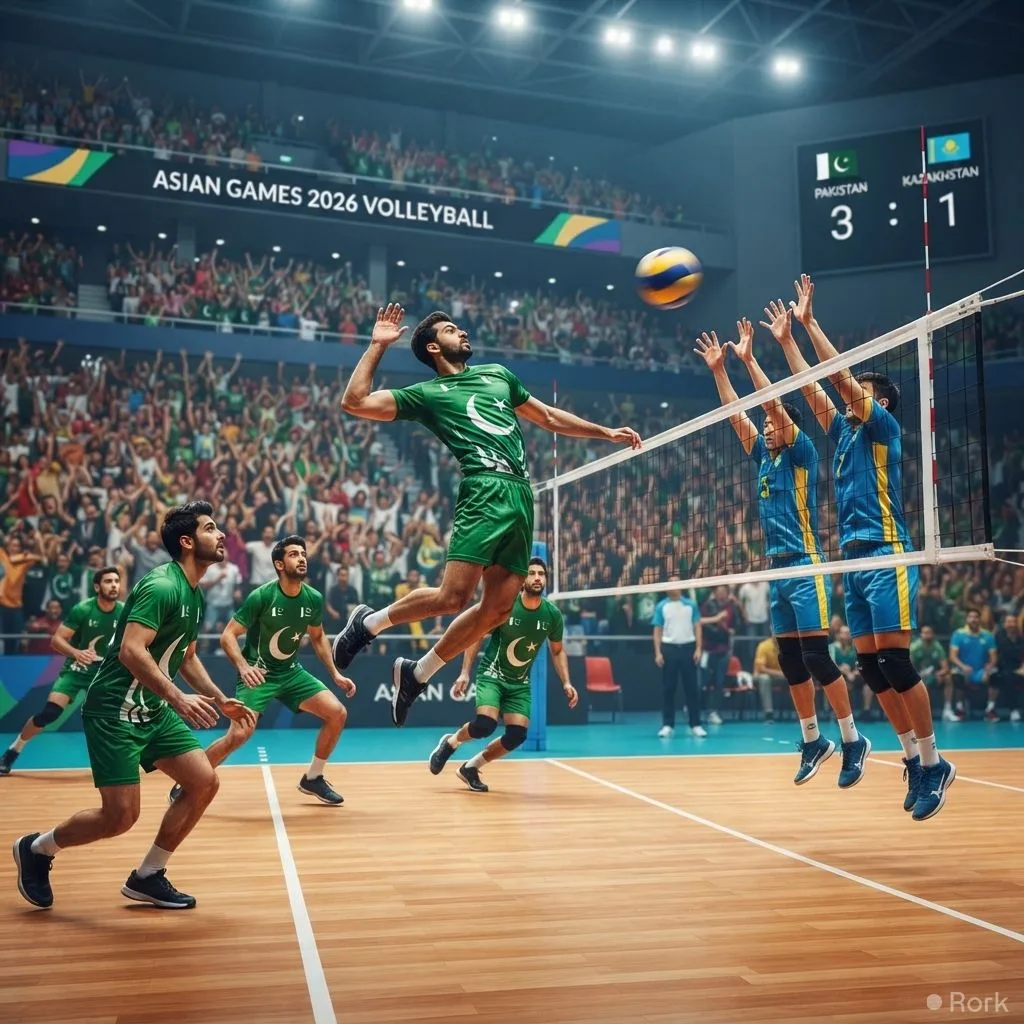
Pakistan opened its Asian Games 2026 volleyball campaign with a 3‑1 triumph over Kazakhstan, clinching the win in the first match of Pool A. Outside hitter Murad Khan dominated the scoreboard, racking up 21 points across the four sets to steer the green‑shirts to victory.
Background
The Hangzhou‑based Asian Games marks the first time since 2010 that Pakistan’s men’s volleyball squad has entered the tournament with a full complement of internationally experienced players. After a modest showing at the 2022 Asian Games, the Pakistan Volleyball Federation (PVF) overhauled its training regime, sending the team to high‑performance camps in Iran and Japan and securing a series of friendlies against higher‑ranked Asian sides. Those preparations paid off during the pre‑Games qualifiers, where Pakistan edged past Thailand and secured the third seed in Pool A.
Kazakhstan, ranked just above Pakistan in the Asian Volleyball Confederation standings, entered the match as a sturdy opponent with a reputation for powerful serves and disciplined block play. The opening set saw the Kazakh side take an early lead, but Pakistan quickly adapted, using quicker rotations and a more aggressive net attack. Murad Khan’s all‑round contribution—four spikes, three blocks, and a string of precise serves—kept the momentum with the Pakistan side, ultimately turning a tight contest into a comfortable win.
What it means
The victory not only guarantees Pakistan a place in the quarter‑finals but also boosts its world ranking, an essential factor for seeding in future continental tournaments such as the Asian Volleyball Championship. For the domestic volleyball community, the result validates the recent investments in coaching, sports science, and talent scouting, encouraging sponsors and government bodies to continue funding the sport’s development.
Beyond the court, the win energises the broader Pakistani sports narrative at the Games. With squash star Noor Zaman securing a bronze medal in the men’s singles, the dual success showcases Pakistan’s growing multi‑sport prowess on the Asian stage. Young athletes across the country are likely to see tangible role models, which could translate into higher participation rates in schools and clubs, especially in regions where volleyball has traditionally been under‑represented.
What happens next
Pakistan now faces the second‑place team from Pool A—Japan—in the knockout round. The Japanese side boasts a deep bench and a sophisticated defensive system, so the Pakistani squad will need to refine its serve‑receive patterns and maintain the aggressive attacking rhythm displayed against Kazakhstan. Coach Rashid Ahmed has already hinted at tactical tweaks, emphasizing quicker transitions and more varied placement on the middle attack.
Regardless of the outcome, the win sets a confident tone for the remainder of the tournament. Should Pakistan advance further, the momentum could carry over into the post‑Games period, influencing selections for the upcoming Asian Men’s Volleyball Cup and providing a springboard for the nation’s bid to host future regional competitions. For fans back home, the green‑shirts’ performance offers a glimpse of what sustained investment and strategic planning can achieve—a promising sign for the future of Pakistani volleyball.