
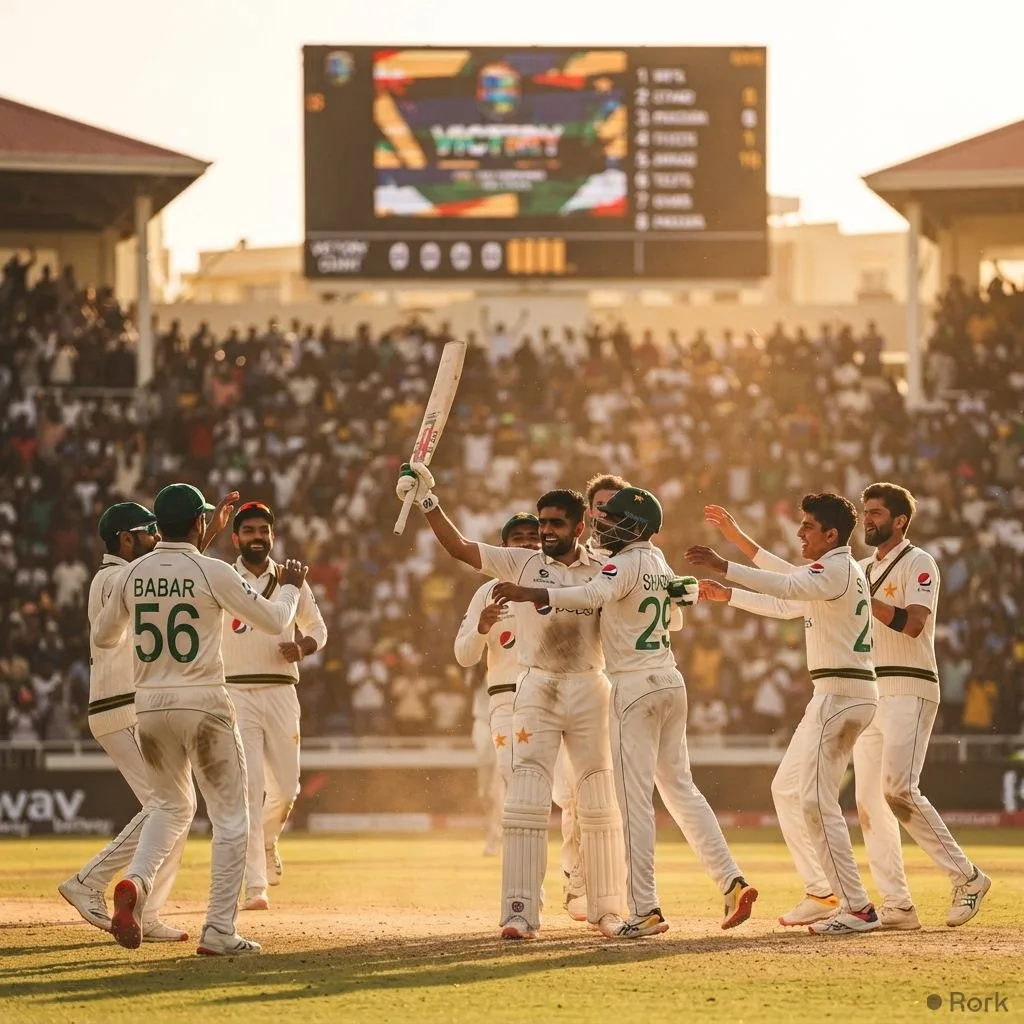
Pakistan clinched an eight‑wicket victory over the West Indies in Port of Spain earlier this month, marking their first Test win abroad after eleven attempts. The triumph snapped an eight‑match losing streak on foreign soil and stands as the sole success in a run that has seen Pakistan fall short in ten of their recent overseas fixtures.
The win came in the final Test of a three‑match series, with Pakistan chasing down a modest target set by a struggling Caribbean side. Babar Azam’s steady leadership and a measured middle‑order partnership steered the chase, while the seam attack, led by Shaheen Afridi, restricted the hosts to a low total. The result, though narrow in the broader context, offered a rare uplift for a side that has struggled to adapt to conditions outside the subcontinent.
Pakistan’s overseas record has deteriorated sharply over the past few years, with only one victory recorded in eleven Tests played away from home. The majority of those matches have ended in defeats, and a handful have been drawn, underscoring the difficulty Pakistani batsmen and bowlers face on pitches that differ markedly from the spin‑friendly tracks of Karachi, Lahore and Rawalpindi. The lack of success has been a point of concern for the Pakistan Cricket Board (PCB), whose officials have repeatedly highlighted the need for more extensive preparation tours and tailored coaching programs to bridge the gap.
Cricket analysts attribute the away‑performance woes to several factors, including limited exposure to the seam‑friendly conditions prevalent in the West Indies, England and Australia, as well as inconsistent team selections that have prevented a settled core from developing chemistry on foreign tours. The recent victory, however, suggests that strategic adjustments—such as selecting a pace‑heavy attack and emphasizing swing bowling—can yield results when executed correctly.
The PCB is expected to use the Port of Spain win as a benchmark for upcoming overseas engagements. With the next series against England slated for later this year, the board faces pressure to translate this isolated success into a more sustained pattern of competitiveness abroad. Selections for the tour will likely hinge on the form of players who performed in Trinidad, and the coaching staff will be tasked with replicating the preparation methods that paid off in the Caribbean.
Domestically, the win has sparked a brief surge of optimism among fans who have grown weary of the string of away defeats. While the eight‑wicket margin offers a morale boost, commentators caution that a single victory cannot mask the underlying issues that have plagued Pakistan’s Test side on foreign pitches. Sustained improvement will require systematic changes in training regimes, talent development, and perhaps a revision of the overseas touring calendar to allow more acclimatization time.
In summary, Pakistan’s solitary triumph in eleven away Tests—secured against the West Indies in Port of Spain—provides a fleeting respite from a troubling trend. The result highlights both the potential for success when conditions are managed effectively and the pressing need for broader strategic reforms to ensure the team can compete consistently on the global stage.