
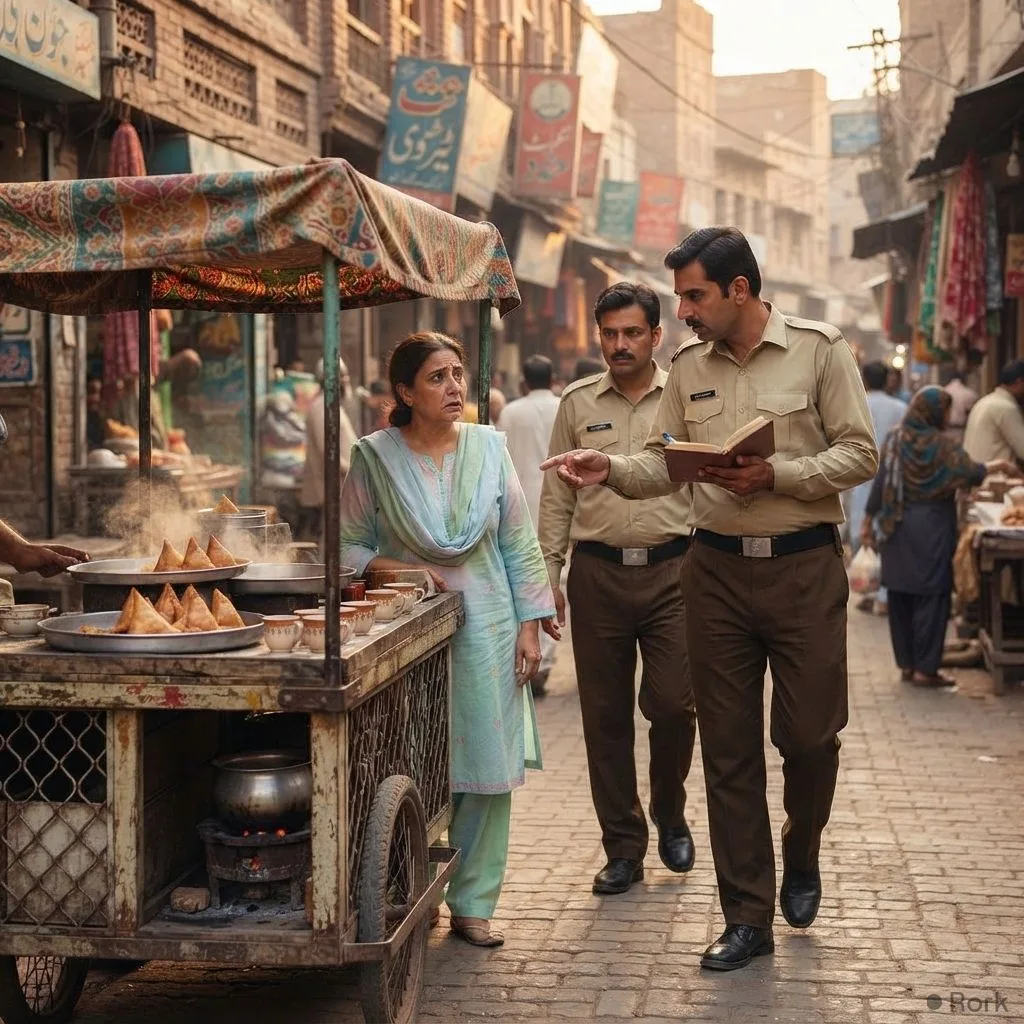
Tahira Habib Jalib, the daughter of the celebrated revolutionary poet, says municipal officials tried to force her to pay a sum of money in exchange for allowing her street‑food stall to continue operating. According to her account, the officers threatened to seize her cart unless she complied with their demand, alleging that she was breaching permit regulations.
Background
The incident took place in a bustling corner of Lahore’s old city, where Tahira has been running a modest food‑cart business for the past two years. Like many informal traders in Pakistan, she operates without a formal shop space, relying on daily sales of traditional snacks to support herself after the loss of a government pension that her father once received.
Over the last decade, street vendors have increasingly found themselves under scrutiny from municipal bodies tasked with enforcing licensing rules that many small‑scale operators consider opaque or unaffordable. In several provinces, recent amendments to the “Street Vendors Act” have introduced higher fees and stricter inspection regimes, prompting protests from traders’ associations.
Tahira’s claim echoes earlier reports from the Punjab Traders Association, which documented a surge in alleged extortion cases involving local officials. While the authorities maintain that their actions are meant to ensure compliance with health and safety standards, critics argue that the lack of clear guidelines creates room for arbitrary demands and intimidation.
What it means
If the allegations are verified, the case could highlight systemic vulnerabilities that allow low‑income entrepreneurs to be exploited by those in power. For the thousands of families that depend on informal vending for their livelihood, such practices can translate into lost earnings, increased debt, and, in extreme cases, the closure of their businesses.
The episode also brings renewed attention to the legacy of Habib Jalib, whose poetry championed the rights of the common man. Tahira’s public statement has resonated on social media, prompting calls for a transparent inquiry and reigniting debate over the balance between regulatory enforcement and the protection of informal workers’ rights in Pakistan.
What happens next
Tahira has requested that the municipal corporation launch an independent investigation and has appealed to the provincial ombudsman for assistance. Legal experts suggest that, should evidence emerge of coercive conduct, the officials could face disciplinary action under anti‑corruption statutes. Meanwhile, vendor groups are mobilising a petition demanding clearer permit procedures and safeguards against abuse, indicating that this single incident may become a catalyst for broader reform in the street‑trading sector.