
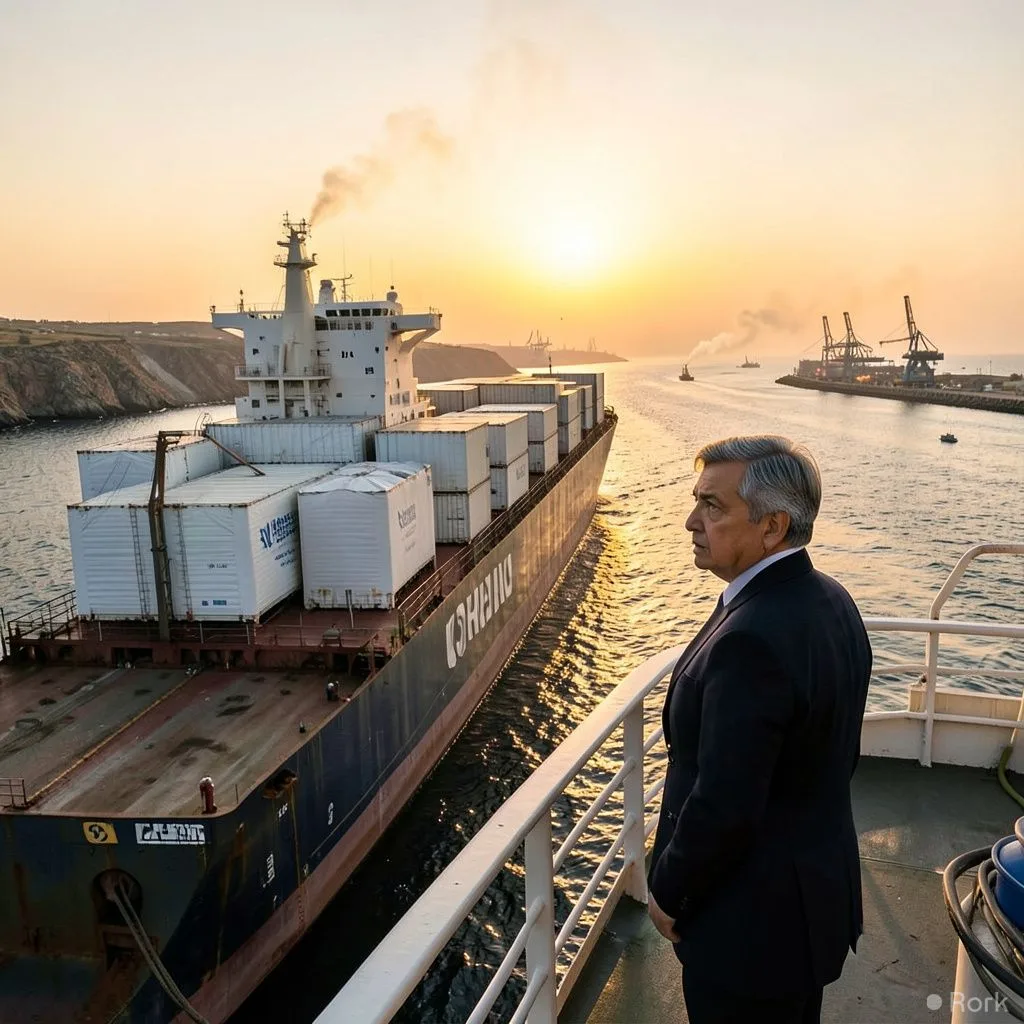
A United Nations official has warned that if the Hormuz fertiliser mechanism is not up and running within the next seven to ten days – the window expected after a prospective US‑Iran agreement – the region could face a serious food‑security shock. The delay threatens to choke the flow of essential fertiliser through the Strait of Hormuz, where fighting has already halted most outbound shipments.
The UN‑backed plan, devised to re‑open safe corridors for fertiliser cargoes from Gulf producers, was slated to be activated almost immediately after any diplomatic breakthrough between Washington and Tehran. Analysts say the mechanism could be operational within a week or so, but the ongoing conflict in the vicinity has kept tankers docked and ports idle, effectively cutting off a lifeline for crops that rely on imported nutrients.
Across the Middle East and South Asia, the suspension of fertiliser deliveries is already pushing prices upward, squeezing farmers already grappling with higher input costs. A prolonged bottleneck would likely shrink agricultural output, inflating food prices and amplifying the risk of a regional food crisis that could spill over into markets already strained by climate‑related stresses.
Pakistan is among the most vulnerable importers, sourcing roughly a third of its urea and a significant share of its phosphatic fertilisers from Gulf states. A sharp rise in fertiliser prices would raise the cost of staple crops such as wheat and rice, eroding farm margins and potentially feeding into the country’s inflationary pressures. The government may be forced to consider emergency subsidies or alternative sourcing strategies to shield consumers and maintain grain supplies.
Both the United States and Iran have declined to comment on the UN’s warning, leaving the diplomatic track and the operational details of the Hormuz corridor shrouded in uncertainty. Their silence adds to the anxiety felt by exporters, traders and agribusinesses that depend on uninterrupted Gulf shipments.
The United Nations has stressed that restoring secure passage for fertiliser cargoes is a matter of urgency, not only to stabilise regional markets but also to avert a broader humanitarian fallout. Failure to act swiftly could transform a logistical hiccup into a full‑blown food emergency affecting millions.
As negotiations continue behind the scenes, farmers and policymakers alike are watching closely, aware that each day of delay narrows the margin for corrective action and heightens the spectre of scarcity in the coming planting season.