
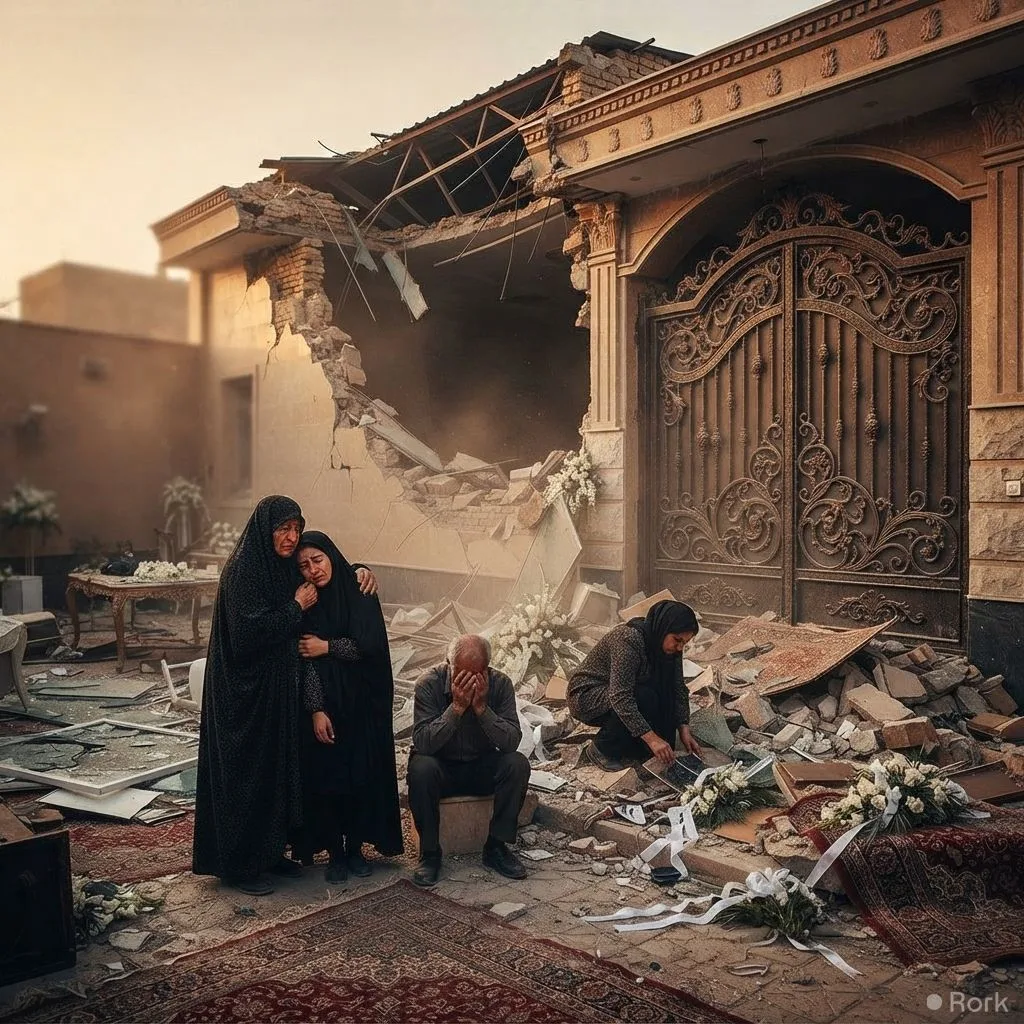
At least 11 people were killed when a US airstrike hit a wedding in Iran.
The attack struck a ceremony in the small town of Khuzestan province, shattering the celebrations of families gathered for the union of a local couple. Iranian authorities confirmed that the blast killed eleven individuals, including the bride’s relatives and staff, and injured several others. Tehran’s foreign ministry immediately condemned the strike, labeling it “a blatant violation of international law” and demanding an urgent explanation from Washington.
In retaliation, Iran launched a barrage of short‑range missiles toward US‑controlled positions in the Persian Gulf, targeting naval assets that the Iranian military says were involved in the initial strike. The missile salvo caused minor damage to a US support vessel but did not result in any American casualties, according to a statement from the US Central Command. Iranian officials presented the response as a measured act of self‑defence, warning that any further aggression would be met with “decisive” force.
The incident comes amid a renewed wave of hostilities between Washington and Tehran, which have escalated since the United States renewed sanctions on Iranian oil and missile programmes earlier this year. Both sides have accused each other of covert operations and proxy attacks across the region, raising fears that the conflict could expand beyond the two nations’ borders.
For Pakistan, the flare‑up adds another layer of volatility to an already fragile neighbourhood. Islamabad has traditionally maintained a delicate balance, engaging with both Tehran and Washington on security and trade issues. A broader confrontation could threaten the flow of Iranian oil that passes through Pakistani ports, affect regional energy prices, and increase the risk of refugee movements or militant spill‑over along the western border, prompting the Pakistani foreign ministry to call for restraint from all parties.
International reactions have been swift, with the United Nations urging an immediate cease‑fire and the European Union calling for a diplomatic dialogue to prevent further civilian casualties. As both capitals exchange accusations, analysts warn that without a clear de‑escalation roadmap, the cycle of retaliation could draw neighboring states into a wider regional conflict.