
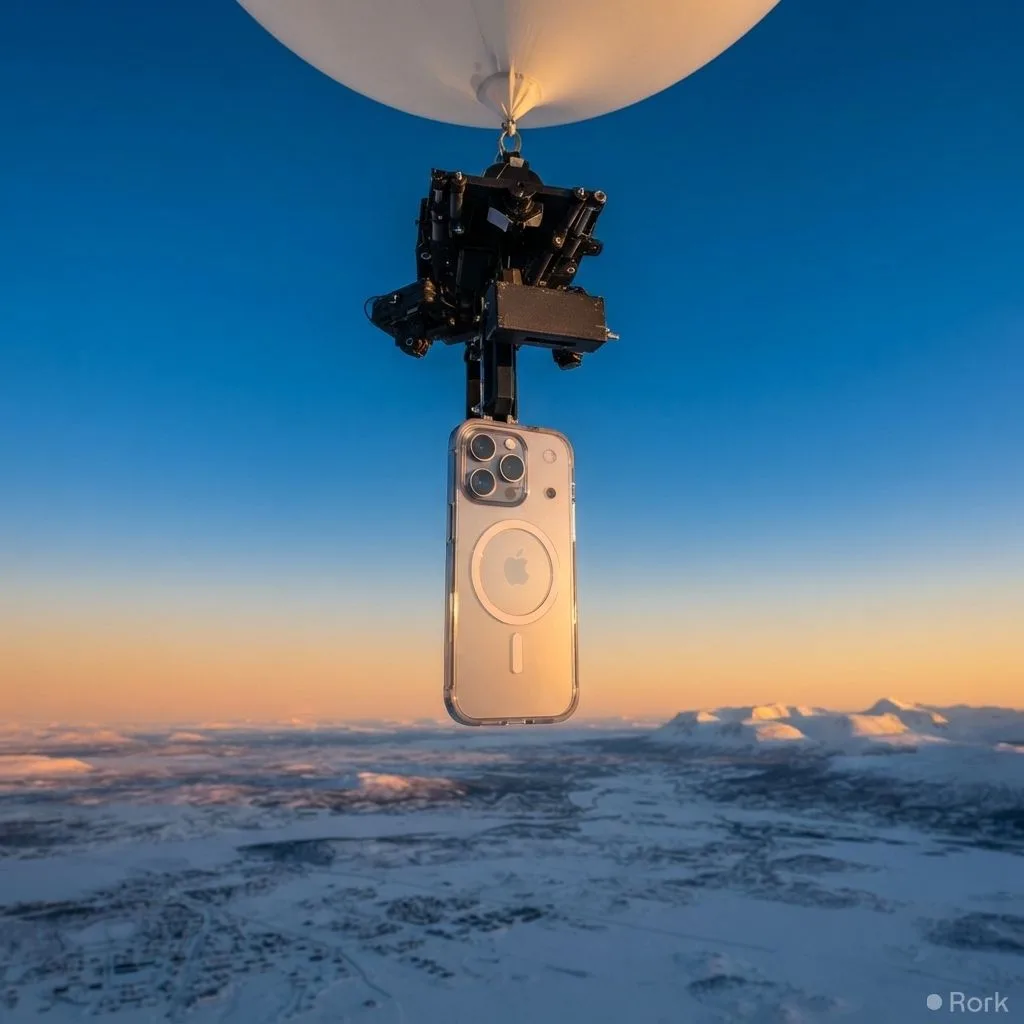
In the far‑north reaches of Sweden, where the aurora dances over snow‑blanketed rooftops, a lone weather balloon began its ascent from the outskirts of Kiruna. The payload it carried was no ordinary scientific instrument – it was a brand‑new iPhone 17 Pro, poised to test the limits of modern smartphone engineering.
The balloon lifted the device beyond the troposphere, soaring to an altitude of roughly 100,400 feet before the envelope finally gave way. The phone then plunged through more than 30 kilometres of air, reaching terminal velocity before crashing onto natural terrain. When officials retrieved the phone, the screen was still responsive, the camera lens unscathed, and the casing showed no structural failure, earning it a fresh Guinness World Record for the highest drop survived by a mobile phone.
The experiment was orchestrated by a small team of independent engineers who equipped the phone with a lightweight harness and a GPS tracker to monitor its trajectory. Their goal was to simulate the most extreme conditions a handheld device could encounter – from freezing temperatures at the edge of the stratosphere to the violent impact of a high‑speed fall. After the drop, the iPhone was examined by Guinness adjudicators, who confirmed that all functional tests passed, thereby certifying the record.
Apple’s spokesperson hailed the outcome as proof of the iPhone 17 Pro’s robust construction, citing the aerospace‑grade titanium frame, reinforced ceramic shield, and advanced internal shock‑absorption systems. The company noted that the achievement underscores its commitment to durability, a feature increasingly demanded by consumers who subject their phones to rugged environments.
For Pakistani users, the news arrives at a time when durability is a key purchasing factor. From bustling Karachi streets to the dusty roads of the northern valleys, smartphones regularly endure drops, heat, and dust. A record‑setting device that can survive a 100‑kilometre‑high plunge may tilt buyer preferences toward models that promise longer lifespans, potentially influencing retailers’ inventory choices and encouraging local carriers to promote sturdier handsets in their plans.