
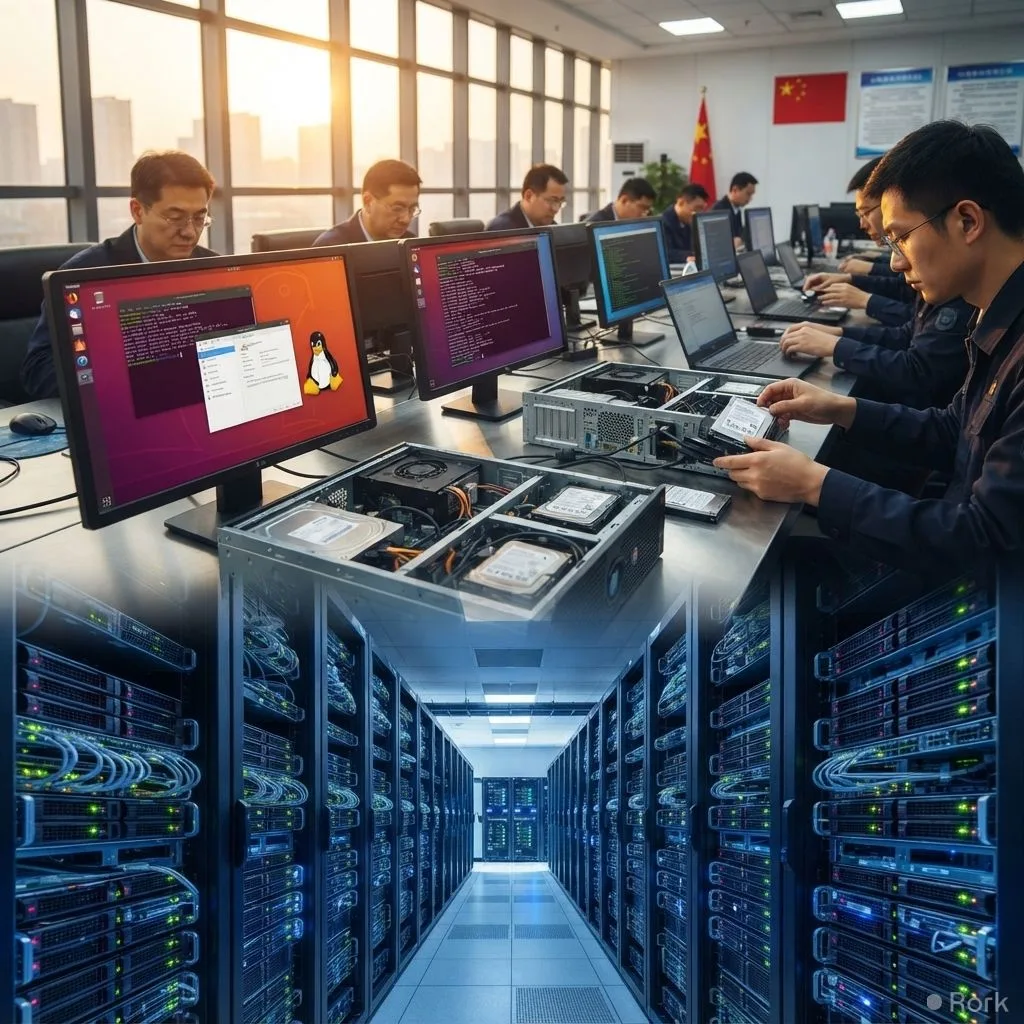
Beijing has ordered a range of state‑linked organisations to remove a customised build of Microsoft Windows 10 from their computers ahead of schedule, demanding that all such systems be switched to Linux‑based alternatives by the close of 2026.
The directive, issued in early August, targets ministries, research institutes and other public‑sector entities that had been using the so‑called “China Government Edition” of Windows 10. Officials say the accelerated timetable is part of a wider campaign to curtail reliance on foreign technology, especially American software, and to tighten control over sensitive data stored on government networks.
According to the order, the uninstallations must be completed no later than 31 December 2026, giving agencies roughly four months to migrate to home‑grown operating systems built on the open‑source Linux kernel. The transition will be overseen by the Ministry of Industry and Information Technology (MIIT), which will provide technical assistance and a set of approved distributions that meet security and compatibility requirements.
The move follows a series of steps taken by the Chinese government since 2023 to replace imported hardware and software with domestic alternatives. Analysts link the policy to the “dual‑circulation” strategy, which seeks to make China’s economy more self‑sufficient while still engaging with global markets. By standardising on Linux, Beijing hopes to eliminate back‑door vulnerabilities, streamline software updates and foster a domestic ecosystem of developers and service providers.
For Pakistan, the shift carries both opportunities and considerations. Chinese firms that supply hardware and cloud services to Pakistani enterprises often bundle Windows licences; a rapid move to Linux could reshape procurement patterns for joint projects under the China‑Pakistan Economic Corridor (CPEC). Moreover, Pakistani IT companies that have been partnering with Chinese partners on cybersecurity and data‑center initiatives may find new avenues for collaboration as China looks to export its home‑grown operating systems to allied markets.
At the same time, the policy underscores growing geopolitical tensions over technology supply chains. With Washington already restricting the sale of advanced chips to Chinese firms, Beijing’s drive to achieve software independence could accelerate the formation of alternative standards that may eventually affect regional tech compatibility, including for Pakistani businesses that rely on cross‑border software licences and support services.
Industry observers note that the transition will not be without challenges. Migrating legacy applications, retraining IT staff and ensuring that critical government functions remain uninterrupted will require substantial resources. The MIIT has pledged to allocate funding for migration projects and to establish a certification programme for Linux‑based solutions that meet the security standards of Chinese ministries.
If the rollout proceeds as planned, China will have one of the world’s largest public‑sector Linux deployments by the end of the year, marking a significant milestone in its quest for technological sovereignty and setting a precedent that could influence other nations contemplating similar moves.