
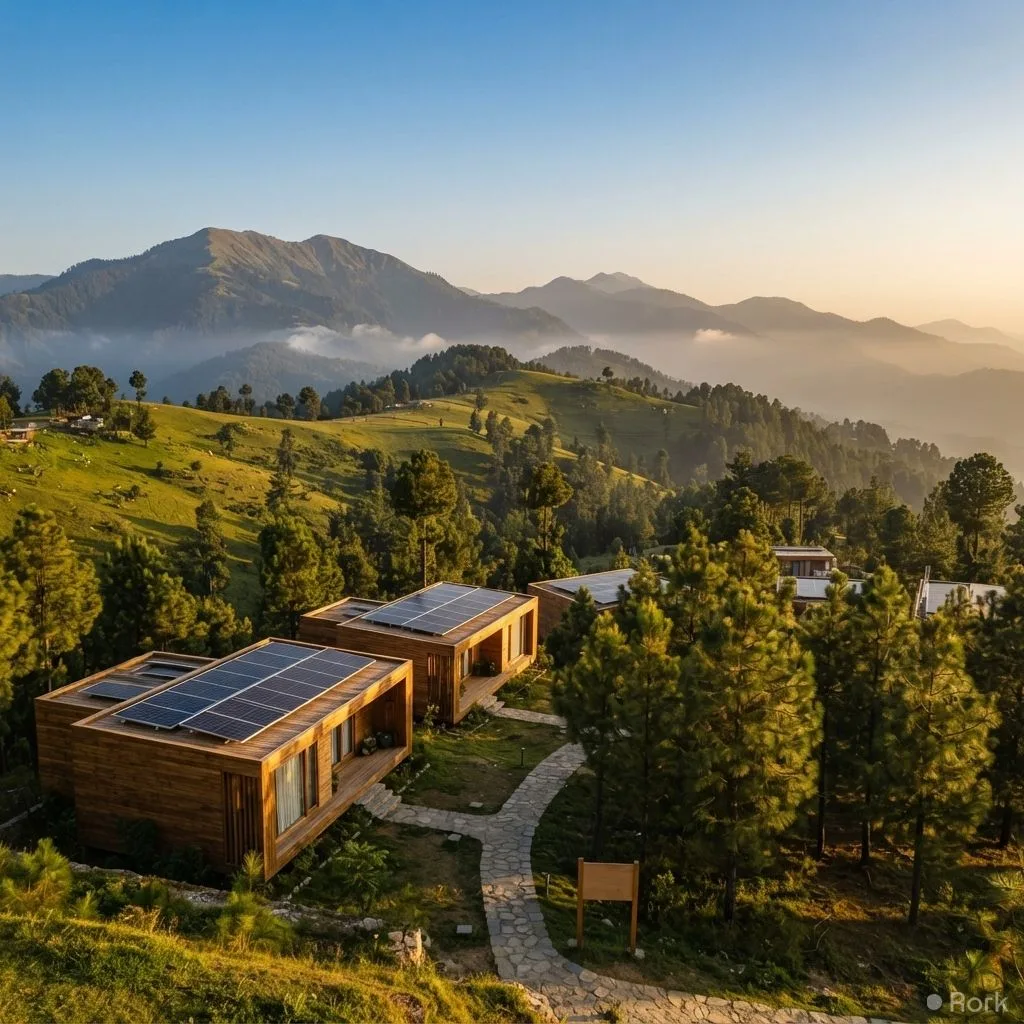
Above Zero (Private) Limited confirmed today that it has signed an Expression of Interest (EOI) with the United Arab Emirates‑based real‑estate conglomerate Fatima International Group. The agreement, sealed at the Government of Pakistan and UNDP Sustainable Development Goals (SDGs) Investment Fair, paves the way for a strategic partnership aimed at developing eco‑tourism facilities in Thandiai, a high‑altitude resort area of Khyber Pakhtunkhwa.
Background
The push for sustainable tourism in Pakistan has accelerated over the past few years, driven by the federal government’s “Vision 2030” tourism policy and the UNDP’s SDG‑focused investment platform. Thandiai, perched at an altitude of over 2,800 metres, has long been recognised for its pristine pine forests, snow‑capped peaks and potential as a winter‑sports hub, yet it has suffered from inadequate infrastructure and limited marketing.
Above Zero, a home‑grown hospitality and adventure‑tourism operator, has been lobbying for private capital to upgrade the region’s lodging, rope‑way systems and renewable‑energy supplies. Earlier this year the company secured a modest grant from the Punjab Tourism Development Fund to pilot a solar‑powered eco‑lodge, which demonstrated that low‑impact facilities could be financially viable.
Fatima International Group, whose portfolio includes luxury residential complexes in Dubai and Doha, announced last month that it is seeking to diversify into “green destination projects” across the Gulf’s neighboring markets. The UAE‑Pakistan investment fair, co‑hosted by the Ministry of Planning, Development and Special Initiatives and UNDP, provided a platform for the group to meet potential Pakistani partners, culminating in the EOI with Above Zero.
What it means
If the partnership proceeds, the first phase is expected to involve a US$45 million investment to construct a cluster of eco‑lodges, a small‑scale ski lift, and a community‑run adventure centre. The project promises to generate roughly 300 direct jobs during construction and about 150 permanent positions once operational, many of which are earmarked for residents of the neighboring Union Councils of Upper and Lower Thandiai.
Beyond employment, the venture is aligned with several SDGs—particularly Goal 8 (decent work and economic growth), Goal 12 (responsible consumption and production), and Goal 15 (life on land). By employing renewable‑energy technologies, waste‑reduction protocols and locally sourced building materials, the development aims to set a benchmark for responsible tourism that could be replicated in other mountain districts such as Swat and Chitral.
What happens next
Both parties have agreed to commission a feasibility study within the next two months, which will be overseen by the Khyber Pakhtunkhwa Tourism Department and a UNDP advisory team. The study will assess environmental impact, land‑use permissions, and the financial structuring required to attract additional equity or debt financing from international climate‑fund sources.
Assuming the study yields positive results, a detailed project plan will be presented to the federal cabinet for final approval by the end of 2027. Local community groups have already been invited to join a stakeholder committee, ensuring that the design of facilities reflects the cultural and economic needs of the area. Successful execution could not only transform Thandiai into a model of sustainable mountain tourism but also signal to other foreign investors that Pakistan’s high‑potential, low‑carbon projects are ready for large‑scale capital inflows.