
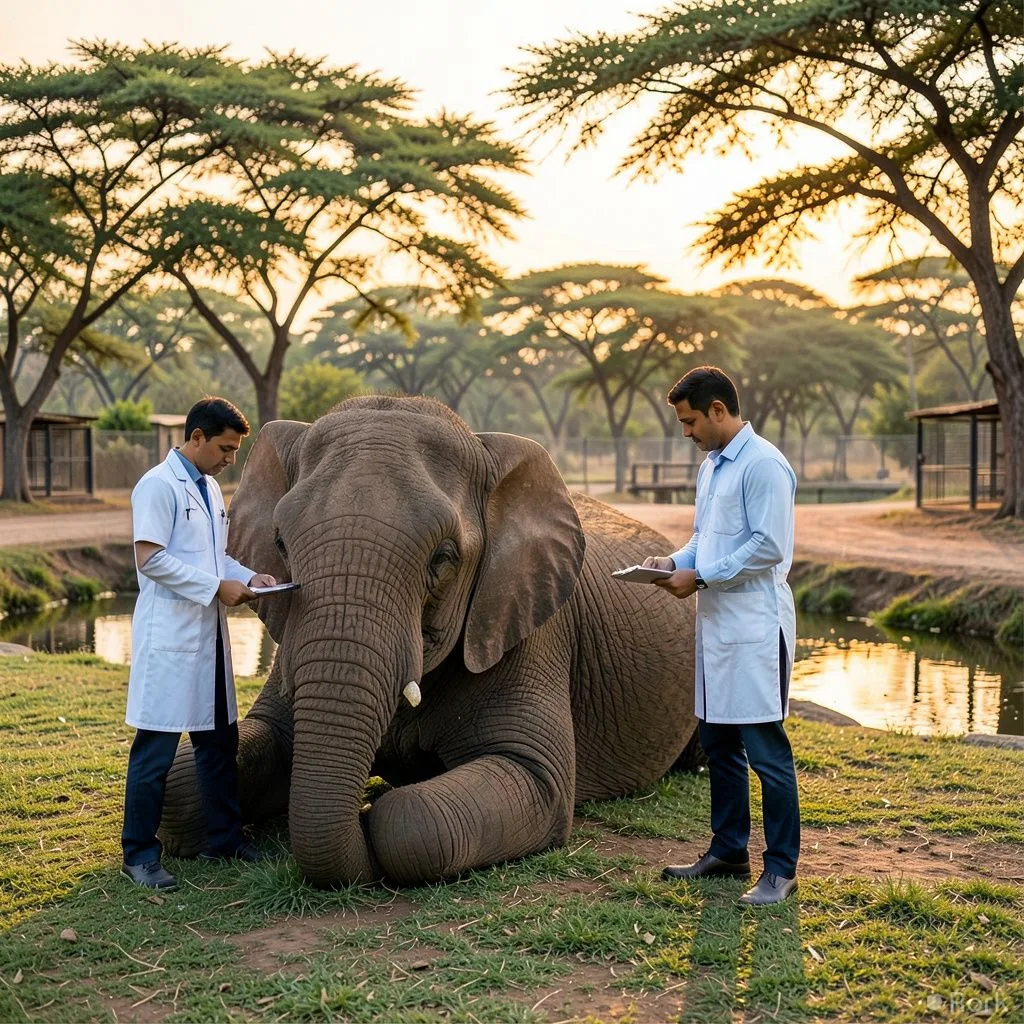
The early morning mist hung low over the expansive grasslands of Karachi Safari Park, where the low rumble of an elephant’s footfalls is a familiar soundtrack for visitors and staff alike. On Tuesday, that familiar rhythm was briefly paused as a team of veterinarians from abroad arrived alongside their Pakistani counterparts to attend to Madhubala, the park’s long‑time African elephant who has shown worrying signs of illness in recent days.
Madhubala, who has been a resident attraction at the park since 2005, was examined in a coordinated effort that combined local knowledge of her history with the specialist expertise of foreign wildlife veterinarians. The joint assessment involved a comprehensive physical examination, blood sampling, ultrasound imaging and other diagnostic procedures aimed at pinpointing the underlying cause of her reduced appetite, lethargy and intermittent limp.
The international contingent, led by a senior veterinarian from the United Kingdom’s Zoological Society, brought advanced diagnostic equipment that is not routinely available in Pakistan’s animal‑care facilities. Their presence allowed the team to run a full panel of blood work on site, checking for infections, metabolic disorders and potential exposure to toxins. Meanwhile, Pakistani veterinarians provided critical insight into Madhubala’s past medical records, dietary regimen and the specific conditions of the park’s enclosure.
Park officials said the collaborative approach underscores a growing commitment within Pakistan’s zoological institutions to elevate standards of animal welfare through knowledge exchange. By integrating global best practices with local experience, the Safari Park hopes to not only restore Madhubala’s health but also set a precedent for future care of large mammals across the country’s wildlife parks and rescue centers.
The outcome of the assessment will shape a targeted treatment plan, with the hope that the beloved elephant will soon regain her strength and continue to inspire visitors. For Karachi’s residents, Madhubala is more than a tourist draw; she is a symbol of the city’s natural heritage, and her wellbeing reflects broader efforts to improve veterinary services for wildlife throughout Pakistan.