
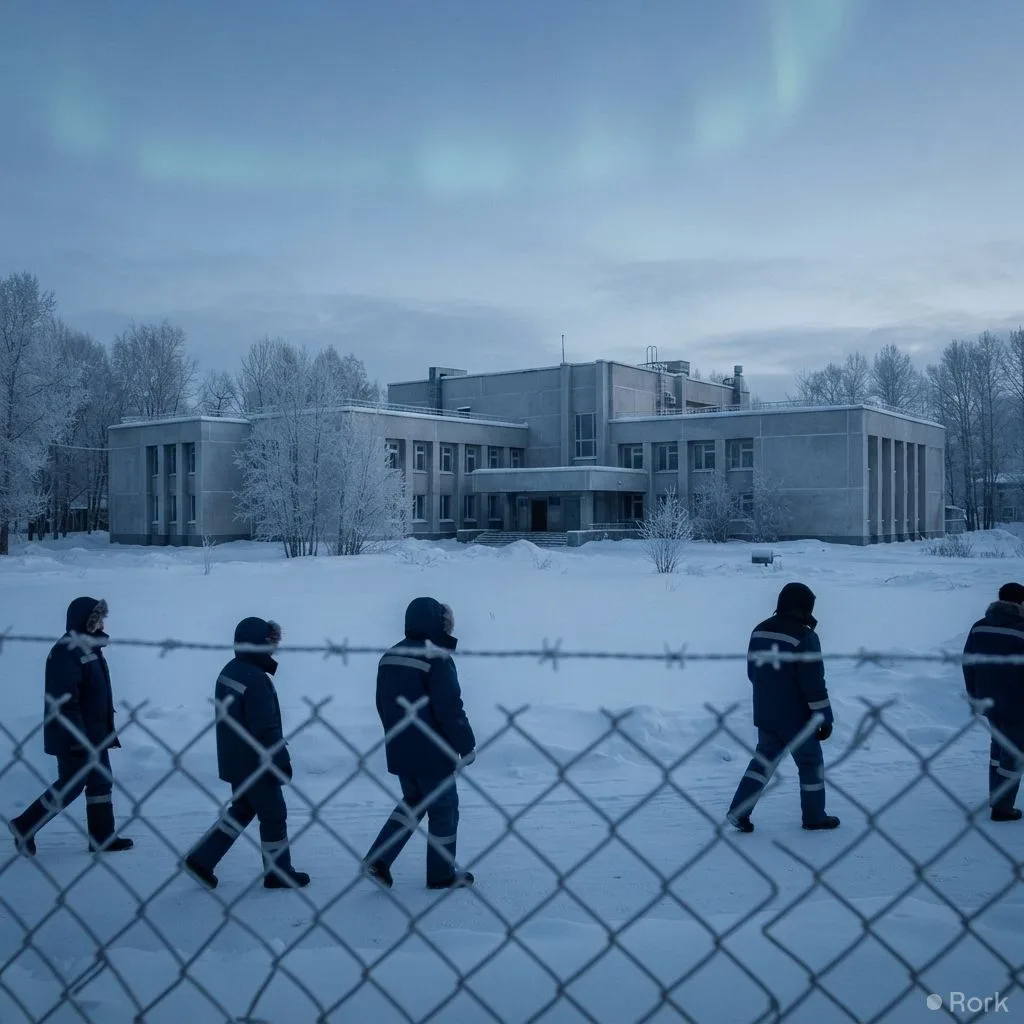
A 28‑year‑old scientist at the Irkutsk Anti‑Plague Research Institute, identified as Darya Shipilova, died on Wednesday after developing acute pneumonia, prompting Russian health authorities to place roughly 200 of the institute’s staff under medical observation amid fears of a Yersinia pestis (plague) exposure.
Preliminary investigations suggest the pathogen may have escaped from a high‑containment laboratory within the institute, leading officials from the regional health department to launch an extensive environmental sampling programme and a review of the facility’s biosafety procedures. Samples from the laboratory, personal protective equipment and air filters are being analysed at a federal reference centre to establish whether a breach occurred and, if so, how it happened.
To date, no additional infections have been confirmed among the observed personnel, and the institute has reported that all individuals under surveillance are asymptomatic and receiving prophylactic antibiotics as a precaution. The observation period, which will last for at least 21 days, aligns with the maximum incubation window for plague, and any emergence of symptoms will trigger immediate isolation and treatment.
The incident has reignited concerns about the safety of high‑security pathogen research in remote locations, where rapid medical response and specialized containment resources can be limited. Siberia’s harsh climate and logistical challenges often impede swift deployment of expert teams, raising questions about the adequacy of emergency preparedness in similar facilities worldwide.
For Pakistan, the episode underscores the importance of stringent biosafety standards in domestic laboratories that handle dangerous microorganisms, including plague‑causing bacteria that are endemic in parts of Balochistan and Khyber Pakhtunkhwa. The National Institute of Health and the Pakistan Council of Scientific and Industrial Research have reiterated their commitment to periodic audits of high‑containment labs and to enhancing training for staff handling zoonotic agents.
Health officials in Islamabad have also advised Pakistani nationals travelling to Russia to stay informed about local health advisories and to seek medical attention promptly if they develop fever, chills, or respiratory symptoms after returning. The episode may prompt the Ministry of Foreign Affairs to review travel guidelines for scientists participating in international research collaborations, ensuring that risk‑assessment protocols are uniformly applied.
While the situation in Irkutsk remains under close monitoring, the swift containment measures and the absence of secondary cases so far are being viewed as a positive sign that the Russian response mechanisms are functioning effectively. Nonetheless, experts warn that any future lapses could have far‑reaching consequences, given the high transmissibility and mortality associated with plague if not treated promptly.