
What happened?
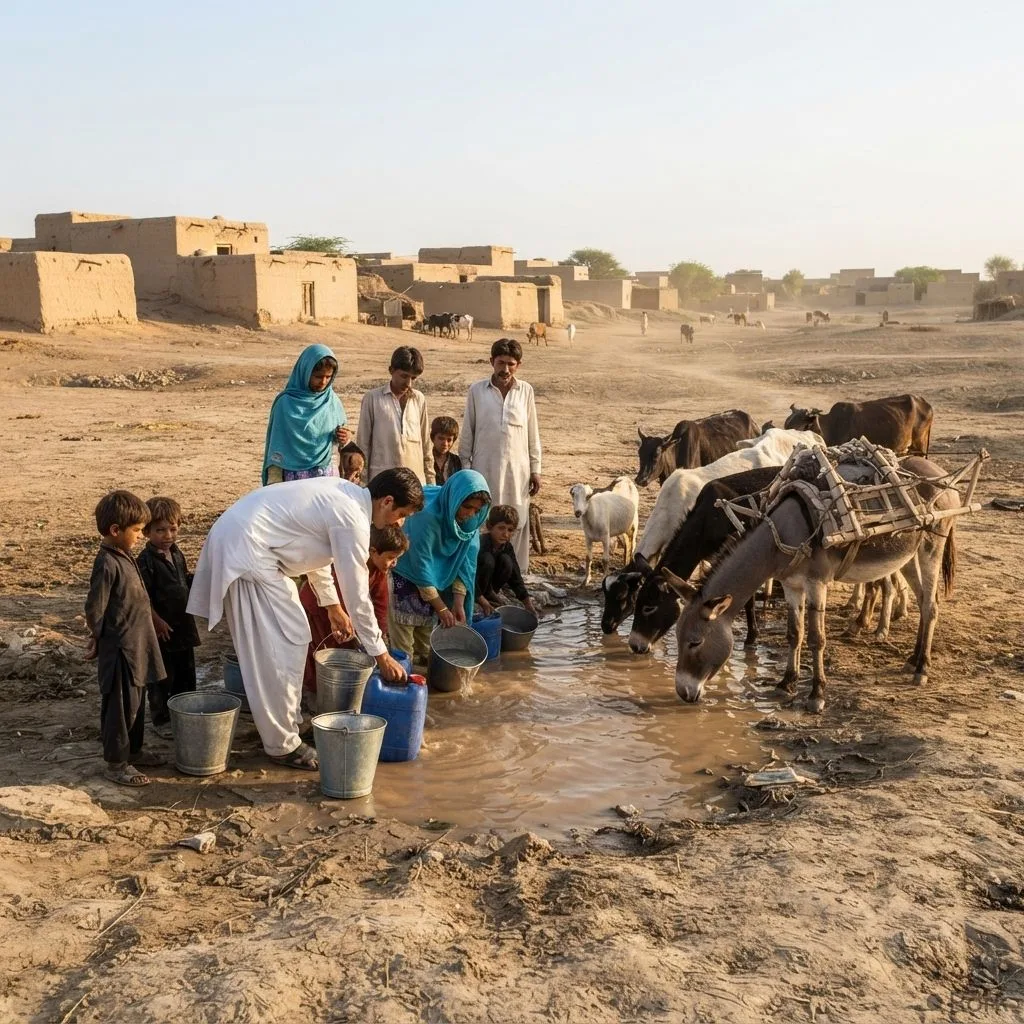
In the village of Jaro, situated in Tehsil Koh‑e‑Suleman of Dera Ghazi Khan, residents have been forced to draw drinking water from a single, polluted trough that is also used by livestock. With the municipal supply cut off and bore‑wells drying up, families have no alternative but to share the contaminated source with their animals.
Why does it matter?
The water carries pathogens that can trigger diarrheal diseases, hepatitis and other water‑borne illnesses, putting children, the elderly and pregnant women at heightened risk. In a district already grappling with high rates of chronic kidney disease and limited healthcare infrastructure, an outbreak could overwhelm local clinics and exacerbate an existing public‑health crisis.
What is being done and what comes next?
Local NGOs have begun distributing emergency water purification tablets and portable filters, while the district administration has pledged to install a temporary water tank, but the equipment has not yet arrived. Community leaders are pressing provincial authorities for a permanent pipeline or deep‑well project, and a joint task force of the Punjab Health Department and the Water and Sanitation Agency is scheduled to conduct a field assessment within the next two weeks.