
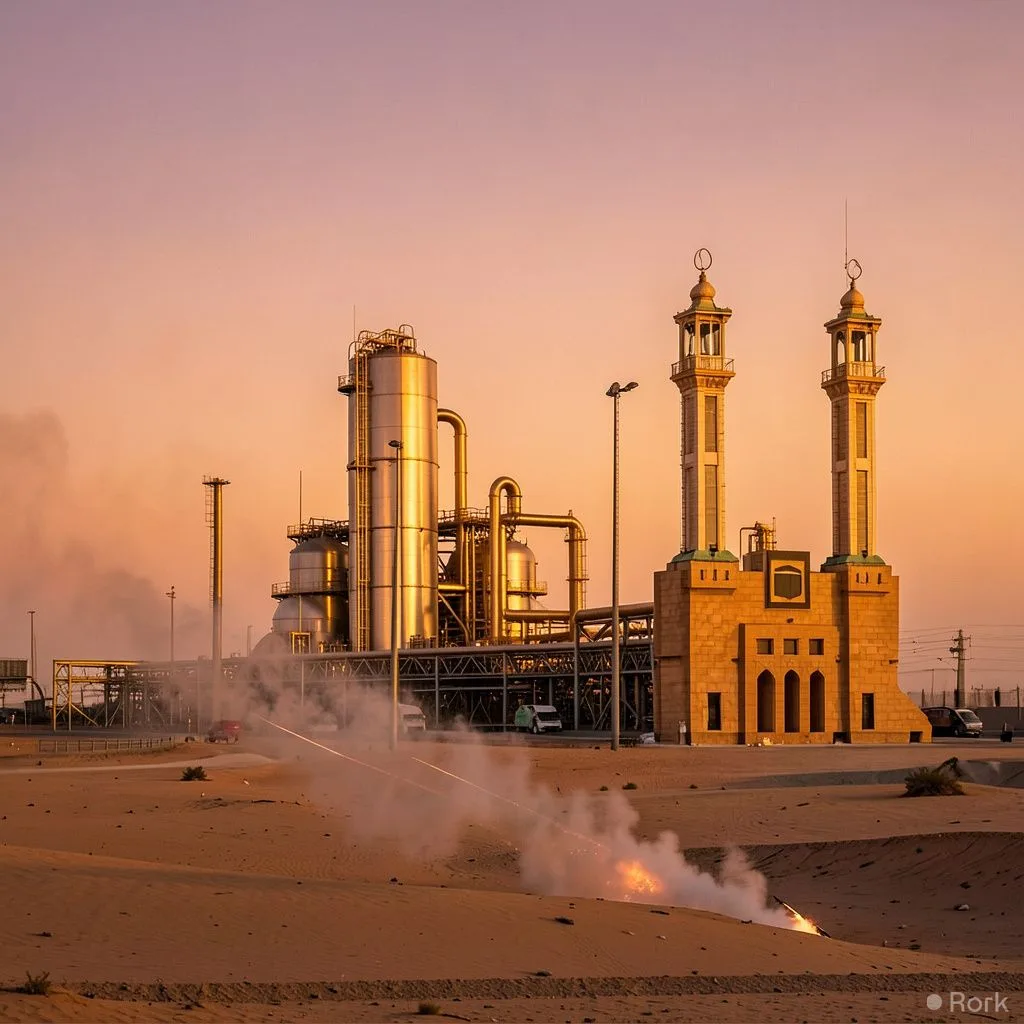
A Houthi‑launched ballistic missile slammed into Saudi Aramco’s central operations complex on Thursday, leaving the sprawling facility visibly scarred.
The missile struck the heart of the kingdom’s flagship oil company, damaging the control hub that coordinates production across the nation’s upstream assets. Saudi officials confirmed that the impact created a sizable crater and sparked an immediate safety shutdown of the affected sector while emergency teams assessed structural damage. In a parallel development, Houthi media claimed responsibility for a strike on a Saudi‑backed oil depot in Yemen, prompting the Saudi‑led coalition to launch retaliatory air raids on Houthi positions earlier this week.
These coordinated assaults mark a sharp escalation in the cross‑border conflict that has increasingly targeted energy infrastructure. Over the past months, the Houthis have stepped up the use of missiles and unmanned aerial vehicles against Saudi facilities, aiming to undermine the kingdom’s role as a global oil supplier. Analysts warn that repeated hits on critical sites could constrain output, tighten global oil supplies and push prices higher, reverberating through markets already jittery from geopolitical tensions.
For Pakistan, the reverberations are immediate and tangible. Saudi Arabia supplies roughly 12 % of Pakistan’s imported crude, and any disruption to Saudi output can translate into higher fuel costs for Pakistani consumers and transport operators. Moreover, heightened instability in the Gulf raises security concerns for Pakistani expatriates working in the region’s energy sector and could influence Islamabad’s diplomatic calculus in balancing ties with Riyadh and Tehran.
The Saudi government has pledged to reinforce security around its oil hubs, deploying additional air‑defence systems and tightening surveillance of the Red Sea corridor. While the full impact on Aramco’s production capacity remains to be quantified, the incident underscores the vulnerability of even the most fortified energy assets to asymmetric warfare, and it places regional stability—and by extension, South Asian energy markets—under renewed strain.