
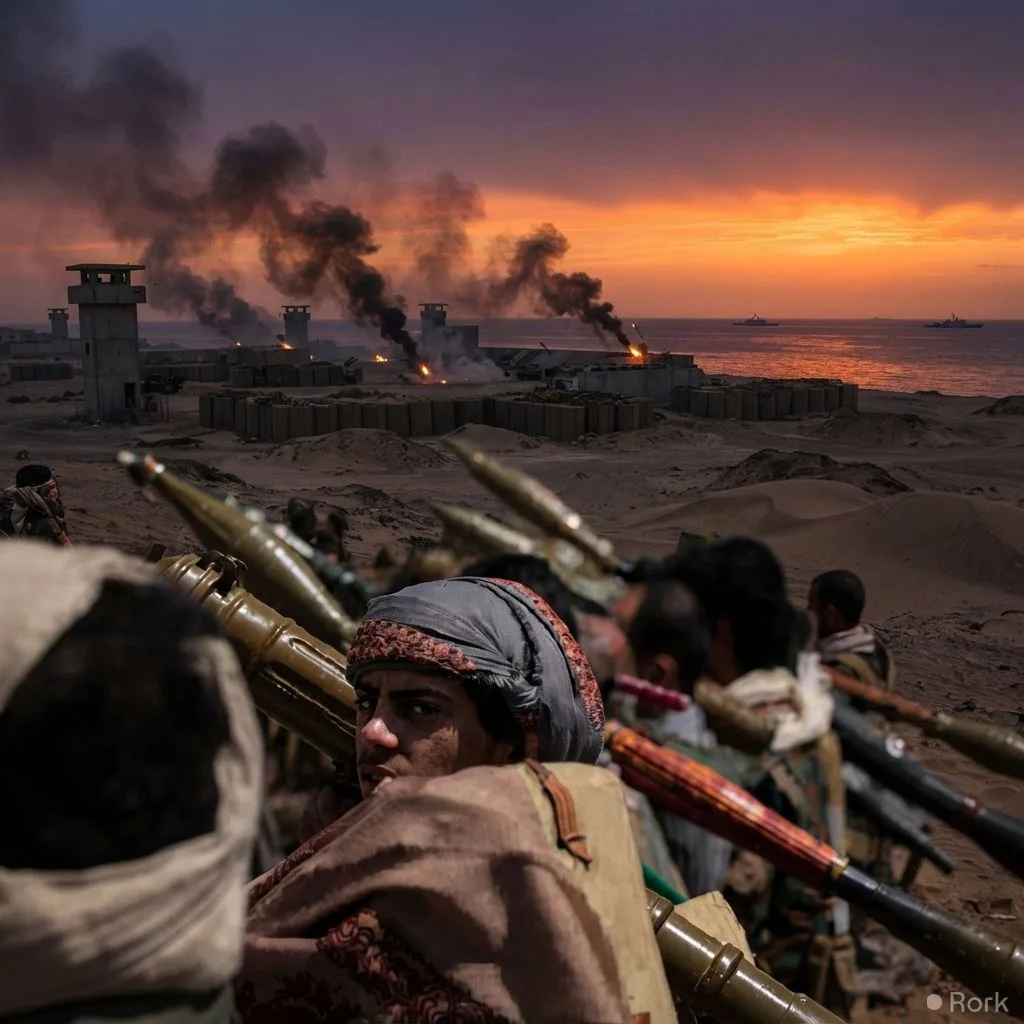
The war in Yemen, already a quagmire of shifting front lines and civilian suffering, has entered a new and volatile phase. After a week of relentless Houthi attacks along the Red Sea coastline, the conflict’s focus has sharpened on a strategic Saudi installation that guards one of the world’s busiest maritime corridors.
Late on Thursday night, Houthi militants launched a missile barrage that struck the Saudi Arabian Red Sea military base near the port of Jizan. The rockets hit the perimeter defenses and fuel storage areas, causing significant structural damage and igniting a series of secondary fires. Saudi officials confirmed that the base, which supports anti‑piracy patrols and secures commercial shipping routes, sustained “critical infrastructure” hits, though they stopped short of detailing casualties.
In retaliation, Yemen’s internationally recognised government deployed fighter jets to carry out air strikes against Houthi positions in the surrounding highlands. The aerial offensive targeted weapons depots and command centres, according to statements from the Ministry of Defense. Both sides exchanged accusations of violating cease‑fire provisions, and the intensity of the strikes suggested a rapid widening of the battlefield beyond the previously contested coastal strip.
The escalation has amplified an already dire humanitarian picture. United Nations agencies report that more than 76,000 Yemenis have been displaced since early July, many of them seeking refuge in overcrowded camps along the Red Sea coast. The latest round of fighting threatens to cut off aid convoys that travel by sea, compounding shortages of food, medicine and clean water for an already vulnerable population.
For Pakistan, the surge in hostilities carries direct implications. The Red Sea is a crucial artery for Pakistani oil imports and for the bulk of the country’s container traffic destined for the Middle East and Europe. Any prolonged disruption could pressure freight rates, raise the cost of energy imports, and strain the logistics chains that support Pakistan’s burgeoning trade links with Gulf nations. Moreover, the sizable Yemeni‑Pakistani diaspora in the Gulf states watches the developments closely, fearing that an expanded conflict could trigger broader regional security measures affecting Pakistani expatriates and their families.
Analysts warn that if the Red Sea corridor becomes a flashpoint for wider regional confrontation, diplomatic initiatives will be needed urgently to prevent a spiral that could entangle neighboring powers and jeopardise international shipping lanes that underpin global trade.