
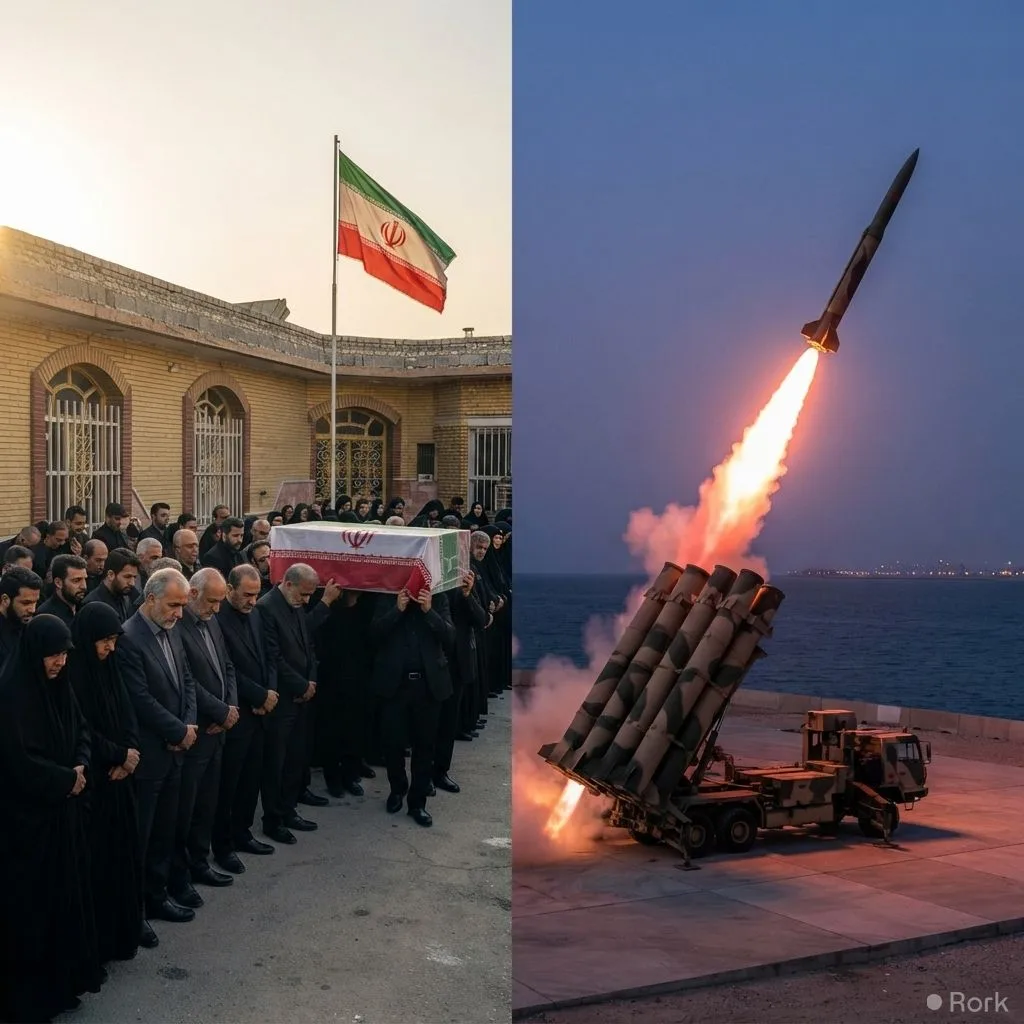
Five people have died and close to 70 were injured after a U.S. missile strike hit a wedding ceremony in Iran.
Iranian authorities conducted funeral rites for the victims on Saturday, including a 22‑year‑old woman who succumbed to her injuries in a hospital. The funerals were held under the national flag, underscoring the state’s mourning and resolve. Shortly after the ceremonies, Iranian fighter jets lifted off, and Tehran launched a missile barrage targeting sites in Kuwait, a move presented as retaliation for the attack that struck the wedding.
The U.S. missile, reportedly launched from a warship in the Persian Gulf, struck the venue in the city of Kermanshah, causing extensive civilian casualties. Iranian officials confirmed that the strike killed five individuals and left almost 70 others wounded, many of them women and children. Washington’s vice president announced that a senior interagency team is investigating the incident, though details of the operation remain classified.
Kuwait’s foreign ministry condemned the Iranian retaliation, describing the missile launches as a violation of its sovereignty and warning of a possible escalation. In response, Kuwait activated its air defence systems and called for an emergency meeting of Gulf Cooperation Council (GCC) members to coordinate a collective response.
The incident arrives at a volatile juncture in regional geopolitics, where U.S.-Iran tensions have been simmering over nuclear negotiations and proxy conflicts across the Middle East. For Pakistan, the heightened hostility raises concerns about the safety of its sizeable expatriate community working in Gulf states, as well as the potential impact on trade routes that pass through the Strait of Hormuz. Pakistani diplomatic circles are likely to monitor the situation closely, urging restraint from all parties to prevent further destabilisation that could affect the broader South Asian economy.