
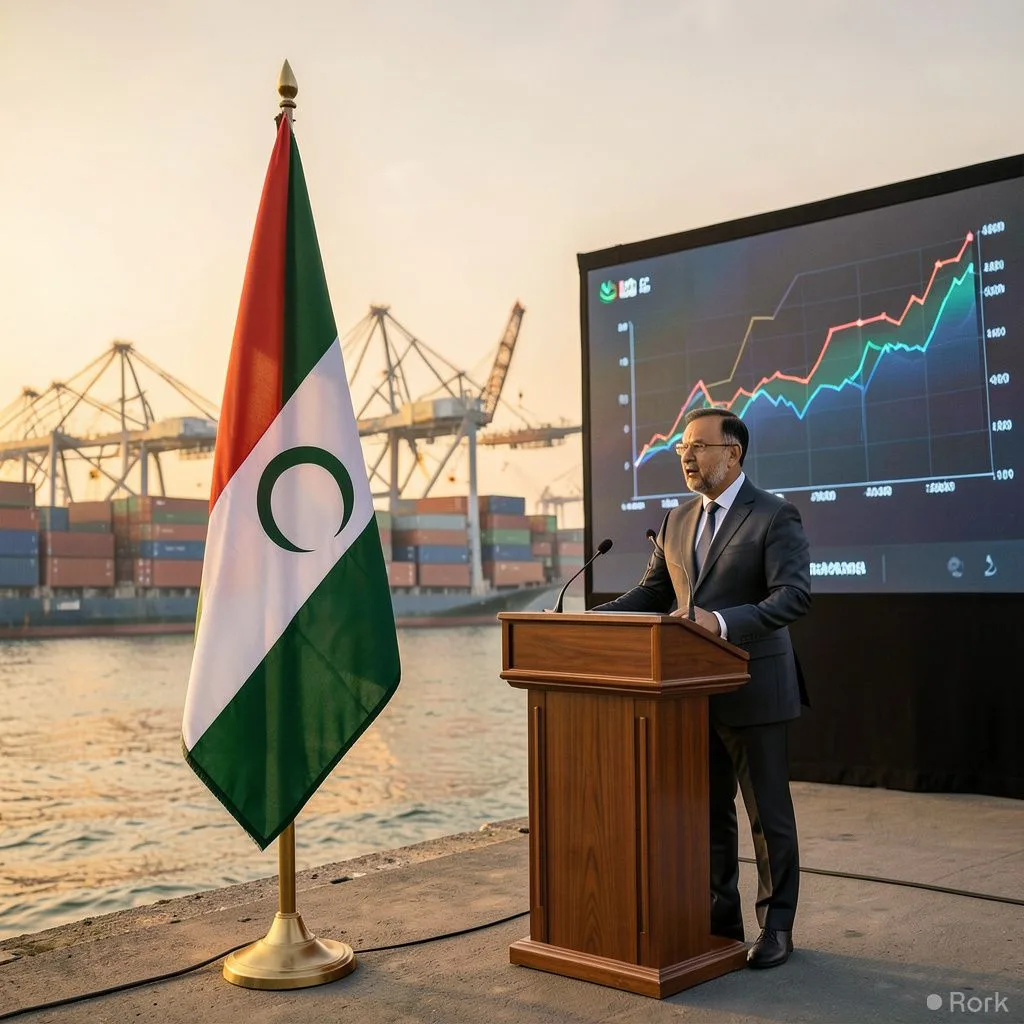
Pakistan aims to lift annual exports to $100 billion by 2035.
Federal Planning Minister Ahsan Iqbal unveiled the ambitious target during his address at the 39th International Conference of the Pakistan Society of Development Economists. He framed the goal as a cornerstone of a broader strategy to curb the nation’s reliance on external borrowing and to fortify economic resilience amid persistent balance‑of‑payments pressures.
At present, Pakistan’s export earnings hover around $45 billion a year, a figure that falls short of covering the widening trade deficit and the mounting external debt that has forced successive governments to seek IMF programmes and sovereign bonds. Raising export receipts to the $100 billion mark would not only narrow the current account gap but also create a fiscal buffer that could lessen the frequency of loan‑dependent financing cycles.
The government’s roadmap centres on a package of incentives for exporters, upgrades to port and inland logistics infrastructure, and the establishment of export‑oriented special economic zones. Particular emphasis will be placed on high‑value manufacturing, agro‑based products, and the burgeoning services sector, including information technology and financial services, which are seen as engines of sustainable growth.
To diversify markets, officials are courting deeper trade links with neighboring economies, the Gulf Cooperation Council, and emerging Asian hubs. By tapping into regional supply chains and leveraging preferential trade agreements, Pakistan hopes to open new channels for its textiles, rice, leather, and software exports, thereby widening the base of firms that can benefit from the push.
While the target is bold, analysts warn that achieving it will require coordinated action across ministries, the private sector, and trade bodies. Streamlined customs procedures, workforce upskilling, and consistent policy signals will be essential to translate the announced incentives into tangible export growth. If the plan stays on course, the $100 billion milestone could mark a turning point for Pakistan’s economy, reducing debt vulnerability and generating jobs across the country’s industrial heartlands.