
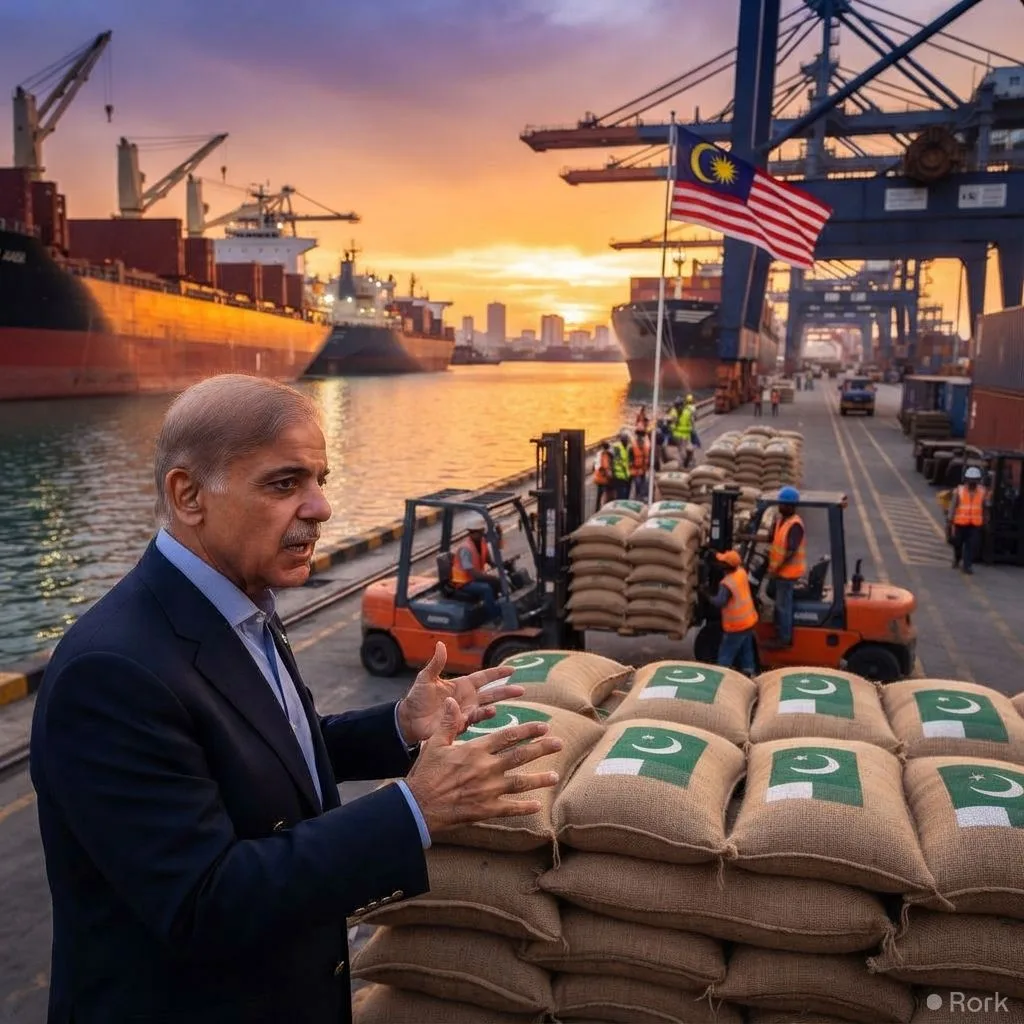
Pakistan will ship 70,000 metric tonnes of rice to Malaysia by the end of December 2026.
Prime Minister Shehbaz Sharif announced the additional export quota during a press briefing, emphasizing that the deal will run from October through December this year. The shipment adds to an already robust trade flow of Pakistani rice to Southeast Asia and is expected to open new avenues for the country’s agricultural producers, especially small‑holder farmers who rely on rice exports for a sizable share of their income.
The cargo will be handled by Pakistan’s primary seaports, chiefly Karachi and Port Qasim, where the grain is packed in bulk bags, loaded onto container vessels, and dispatched to Malaysian harbours such as Port Klang. Logistics firms involved have highlighted the efficiency of the existing supply chain, noting that the infrastructure upgrades made in recent years—like deeper berths and modernised cargo handling equipment—will facilitate a smoother transit for the bulk load.
For the domestic rice sector, the extra 70,000 tonnes translates into a potential revenue boost of several hundred million rupees, according to market analysts. The infusion of earnings could encourage farmers in Punjab and Sindh to invest in higher‑yield varieties and better post‑harvest practices, thereby strengthening Pakistan’s position in the global Basmati and non‑Basmati markets.
Malaysia, a growing consumer of long‑grain rice, stands to gain from a diversified supply source, which may help stabilise local prices and expand consumer choice. The agreement also underscores the deepening economic ties between Islamabad and Kuala Lumpur, complementing recent collaborations in textiles, pharmaceuticals, and information technology.
Industry observers caution that the success of the shipment will depend on prevailing international rice prices and the ability to meet stringent phytosanitary standards. Nevertheless, the consensus remains optimistic: the deal not only reinforces Pakistan’s export credentials but also provides a timely lift to an agriculture sector that remains a cornerstone of the nation’s economy.