
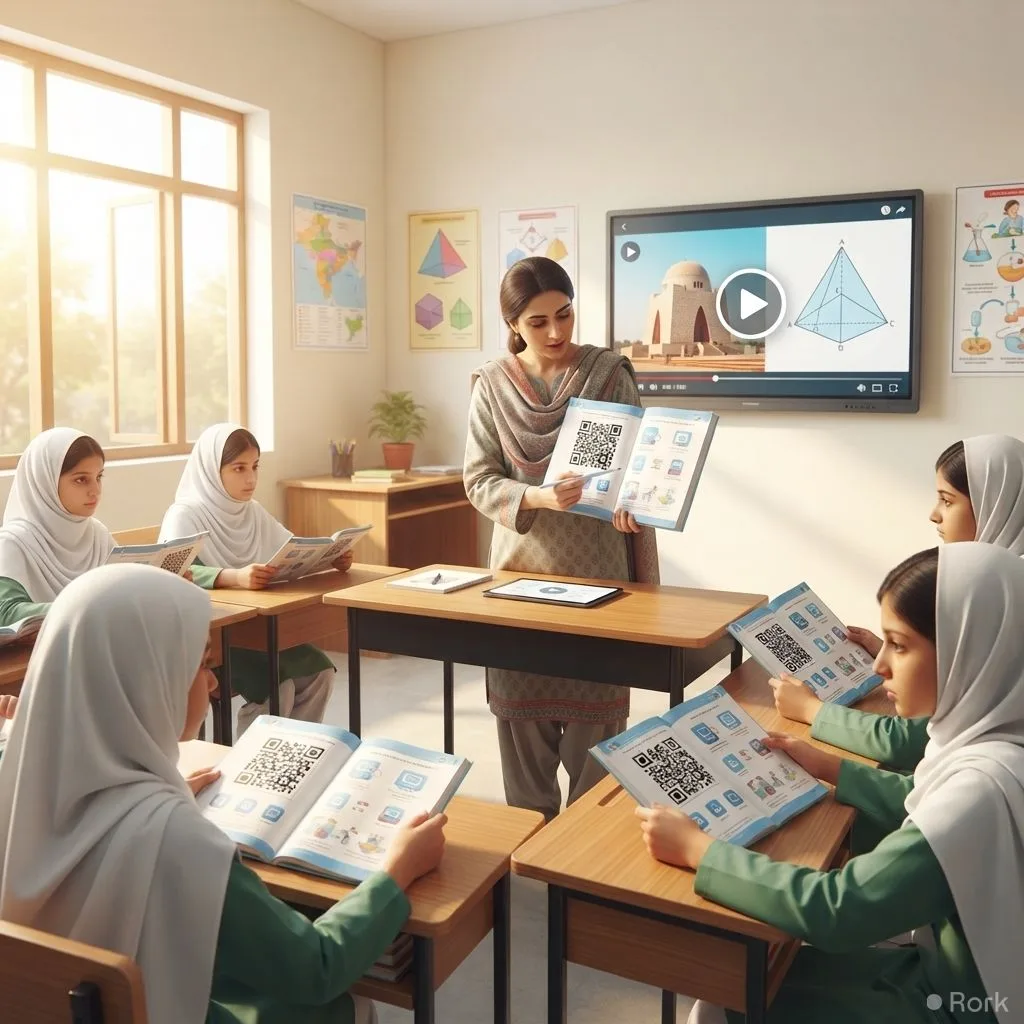
Punjab’s education department has approved a fresh set of textbooks for students from Montessori up to Grade 5, embedding QR codes that link directly to instructional videos. The QR‑enabled books will be distributed to government schools across the province at the start of the new academic session in April 2027, with plans to extend the rollout to private institutions thereafter.
The new curriculum, devised by the Punjab Curriculum Development Board, merges traditional print material with digital content to create a blended learning environment. Teachers and pupils can scan the QR codes with a smartphone or tablet to access short video lessons that reinforce the concepts presented in the textbook, offering visual explanations for topics ranging from basic numeracy to early science experiments.
Education officials say the initiative is aimed at raising engagement levels and improving learning outcomes, particularly in rural and under‑resourced areas where access to quality teaching aids has historically been limited. By providing instant multimedia support, the province hopes to narrow the performance gap between urban and peripheral schools and to bring primary education in line with the broader digital‑learning push championed by the provincial government in recent years.
The rollout will initially focus on public schools, which serve the majority of Punjab’s primary‑level learners. The education department has earmarked training sessions for teachers to become familiar with the QR technology and the associated video resources, ensuring that educators can integrate the digital components smoothly into their lesson plans.
While the exact cost of producing the QR‑linked books has not been disclosed, the provincial budget for education this year includes a dedicated line item for “digital learning resources,” reflecting the administration’s commitment to modernising the curriculum. Critics, however, caution that the success of the programme will depend on reliable internet connectivity and the availability of smart devices in classrooms, challenges that have persisted in many parts of the province.
If the pilot proves effective, Punjab could set a precedent for other provinces seeking to combine low‑cost printed materials with scalable digital content, potentially reshaping primary education across Pakistan. The first batch of the new textbooks is slated to arrive in schools by March 2027, giving teachers a month to familiarize themselves with the QR‑linked lessons before classes resume in April.