
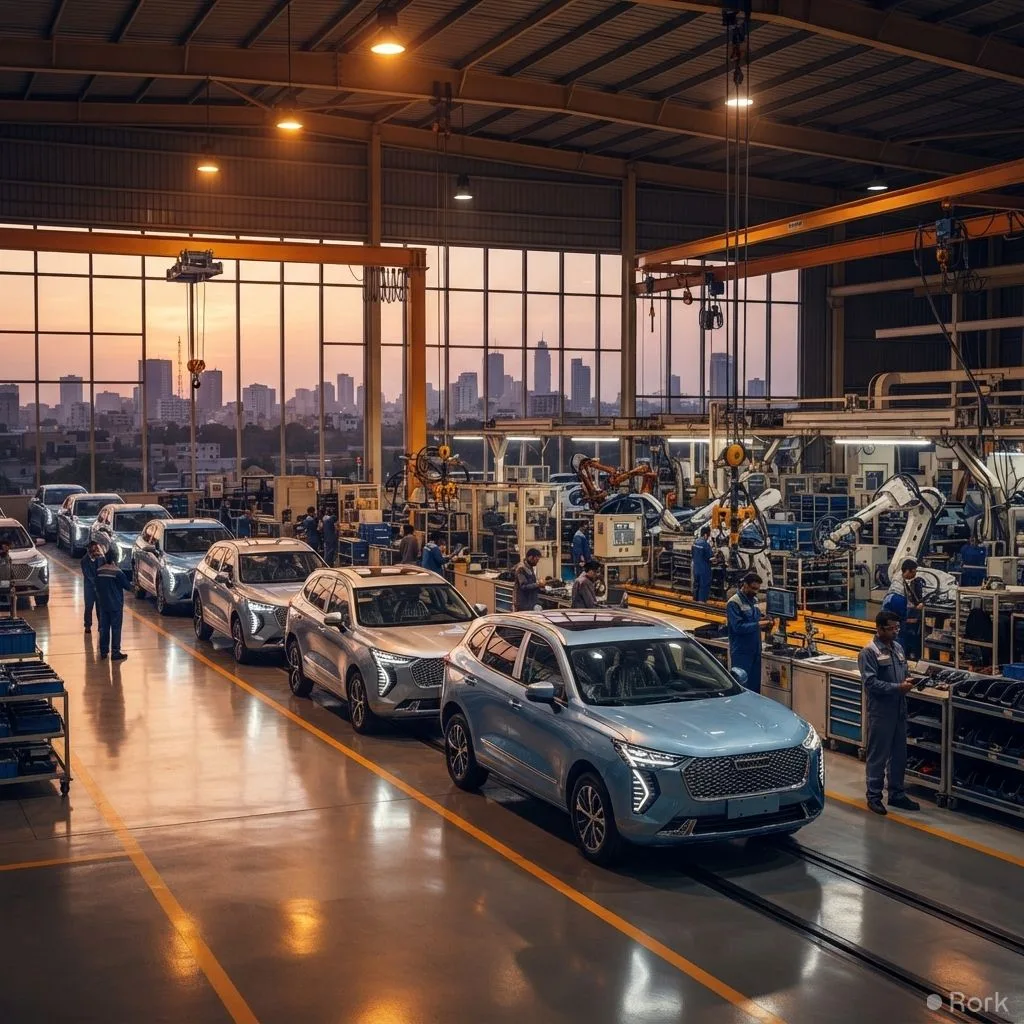
Sazgar Engineering Works announced a net profit of Rs 8.7 billion for the quarter ended June 2026, leaving both Toyota Pakistan and Honda Atlas Motors behind in quarterly earnings for the first time since the two multinationals entered the market.
Background
Founded in 1992 as a modest assembler of utility vehicles, Sazgar has gradually shifted its strategy toward full‑scale manufacturing of locally designed cars and light commercial trucks. The company’s recent focus on the “Rivian‑inspired” electric‑ready hatchback and an upgraded 4‑wheel‑drive pickup has paid off, with sales volumes climbing sharply in the first half of 2026. Compared with the same quarter a year earlier, revenue rose by more than 150 %, a surge that the firm attributes to higher domestic demand and a tightened supply chain that favoured locally produced units over imported models.
Toyota and Honda have traditionally dominated Pakistan’s passenger‑car segment, accounting for roughly 70 % of total sales. However, rising import duties on completely built‑up (CBU) units and the government’s “Make in Pakistan” incentives have encouraged buyers to consider locally assembled alternatives. Sazgar’s ability to keep production costs low—through improved lean‑manufacturing practices at its Lahore and Gujranwala plants—allowed the company to offer competitive pricing without compromising margins, a factor that helped it eclipse the foreign brands in quarterly profit.
What it means
For investors, the Rs 8.7 billion profit signals that home‑grown manufacturers can generate returns comparable to, or even exceeding, those of long‑standing multinational players. Sazgar’s shares rallied sharply after the results were released, and analysts are revising earnings forecasts for the broader Pakistani auto sector upward, citing the firm as a bellwether for the viability of locally sourced components and labour.
Consumers stand to benefit from the intensified competition. With Sazgar’s price‑point advantage, dealerships are likely to offer more aggressive discount structures on both passenger cars and commercial vehicles. This could translate into lower monthly instalments for middle‑class families and reduced operating costs for small‑business owners who rely on affordable trucks for logistics.
The result also bolsters the government’s industrial policy agenda. A stronger performance by a domestic automaker validates the recent tax breaks on locally assembled kits and the push for “green” vehicle production. It may prompt regulators to extend or deepen incentives, potentially accelerating the rollout of electric‑ready models and fostering a more self‑sufficient automotive supply chain in Pakistan.
What happens next
Looking ahead, Sazgar has hinted at expanding its product line with a compact SUV tailored for the Pakistani market, slated for launch in early 2027. The company is also negotiating with local parts suppliers to increase the proportion of indigenous components from the current 55 % to over 70 % within the next two years, a move that could further improve profitability and reduce exposure to currency fluctuations.
Nevertheless, challenges remain. The Pakistani rupee has experienced volatility, which could affect the cost of imported raw materials such as steel and electronics. Additionally, the competitive response from Toyota and Honda—who may accelerate their own localisation programmes—could tighten market margins. Stakeholders will be watching closely whether Sazgar can sustain its growth trajectory amid these headwinds and whether its success will inspire a broader wave of domestic innovation in the country’s automotive industry.