
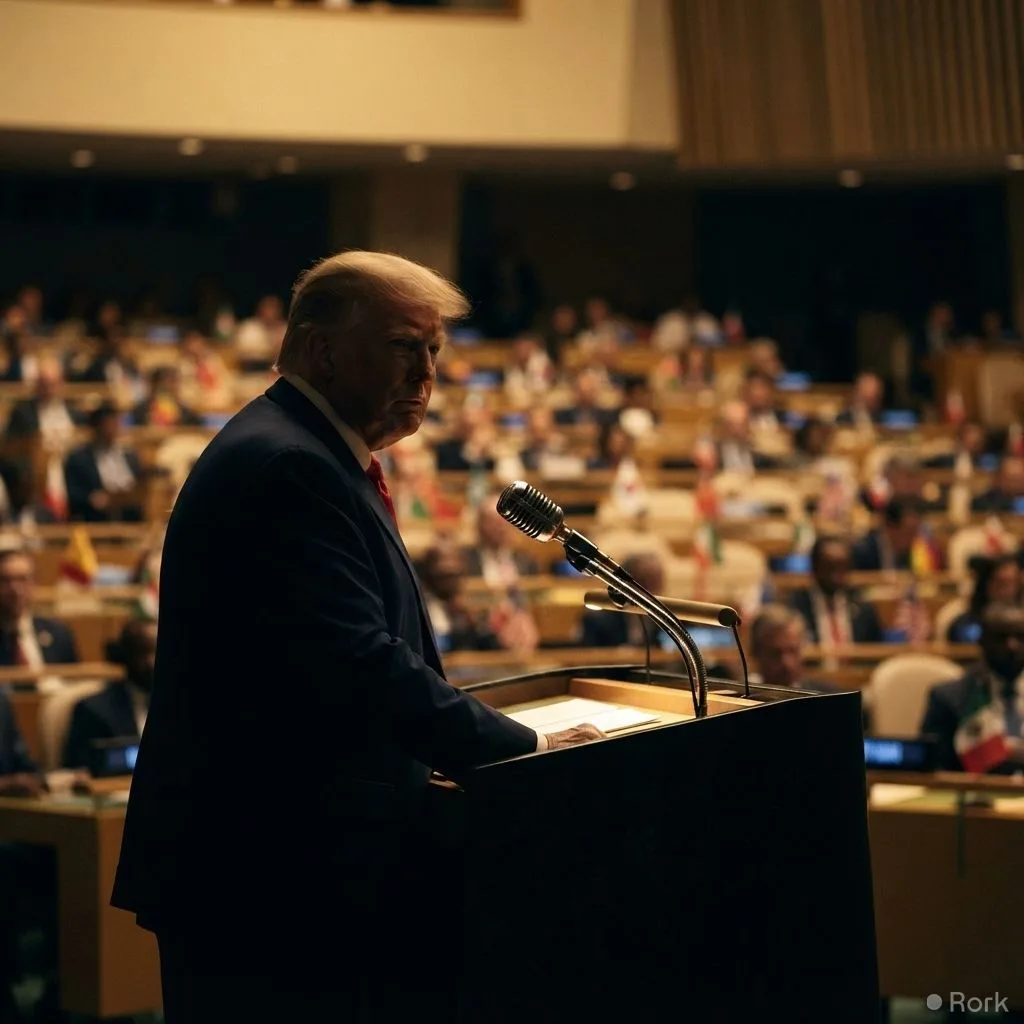
Former President Donald Trump warned at the United Nations that he could “annihilate” Iran, yet suggested a settlement might still be achievable.
Speaking to the UN General Assembly, Trump said he faced “a big decision” regarding Tehran and combined a stark threat of military action with an unexpected note that diplomatic talks could still produce a deal. The remarks came amid heightened tensions over Iran’s nuclear program and its recent provocations in the Persian Gulf, marking the most forceful rhetoric from the former U.S. leader since he left office.
U.S. envoy Steve Witkoff later disclosed that American officials have been engaged in “lengthy” behind‑the‑scenes discussions with Iranian counterparts through a network of regional mediators. While details remain classified, Witkoff indicated that the talks aim to de‑escalate the standoff and explore a framework that could address both nuclear safeguards and the security of shipping lanes.
An Iranian spokesperson responded by saying the strategic Strait of Hormuz could be reopened within days if U.S. pressure is eased, underscoring the waterway’s pivotal role in the global oil market. Hormuz handles a significant share of the world’s petroleum flow, and any disruption reverberates through energy‑dependent economies, including Pakistan’s, which imports a large portion of its crude through the passage.
For Pakistan, the prospect of renewed U.S.–Iran negotiations carries both opportunities and risks. A stable Hormuz corridor would help contain fuel price spikes that strain the country’s already fragile economy, while a diplomatic breakthrough could reduce the likelihood of military confrontations that threaten the safety of Pakistani merchant vessels operating in the Arabian Sea. Consequently, Islamabad is watching the talks closely, balancing its historic ties with Tehran against its strategic partnership with Washington, and preparing contingency plans to safeguard its energy imports and maritime security.