
Key points:
- PPP chairman Bilawal Bhutto Zardari warned that Islamabad could be transferred to the people of Tharparkar if the federal capital does not meet its development commitments.
- The statement was made on 5 October 2026 during the inauguration of Phase III of the Thar Coal project.
- Bilawal used Thar’s rapid infrastructure progress as a benchmark, suggesting the desert district can deliver results faster than the capital.
- The comments add pressure on the Islamabad administration to accelerate stalled projects ahead of upcoming provincial and national elections.
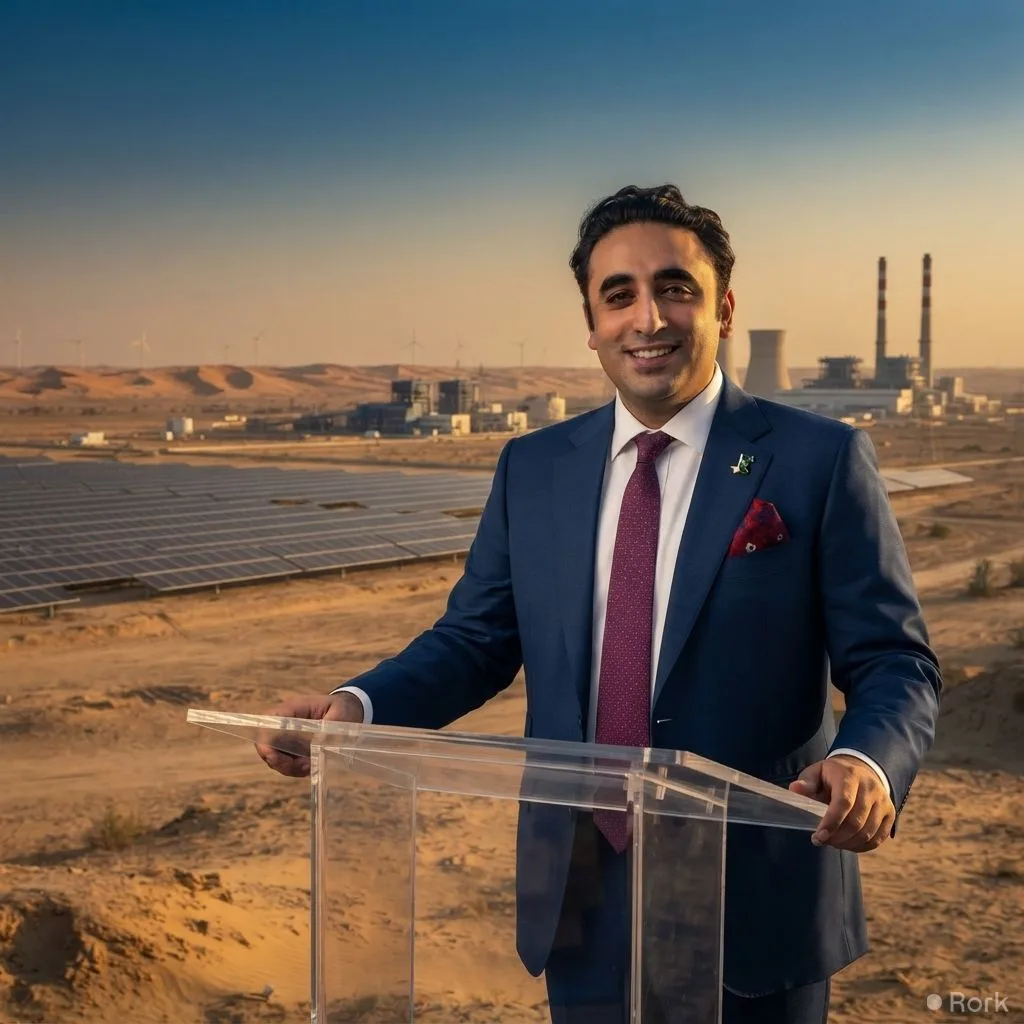
Bilawal Bhutto Zardari, head of the Pakistan Peoples Party, addressed a gathering of officials, investors and local leaders at the launch of the third phase of the Thar Coal development. While lauding the pace of work in the arid district—where new power plants, road networks and water supply schemes are taking shape—he warned that the federal capital must match that momentum. “If Islamabad cannot run itself efficiently, then perhaps the people of Tharparkar should be given the reins,” he said, implying that the desert region could serve as a model for swift governance.
The remarks come at a time when Islamabad’s long‑standing infrastructure bottlenecks—such as delayed metro extensions, chronic traffic congestion and unfinished housing projects—have drawn criticism from opposition parties and civil society alike. Bilawal’s challenge to the capital’s administration is intended to highlight the contrast between a city that has struggled to fulfill promises and a region where the PPP‑led provincial government claims to have turned a barren landscape into a hub of renewable energy and job creation.
Political analysts see the statement as part of the PPP’s broader strategy to capitalize on development narratives ahead of the 2027 general elections. By spotlighting Thar’s progress, the party hopes to reinforce its image as a catalyst for tangible change, especially in under‑served areas, while urging the federal government to accelerate its own agenda. If the capital’s projects remain stalled, the criticism could translate into electoral setbacks for the ruling coalition, which is already navigating economic headwinds and public dissatisfaction.
Local stakeholders in Tharparkar welcomed the national attention, noting that the Phase III inauguration marks the completion of additional 1,200 MW of coal‑based power generation and the expansion of the region’s road and water infrastructure. They argue that the success story underscores what can be achieved with focused political will and investment, reinforcing Bilawal’s call for a similar approach in Islamabad. The debate now centers on whether the federal authorities will respond with an accelerated development roadmap or face increasing political pressure from both opposition forces and a public eager for visible progress.