
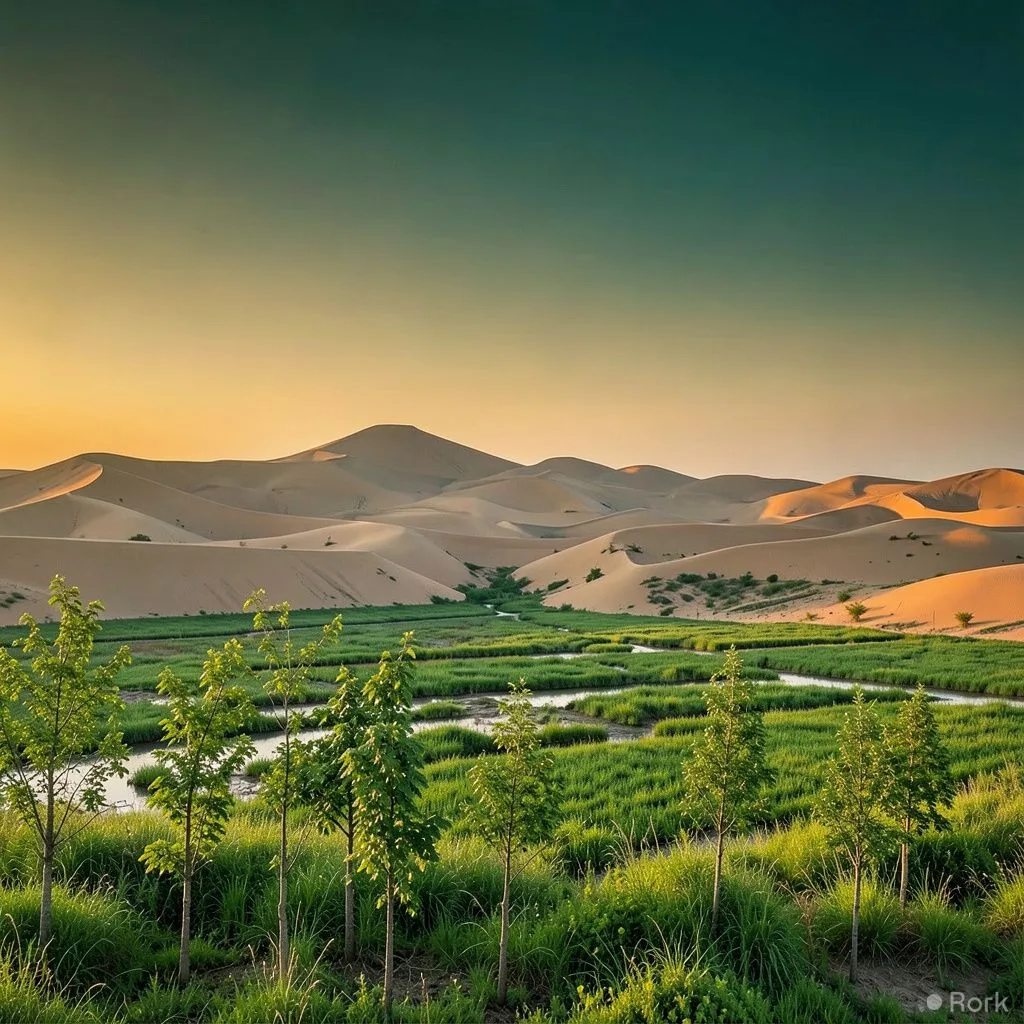
Eighty‑five percent of the Mu Us Sandy Land in northern China is now classified as “controlled” after seven decades of anti‑desertification work.
The Chinese Ministry of Ecology and Environment announced that the once‑raging dunes of the Mu Us region have been largely tamed, with vegetation now covering the majority of the area. Over the past 70 years, a series of coordinated interventions—massive tree‑planting drives, the introduction of sand‑binding grasses, and the construction of water‑conservation infrastructure—have reshaped the landscape from barren sand to patches of green and cultivated fields.
The greening effort began in the 1950s, when the government launched the “Great Green Wall” initiative to halt the spread of desert towards the fertile Loess Plateau. Subsequent phases focused on selecting drought‑tolerant species, such as Haloxylon ammodendron and native grasses, that could stabilize loose sand while requiring minimal irrigation. Meanwhile, a network of check‑dams, underground drip systems, and reclaimed water channels has improved soil moisture retention, allowing farms and pastures to thrive where only dust once blew.
For Pakistan, a country that grapples with desert encroachment in the Thar and Kharan regions, China’s long‑term model offers a practical blueprint. Experts suggest that adapting similar multi‑pronged strategies—combining native vegetation, efficient water use, and sustained governmental funding—could help mitigate land loss, protect livelihoods of pastoral communities, and contribute to the nation’s climate‑resilience goals. The Mu Us success story underscores that, with persistent effort and coordinated policy, even the most stubborn arid zones can be reclaimed.