
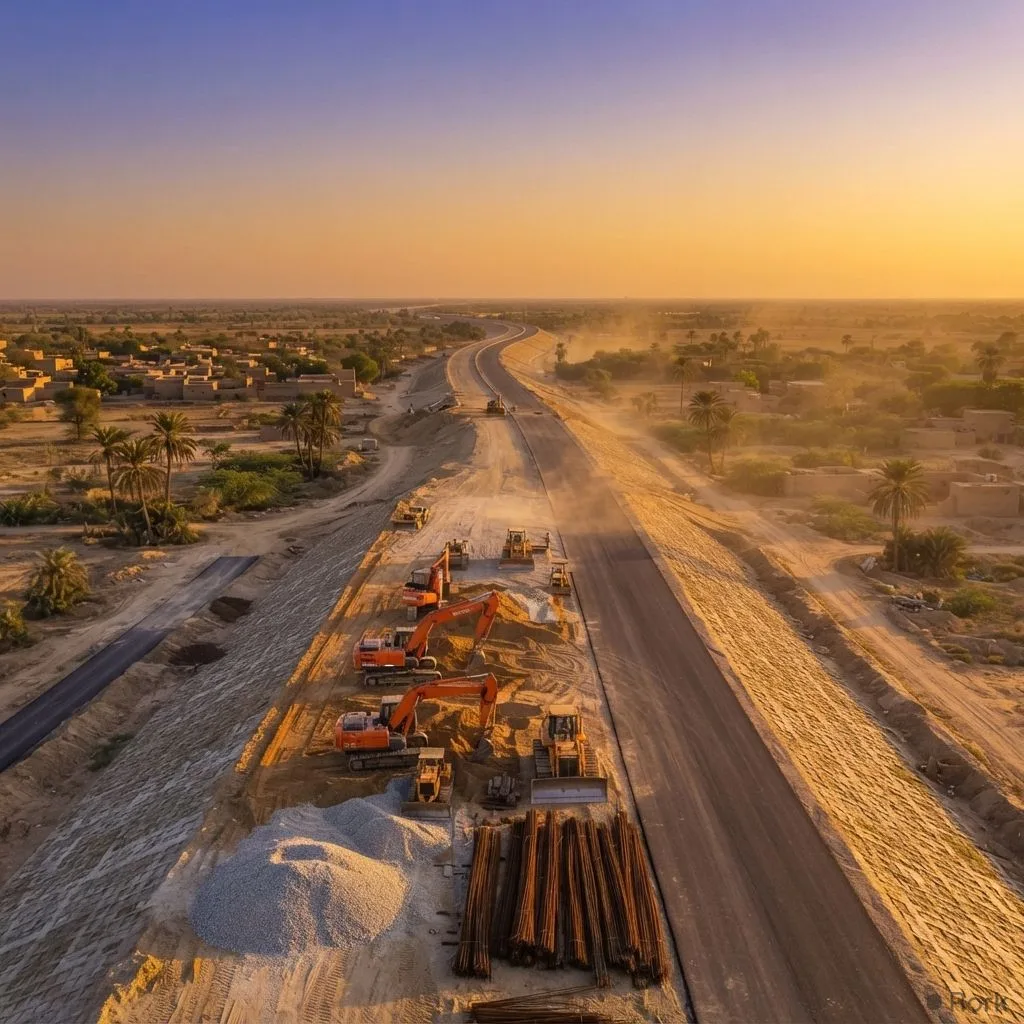
Construction on the 306‑kilometre M6 Hyderabad‑Sukkur motorway officially commenced this month, ending a three‑decade postponement of the project that will finally close the missing segment of the Peshawar‑Karachi arterial road network. Federal officials announced that earth‑moving operations and the first strip of pavement are under way, marking the first tangible progress since the scheme was first proposed in the mid‑1990s.
The motorway, stretching across central Sindh, had been stalled for years due to funding shortfalls, land‑acquisition disputes and shifting political priorities. Its revival follows the recent approval of a multi‑billion‑rupee financing package that combines federal budget allocations with private‑sector participation, enabling the National Highway Authority to move forward after prolonged uncertainty.
By linking Hyderabad, an industrial hub, with Sukkur, a key commercial centre on the Indus, the new highway will create a continuous high‑speed corridor from the northern city of Peshawar to Karachi. The completion of this link is expected to streamline freight movements, allowing agricultural produce, textiles and other regional goods to reach ports and markets more efficiently, while also providing a safer, faster route for passenger traffic.
Local authorities anticipate that the M6 will act as a catalyst for economic activity in the surrounding districts, spurring investment in logistics parks, service stations and ancillary businesses. Moreover, the construction phase itself is projected to generate thousands of jobs for skilled and unskilled workers, offering a short‑term boost to employment in an area that has long awaited major infrastructure development.
The project aligns with the government’s broader ambition to modernise Pakistan’s transport network, reduce logistics costs and improve connectivity across provinces. Once operational, the M6 is slated to cut travel time between Hyderabad and Sukkur by several hours, enhancing accessibility for commuters, traders and tourists alike, and reinforcing Sindh’s role as a vital conduit in the country’s north‑south trade corridor.