
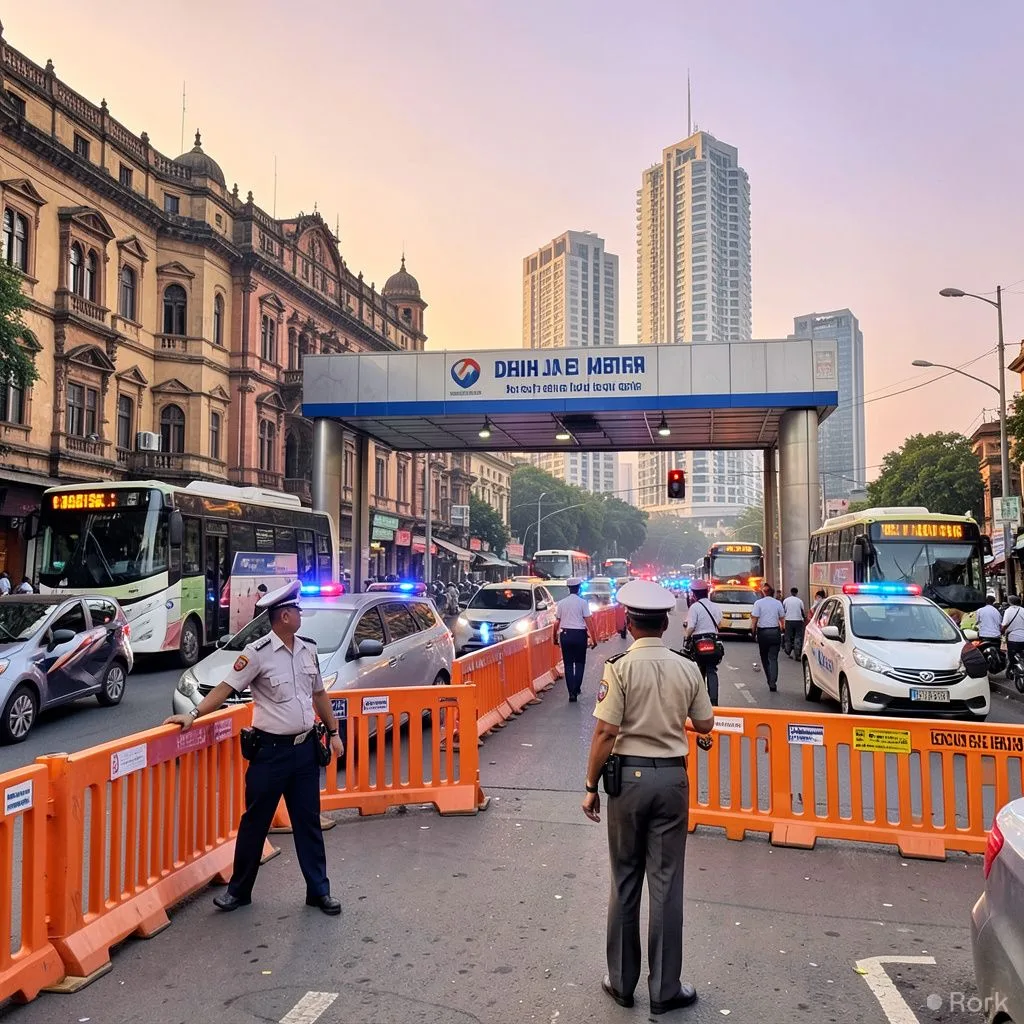
Key points:
- Six metro stations in central Delhi were closed on Monday as authorities prepared for a new protest against the election chief.
- Police imposed traffic restrictions and set up diversions, warning commuters of possible delays.
- The Chief Justice of India is expected to seek permission to lead the demonstration, raising security concerns.
- The disruption highlights the growing political tension in the capital ahead of the upcoming protest.
The Delhi administration ordered the shutdown of six key metro stations—located on the Yellow, Red and Violet lines—early Monday morning, citing the need to ensure public safety ahead of a planned demonstration targeting the country's election chief. Police deployed barricades and rerouted vehicular traffic around the affected zones, urging commuters to anticipate longer travel times and to consider alternative routes or public transport options.
The protest is being organized by a coalition of opposition parties and civil society groups, with the Chief Justice of India set to request the Supreme Court's permission for a large‑scale gathering. Officials said the restrictions are a preventive measure to avoid crowding at transit points and to manage any potential law‑and‑order challenges that could arise from the demonstration.
Delhi’s transport authority has urged daily commuters to use remaining metro services sparingly and to check real‑time updates through official channels. Traffic police have marked detour routes and deployed additional personnel to monitor the flow of vehicles, especially on major arteries such as Ashok Rajpath and Rajpath.
While the events unfold in India’s capital, the ripple effects are felt across the sub‑continent, including Pakistan. Political analysts note that heightened tensions in Delhi could influence regional diplomatic dialogues, especially concerning electoral reforms and cross‑border cooperation ahead of the forthcoming South Asian regional summit. Pakistani expatriates and business travelers based in Delhi are also likely to experience the transit disruptions, underscoring the broader impact of India's internal political dynamics on neighboring countries.