
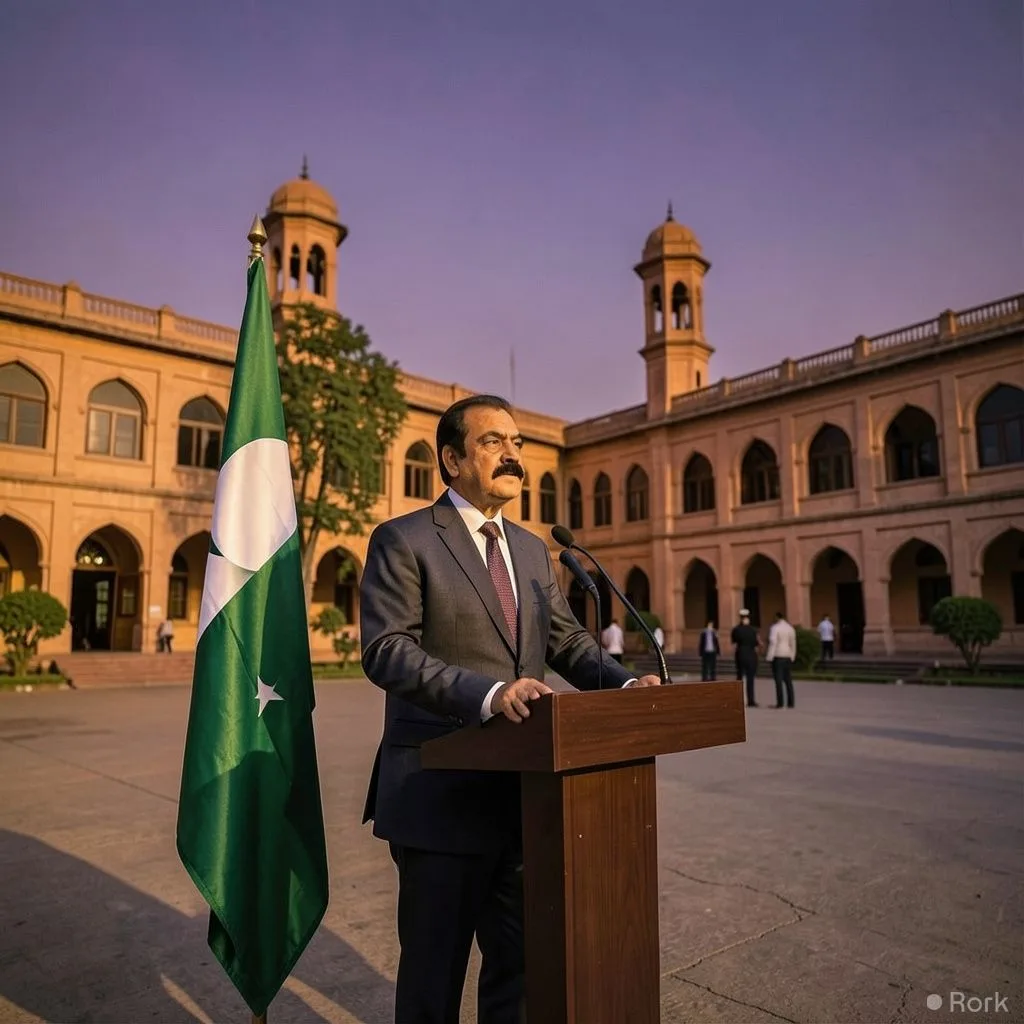
The federal government has once again signaled its readiness to sit down with Pakistan Tehreek‑e‑Insaf (PTI), but Adviser on Political Affairs Rana Sanaullah warned that the party’s current demands are untenable as long as it “holds the state hostage.” The remarks came amid a spate of PTI‑led protests and allegations that provincial resources in Khyber Pakhtunkhwa are being diverted for partisan purposes.
Background
Since the removal of former Prime Minister Imran Khan from office last year, PTI has mounted a series of mass mobilisations across the country, particularly in its stronghold Khyber Pakhtunkhwa. The party claims the government is violating democratic norms, while the federal administration accuses PTI of exploiting the province’s administrative machinery to fund rallies, block highways and disrupt essential services.
Rana Sanaullah, who serves as the prime minister’s chief political adviser, reiterated the government’s willingness to engage in dialogue but stressed that any negotiation must respect the nation’s sovereignty. He pointed to recent incidents in Peshawar and surrounding districts where police resources were allegedly redirected to protect PTI convoys rather than maintain public order.
The adviser also dismissed PTI’s core demand – the reinstatement of its former leadership and the withdrawal of several high‑profile corruption cases – as “unrealistic” in the current political climate. He argued that conceding to such demands would effectively place the state’s institutions under the control of a single party, jeopardising the balance of power between the federal and provincial governments.
What it means
For ordinary citizens in Khyber Pakhtunkhwa, the standoff could translate into continued disruptions to daily life: road blockades that delay the transport of goods, heightened security alerts, and the diversion of development funds toward political campaigning. Business owners in the capital, Peshawar, have already reported losses due to intermittent curfews imposed during recent protests.
At the national level, the deadlock threatens to stall key legislative initiatives that the ruling coalition is trying to push through Parliament, including budget allocations for health and education. If PTI’s agitation persists, the government may have to allocate additional security personnel and financial resources to contain unrest, diverting them from priority sectors such as infrastructure and flood‑relief projects that are critical this year.
What could happen next
Sanaullah’s statement suggests that the federal government is prepared to open a formal negotiation track, but only if PTI agrees to a framework that excludes any attempt to commandeer state apparatus. Analysts expect a mediating body – possibly involving senior members of the opposition Pakistan Muslim League (N) and independent parliamentarians – to be convened within the next fortnight.
Should PTI reject such conditions, the likelihood of further large‑scale protests increases, which could compel the interior ministry to invoke emergency powers under the Public Safety Ordinance. Conversely, a breakthrough in talks could pave the way for a cease‑fire arrangement, allowing both sides to focus on pressing economic challenges and the upcoming provincial elections slated for early 2027.