
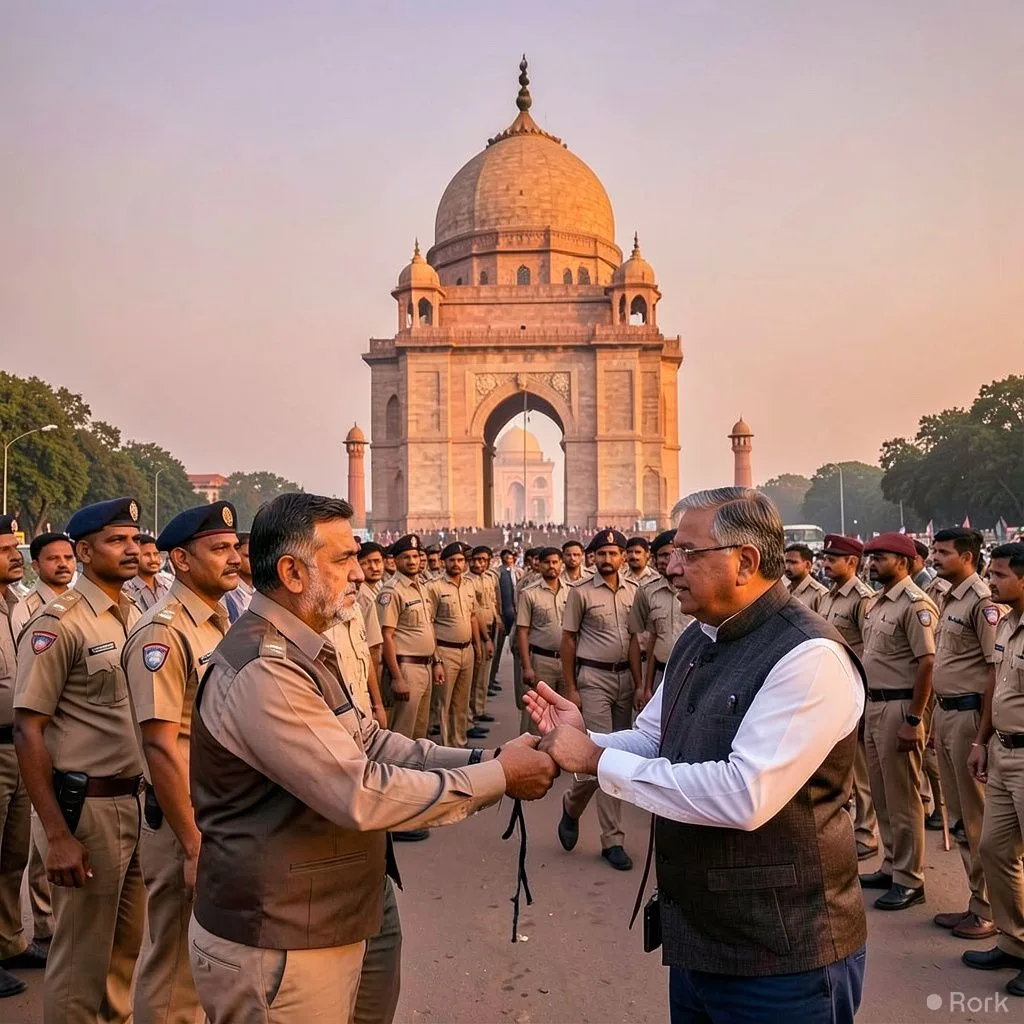
Delhi police have arrested the founder of the “Cockroach” movement and ordered a citywide lockdown ahead of a scheduled demonstration.
The Delhi police detained the movement’s chief on Monday, citing intelligence reports that warned of a mass gathering aimed at pressuring the Election Commission’s chief, Gyanesh Kumar, to step down. In tandem with the arrests, authorities imposed a sweeping curfew that bars public assemblies and restricts vehicular movement across the capital, warning that any violation will be met with strict legal action.
Organisers of the “Cockroach” protest, a loosely‑structured coalition of anti‑government activists, announced that thousands were expected to converge on central Delhi to demand Kumar’s resignation, alleging electoral irregularities and bias in favour of the ruling Bharatiya Janata Party (BJP). The movement’s founder, a charismatic speaker known for his viral social‑media rallies, was taken into custody before the protest could materialise, effectively crippling the organisers’ ability to coordinate the demonstration.
The BJP dismissed the crackdown as a political ploy by opposition parties desperate to dent Prime Minister Narendra Modi’s re‑election momentum. Party spokespersons accused rivals of “crying foul” after failing to secure a favourable outcome at the polls, while opposition leaders have denounced the police action as an attempt to stifle democratic dissent and curtail freedom of assembly.
For Pakistan, the episode adds another layer to the already tense Indo‑Pak political landscape. Delhi’s heavy‑handed response is likely to be highlighted by Islamabad’s media as evidence of democratic backsliding in India, a narrative that could influence public opinion ahead of Pakistan’s own general elections slated for early 2027. Analysts suggest that any perceived instability in India may affect cross‑border trade, security dialogues, and the broader South Asian geopolitical balance.
Legal experts note that the police are invoking the Delhi Police Act and the Disaster Management Act to justify the lockdown and arrests, but civil‑rights groups warn that such broad powers risk being misused to silence legitimate protest. The situation remains fluid, with the police monitoring social‑media chatter for any signs of a renewed rally, while the “Cockroach” movement vows to continue its campaign through alternative channels if the ban persists.