
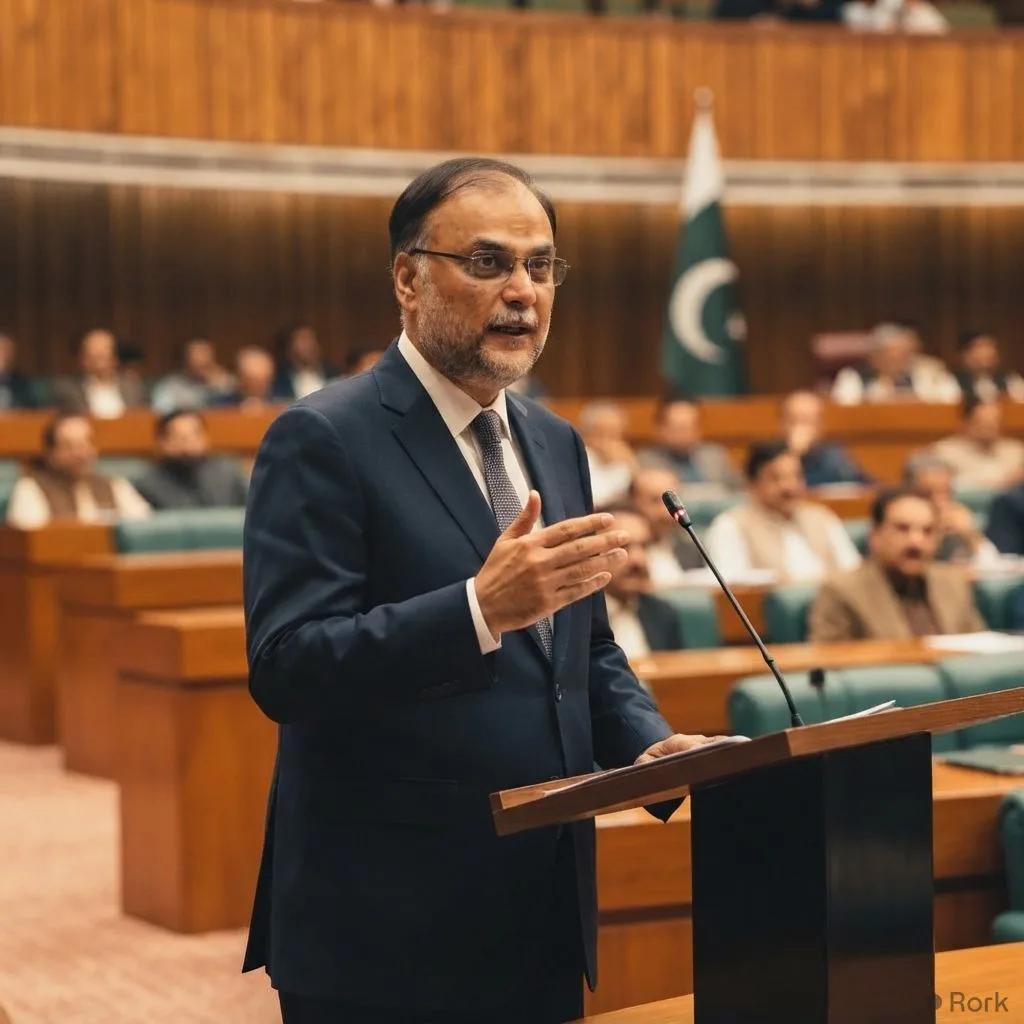
Federal Minister Ahsan Iqbal announced on 2 September 2026 that he intends to split Pakistan into 15 new provinces, arguing that a finer‑grained administrative map would allow the state to react more swiftly to citizens’ needs and improve the delivery of public services.
Iqbal, who heads the Ministry of Planning and Development, said the proposal aims to bring decision‑making and government programs closer to local communities, reducing the bureaucratic distance that currently exists between the federal centre and the four existing provinces. He added that smaller provincial units could enhance accountability, cut red‑tape, and make resource allocation more responsive to regional demands.
The plan marks a dramatic departure from the country’s present structure, which comprises Punjab, Sindh, Khyber Pakhtunkhwa and Balochistan. By carving out additional provinces—potentially based on existing districts or cultural‑geographic clusters—the government hopes to address long‑standing grievances over uneven development, particularly in remote or under‑served areas such as northern Gilgit‑Baltistan, southern Balochistan and the tribal belt of Khyber Pakhtunkhwa.
Implementing the reorganisation would require a constitutional amendment, a process that mandates a two‑thirds majority in both the National Assembly and the Senate, as well as the consent of the current provincial assemblies. Legal scholars note that the amendment route is notoriously complex; past attempts to alter provincial boundaries have stalled amid political resistance and concerns over the fiscal viability of smaller units.
Political reactions have been mixed. Members of the ruling coalition have largely echoed Iqbal’s call for “decentralised, people‑centred governance,” while opposition parties caution that the move could be used to dilute provincial autonomy and reshape electoral constituencies to the ruling party’s advantage. Analysts from think‑tanks in Islamabad and Lahore warn that without a clear revenue‑sharing formula, the new provinces could face severe budget shortfalls, exacerbating the very problems the reform seeks to solve.
Experts on federalism point out that similar experiments in other large, diverse nations have yielded mixed results. While some countries have benefitted from devolved authority, others have struggled with overlapping jurisdictions and inter‑provincial competition. In Pakistan’s context, the ethnic, linguistic and economic disparities across regions make any redrawing of boundaries a politically sensitive undertaking.
The ministry has indicated that a detailed feasibility study will be commissioned within the next three months, with consultations scheduled among provincial leaders, civil‑society groups, and the public. If the study supports the proposal, a parliamentary bill is expected to be tabled before the end of 2026, setting the stage for a protracted legislative debate that could extend into 2027.
Should the restructuring proceed, the immediate impact would be felt by millions of Pakistanis who rely on provincial ministries for health, education, and infrastructure services. Local administrations would gain greater discretion over budgeting and program implementation, potentially accelerating development projects in historically neglected districts. However, the transition would also demand a massive bureaucratic overhaul, including the creation of new provincial assemblies, civil‑service cadres, and judicial jurisdictions.
As the debate unfolds, the core question remains whether breaking the country into fifteen smaller provinces will truly translate into faster, more efficient governance, or whether it will add another layer of complexity to an already intricate federal system.