
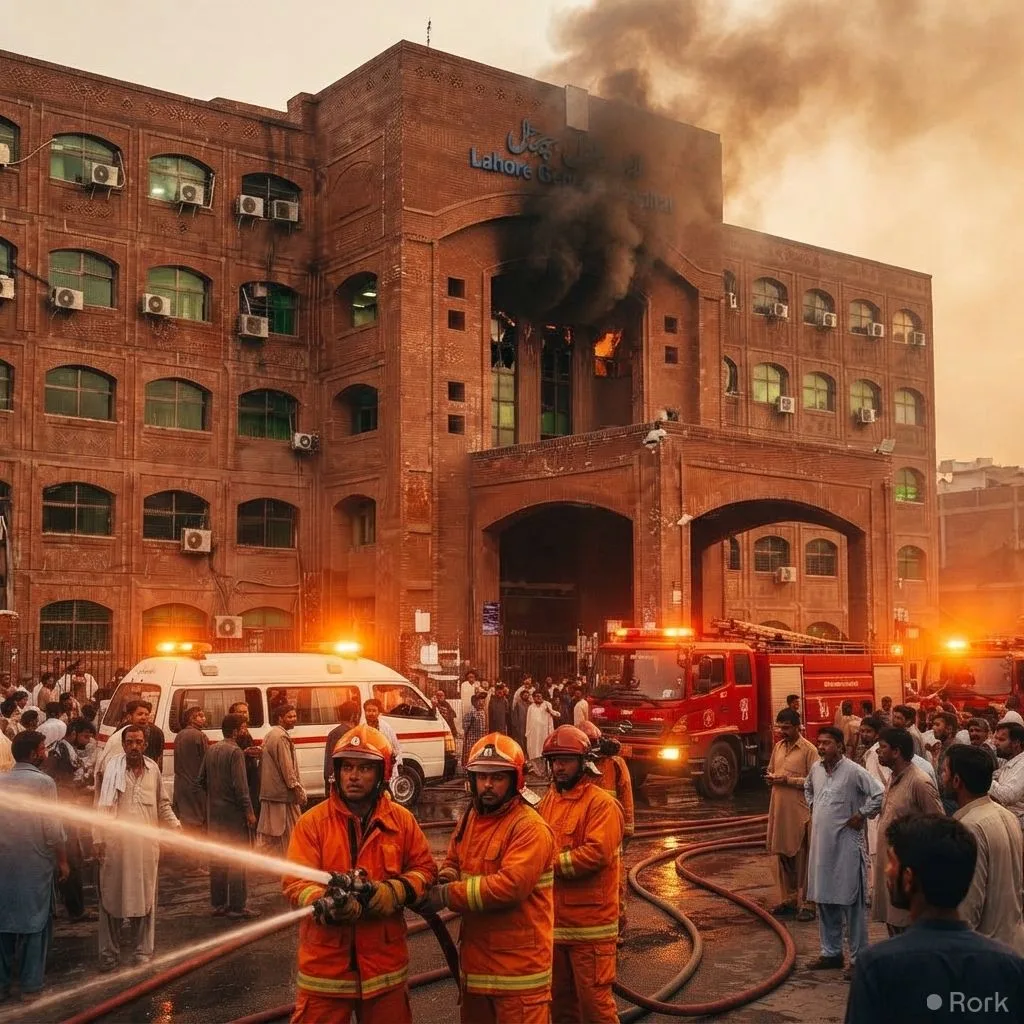
A fire ignited Tuesday evening in the gynecology ward of Lahore General Hospital, filling corridors with thick, acrid smoke and forcing the evacuation of roughly 70 individuals – a mix of expectant mothers, other patients, their attendants and hospital staff. Firefighters arrived within minutes, extinguishing the blaze and rescuing those trapped before any fatalities were reported.
Background
Lahore General Hospital, one of the province’s largest public medical facilities, serves a catch‑all population from the city’s densely populated neighborhoods and surrounding districts. The gynecology wing, often crowded with women awaiting deliveries or routine obstetric care, operates around the clock and relies on a network of makeshift waiting areas due to chronic space shortages. Over the past few years, the hospital has faced criticism for outdated electrical wiring, inadequate fire‑alarm systems, and insufficient emergency exits – problems that have been highlighted in past audit reports but remain largely unaddressed.
The fire appears to have started in an electrical panel near the ward’s main corridor, according to early statements from the Punjab Health Department. Rapid smoke spread was exacerbated by narrow passageways and a lack of functional fire suppression equipment, prompting staff to resort to manual evacuation procedures. While the exact cause is still under investigation, the incident mirrors previous fire‑related scares in other public hospitals across Pakistan, where aging infrastructure and high patient loads create a volatile environment.
What it means
For the women who were in the ward at the time, the emergency meant an abrupt interruption of prenatal care and, for some, the postponement of imminent deliveries. Those displaced were transferred to nearby private clinics and the city’s teaching hospitals, stretching already‑busy maternity services and potentially increasing wait times for other patients. Families of attendants and nearby residents also faced sudden displacement, highlighting how a single safety lapse can ripple through a community already coping with limited healthcare resources.
Beyond the immediate health concerns, the blaze fuels public anxiety over the safety standards of Pakistan’s public hospitals. Many citizens rely on institutions like Lahore General for affordable care; a loss of confidence could drive more patients toward costly private facilities, widening the gap in access to essential medical services. Moreover, the incident places pressure on provincial authorities to reassess compliance with fire‑safety regulations, especially in high‑risk zones such as obstetrics and intensive care units.
What happens next
The Punjab Health Department has announced a comprehensive inquiry, promising to review the hospital’s fire‑prevention measures, electrical installations, and evacuation protocols. An independent safety audit team is expected to be deployed within the next 48 hours, and the findings will be shared with the provincial cabinet for possible policy action. Hospital administrators have pledged to temporarily relocate the gynecology ward’s patients to safer sections of the campus while repairs and upgrades are carried out.
In the longer term, officials have hinted at a broader overhaul of safety standards in public hospitals across the province, including mandatory installation of automatic sprinkler systems, regular fire‑drill training for staff, and stricter enforcement of building‑code compliance. Stakeholders—ranging from medical professionals to patient advocacy groups—are calling for increased budget allocations to modernize aging infrastructure, arguing that safeguarding patients should be a priority equal to expanding medical services. The outcome of this investigation could set a precedent for how Pakistan tackles hospital safety challenges nationwide.