
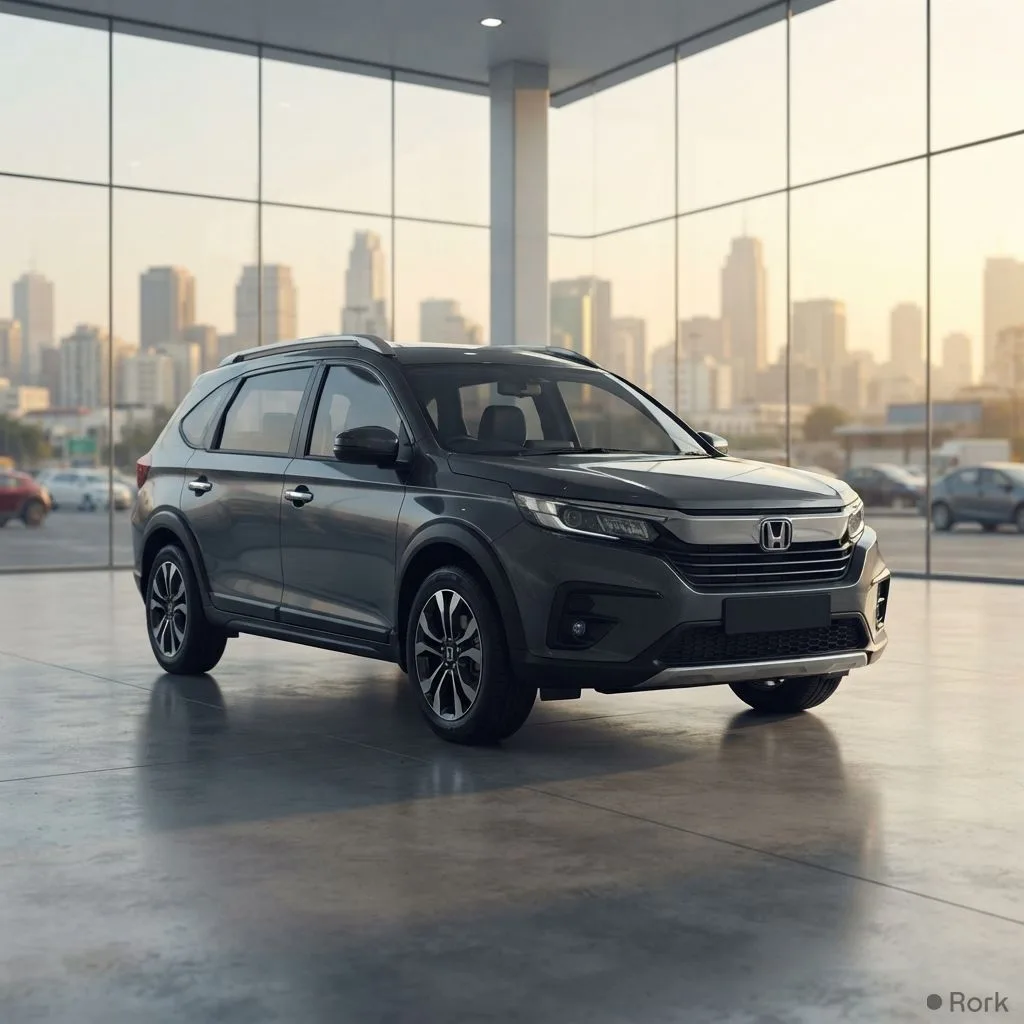
After nine years on Pakistani roads, the Honda BR‑V has officially been pulled from the market.
Honda Atlas Cars announced that it will no longer supply the seven‑seat compact SUV, a model that first rolled out in 2017 and has since become a common family vehicle in the country’s burgeoning SUV segment. The decision, communicated through a formal statement, marks the end of a nine‑year production run and confirms that no fresh units will be delivered to dealerships across Pakistan.
The move mirrors shifting consumer preferences and intensified competition within the local automobile landscape. Buyers are increasingly gravitating toward larger crossovers, fuel‑efficient hybrids, and tech‑laden models, prompting manufacturers to streamline their line‑ups. Honda, which has been rolling out hybrid variants of its CR‑V and City, appears to be reallocating resources toward newer platforms and emerging technologies rather than sustaining a model whose sales have plateaued amid rising inflation and tighter credit conditions.
For existing owners, the announcement brings both reassurance and uncertainty. While Honda Atlas assures continued after‑sales service, warranty support, and parts availability for current BR‑V customers, dealers are expected to clear remaining stock, potentially prompting a short‑term price dip in the used‑car market. Families that relied on the BR‑V’s affordable seven‑seat configuration will now need to look at alternatives such as the Toyota Fortuner, Kia Seltos, or upcoming domestic offerings that can fill the practical space‑and‑price niche.
Industry observers see the discontinuation as a clear signal of Honda’s strategic pivot in Pakistan: focusing on higher‑margin models and preparing for a future where electrified powertrains gain traction. The vacancy left by the BR‑V could open opportunities for rival brands to capture price‑sensitive buyers, reshaping the compact SUV segment in the months ahead.