
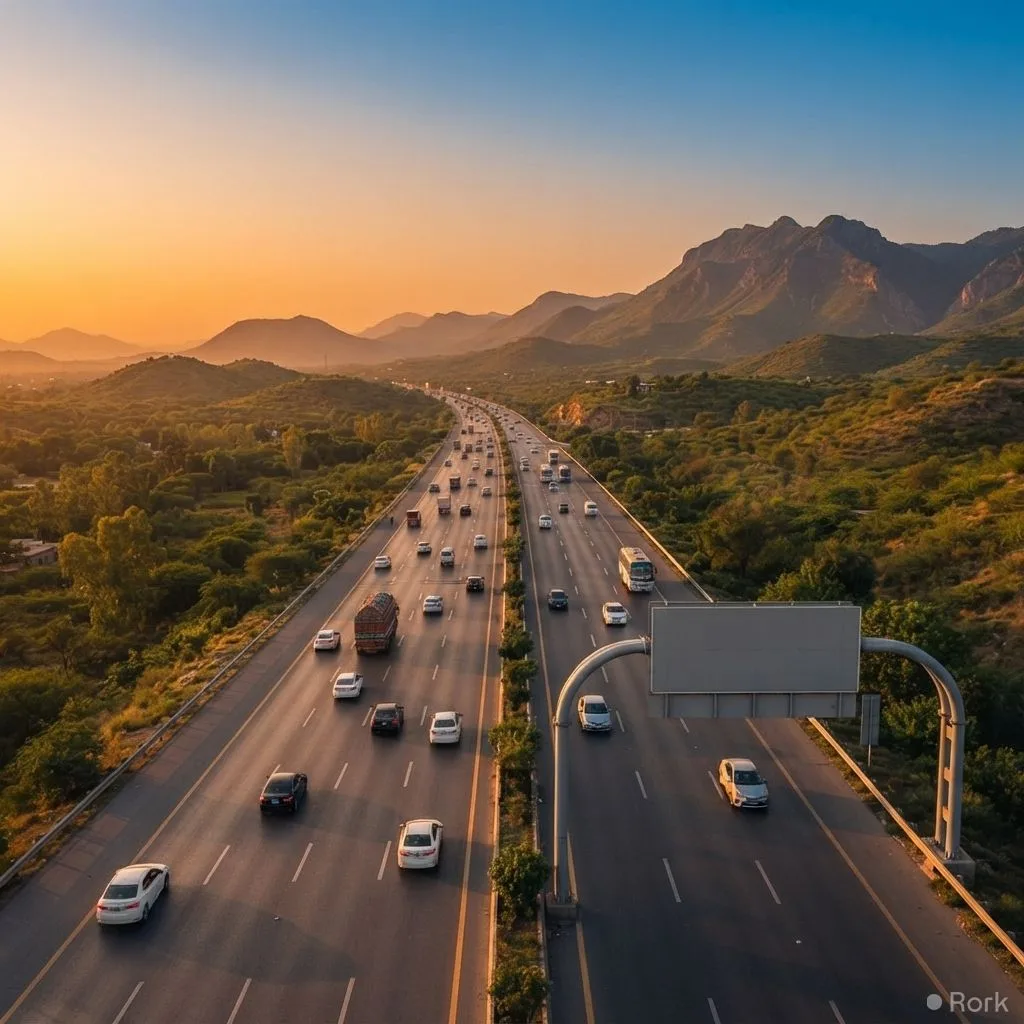
The National Highways and Motorway Police (NHMP) announced on Wednesday that the M‑1 motorway, the main artery linking Islamabad with Peshawar, has been fully reopened for all vehicle categories after a five‑day shutdown. Traffic is now permitted to move in both directions along the 155‑kilometre stretch, ending the period of disruption that began on Monday.
The closure had forced motorists and freight operators onto alternative routes such as the N‑5 national highway and local roadways, creating lengthy detours and severe congestion, particularly around the Rawalpindi‑Islamabad corridor and the outskirts of Peshawar. Truck drivers reported delays of up to six hours, while commuters faced extended travel times and increased fuel costs.
NHMP officials said the motorway was closed to allow for essential maintenance and safety checks following reports of minor surface damage and drainage issues that could have jeopardised vehicle safety. The agency emphasized that the work was completed ahead of schedule, enabling the swift resumption of services without imposing further restrictions on heavy‑load traffic.
The M‑1 is a vital component of Pakistan’s transport network, facilitating the movement of goods and passengers between the federal capital and the north‑western province of Khyber Pakhtunkhwa. Its reopening is expected to relieve pressure on secondary roads, reduce travel time for daily commuters, and restore the efficient flow of commercial freight that underpins regional trade and supply chains.
Local businesses, especially those involved in agriculture, manufacturing, and construction, are likely to benefit from the restored link, as the motorway provides a faster route for the distribution of raw materials and finished products. Moreover, the renewed connectivity supports tourism between the capital and historic sites in the north, potentially giving a modest boost to the hospitality sector.
The rapid restoration highlights the strategic importance of the M‑1 corridor for national logistics, emergency response, and economic activity, underscoring the government’s commitment to maintaining critical infrastructure in the face of operational challenges.