
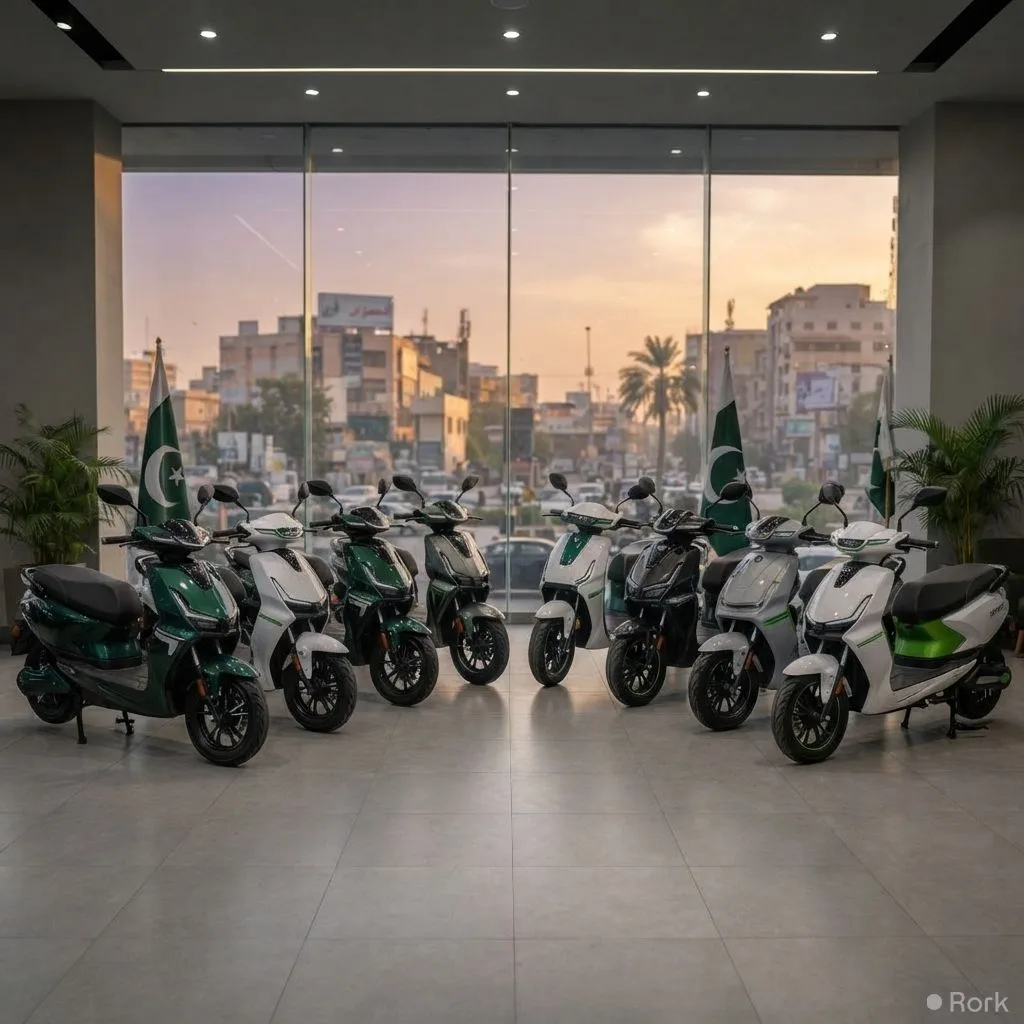
Super Star has unveiled a fresh line‑up of eight electric scooters for the Pakistani market, with the entry‑level model starting at Rs 110,000. The launch, announced on 26 September 2026, expands the company’s EV portfolio from the single‑model offering it introduced last year to a range that spans compact city commuters and sportier variants.
Background
Pakistan’s two‑wheel market has long been dominated by cheap, fuel‑burning motorcycles, which together account for more than 70 % of all registered motor vehicles. Rising fuel prices, mounting air‑quality concerns in megacities such as Karachi, Lahore and Islamabad, and the federal government’s recent “Green Mobility Initiative” have created a fertile environment for electric two‑wheelers. The policy, rolled out in early 2025, offers a 30 % import‑duty rebate on battery‑powered scooters and promises subsidies for the installation of public charging stations in urban centres.
Super Star, a domestic manufacturer that previously focused on conventional scooters, entered the electric segment in 2024 with a single 1‑kWh model priced at Rs 180,000. After a modest but encouraging first‑year sales run—approximately 4,500 units—the company accelerated its R&D, partnering with a Chinese battery supplier to adopt a higher‑density lithium‑iron‑phosphate cell that promises longer range and faster charging. The new eight‑model series leverages this technology, offering ranges from 45 km to 120 km on a single charge and a top speed of up to 80 km/h for the sport‑grade versions.
What it means
For daily commuters, the Rs 110,000 price tag places Super Star’s entry scooter just below the average cost of a new 125 cc petrol bike, making the switch to electric financially viable for a broader segment of riders. Assuming an average monthly fuel spend of Rs 3,500, owners could recoup the price differential within 12‑14 months, given the lower electricity cost per kilometre.
The expanded line‑up also addresses the diversity of Pakistani riding patterns. The compact “City‑Lite” model, with its narrow wheelbase and fold‑away footrests, is tailored for congested downtown streets, while the “Turbo‑X” version, featuring regenerative braking and a sport‑styled frame, targets younger riders seeking performance without compromising on emissions. By covering both ends of the market spectrum, Super Star is positioned to capture demand that was previously split between low‑cost petrol scooters and high‑priced imported e‑scooters.
Industry analysts note that the aggressive pricing could catalyse a shift in market share away from established two‑wheel manufacturers that have been slow to adopt electric technology. If Super Star’s sales projections of 20,000 units in the first quarter are met, the company could become the largest domestic EV scooter seller, prompting competitors to launch their own affordable electric models. This competitive pressure may also spur the development of ancillary services, such as battery‑swap kiosks and ride‑sharing fleets, further embedding electric mobility into Pakistan’s transportation ecosystem.
What happens next
The rollout will begin with a limited release in Karachi, Lahore, and Islamabad, where the government has earmarked funds for 150 new public charging points over the next year. Super Star has signed memoranda of understanding with three municipal authorities to install dedicated charging bays at major transit hubs, a move that could alleviate range‑anxiety concerns among prospective buyers.
Looking ahead, the company plans to introduce a battery‑leasing scheme later in 2027, allowing riders to purchase the scooter at a lower upfront cost while paying a monthly fee for battery usage and maintenance. If successful, this model could further lower entry barriers and accelerate the adoption of electric two‑wheelers across mid‑tier cities such as Faisalabad, Multan and Peshawar, helping Pakistan meet its 2030 target of 30 % zero‑emission transport.