
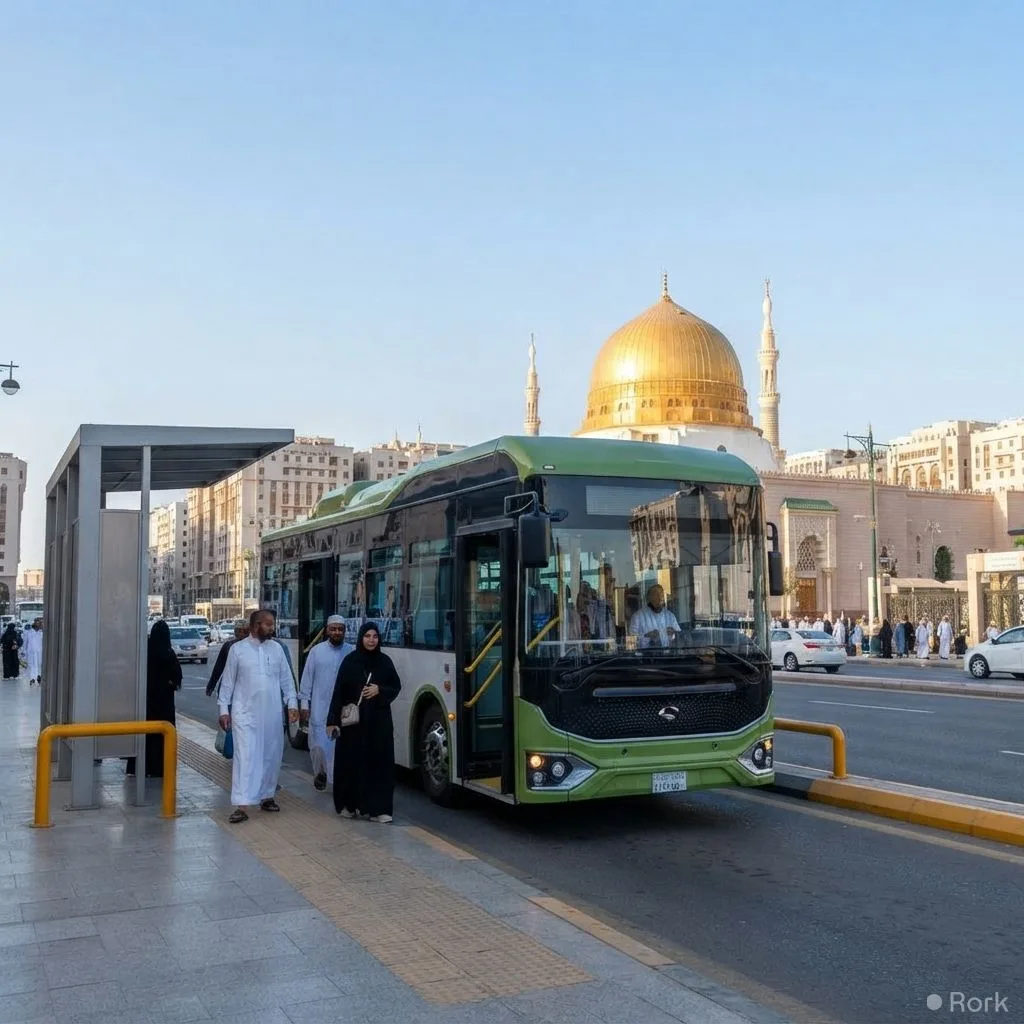
Madinah’s public transport authority announced on 2 October 2026 that the fare for the city’s airport shuttle will be lowered to SAR 3.45 and that a new direct bus line will run straight from Prince Mohammad bin Abdulaziz Airport to Masjid an‑Nabawi. The changes, which also include the introduction of several additional routes across the holy city, are intended to make intra‑city travel more convenient and affordable for both residents and the growing number of pilgrims visiting during the Hajj and Umrah seasons.
The fare cut represents a reduction of roughly 30 % from the previous price, giving travelers a cheaper alternative to taxis and ride‑hailing services. The new “Airport‑to‑Nabawi” service eliminates the need for passengers to transfer between routes, cutting travel time from the airport to the Prophet’s Mosque to about 20 minutes depending on traffic conditions.
In addition to the airport‑Nabawi line, the transport board unveiled three fresh routes that link key residential districts, commercial hubs and other religious sites such as Quba Mosque and the historic Qiblatain Mosque. By expanding the network, officials aim to reduce reliance on private cars, alleviate congestion around the city centre and support the Saudi Vision 2030 goal of modernising urban mobility.
Pakistani pilgrims stand to benefit directly from the lower fare and improved connectivity. Many travel agencies in Pakistan arrange Umrah packages that include airport transfers, and the reduced cost can lower overall package prices, making the pilgrimage more accessible to middle‑income families. Moreover, the streamlined link to Masjid an‑Nabawi will simplify logistics for group tours that traditionally coordinate multiple transport legs, potentially shortening the waiting period for pilgrims arriving from Pakistan’s major airports such as Islamabad and Karachi.
The transport authority also indicated that the fare reduction and new routes are part of a broader pilot programme that will be evaluated over the next six months. Passenger feedback, ridership data and operational efficiency will be monitored to decide whether further adjustments—such as additional direct lines to other holy sites or dynamic pricing during peak pilgrimage weeks—are warranted.
Overall, the initiative reflects a concerted effort by Madinah’s municipal agencies to align public transportation with the city’s spiritual significance and its increasing visitor numbers, while also offering tangible economic relief to the Pakistani pilgrim community that travels there each year.