
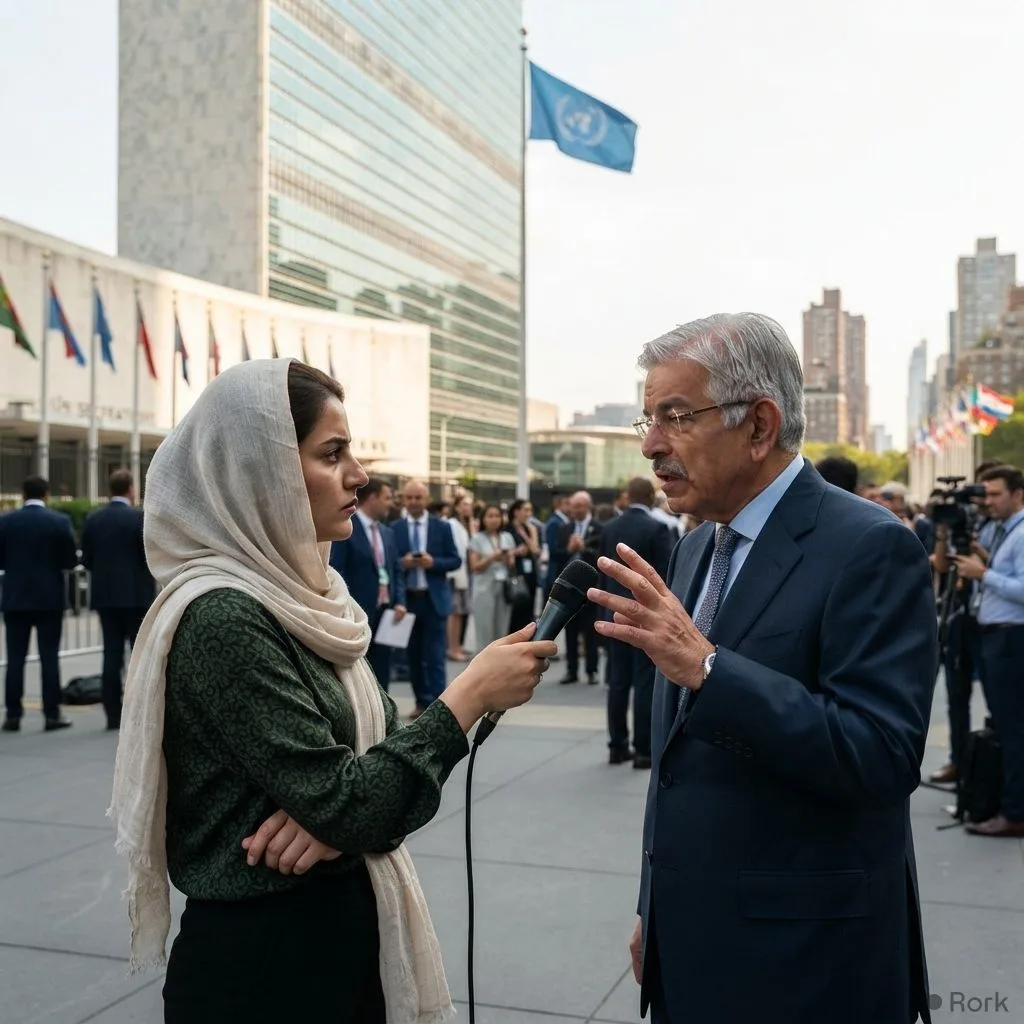
The United Nations headquarters in New York bustles every morning with a mix of diplomats, activists and journalists hurrying between briefings and press conferences. Against this backdrop, a brief but heated exchange unfolded outside the iconic plaza, drawing the attention of on‑lookers and later millions of online viewers.
Pakistani Defence Minister Khawaja Muhammad Asif was approached by an Afghan woman reporter who identified herself as covering stories from Afghanistan. When she mentioned her nationality, the minister interrupted, telling her she “was not a good neighbour” and urging her to reconsider her stance. The remarks were captured on video by by‑standers and quickly circulated on social platforms.
Witnesses said the encounter lasted less than a minute, but the intensity of the minister’s tone left a strong impression. Asif, who has been a senior figure in Pakistan’s government for more than a decade, has often been vocal about cross‑border security concerns, and his comment appeared to echo the broader mistrust that has characterised Islamabad‑Kabul relations since the recent border skirmishes and the ongoing dispute over water sharing.
The clip sparked a flurry of reactions on Twitter, Facebook and local Pakistani media outlets. Some users condemned the minister’s approach as unbecoming of a senior official at an international venue, arguing that it infringed on press freedom. Others defended Asif, suggesting the journalist’s line of questioning had crossed into political provocation, and that a firm response was warranted in the context of escalating tensions between the two neighbours.
Analysts note that the incident, though fleeting, underscores the fragile diplomatic climate between Pakistan and Afghanistan. With both governments navigating a complex mix of security, refugee and trade issues, any public spat can reverberate back home, influencing public opinion and potentially shaping future diplomatic engagements at the UN and beyond. The episode also raises questions about how officials interact with the media on the global stage, a debate that is likely to persist as South Asian politics remain under the international spotlight.