
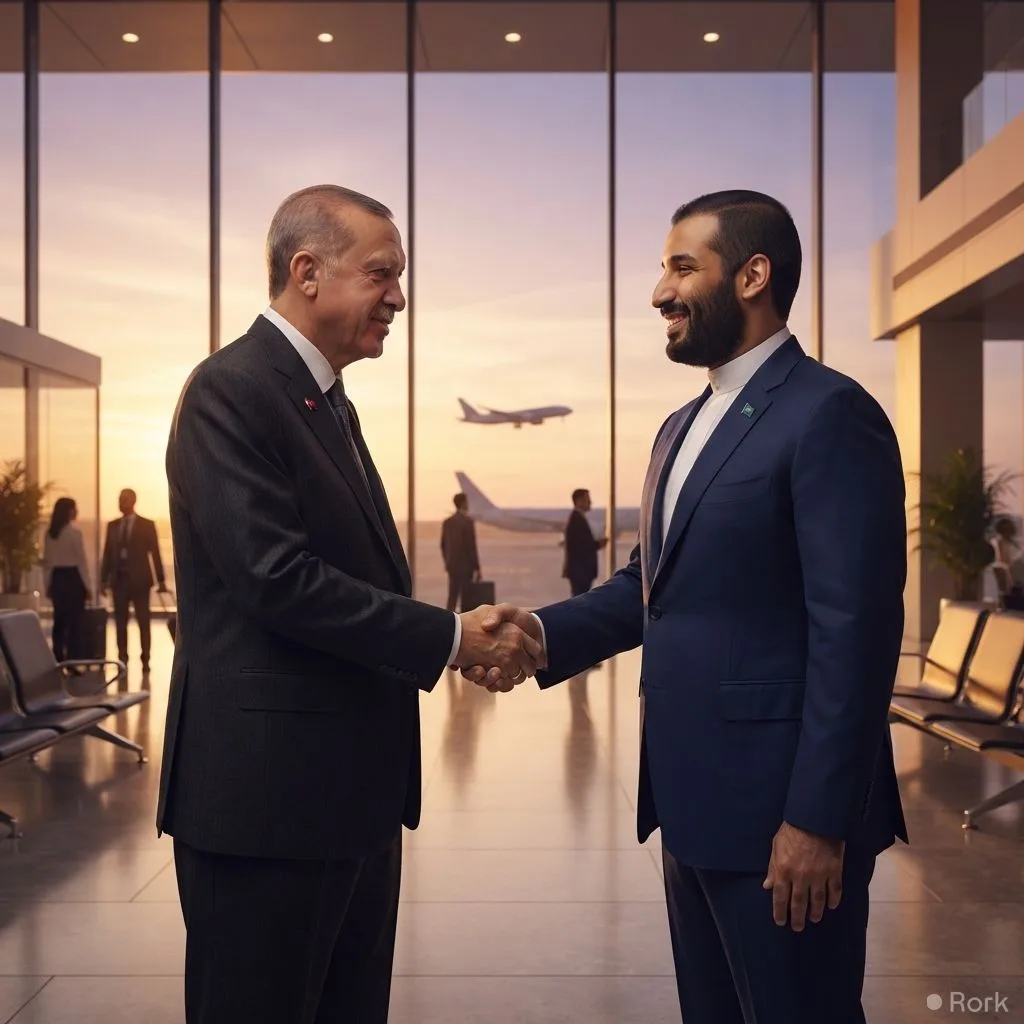
The Middle East and South‑Asian capitals have been busy tightening diplomatic ties ahead of the annual Hajj season, and a wave of new travel arrangements has been rolling out across the region. In that climate, Ankara and Riyadh have just signed a reciprocal deal that removes visa requirements for holders of diplomatic and special passports traveling between the two states.
Effective immediately, officials, senior bureaucrats and other passport holders classified under the diplomatic or special categories will be able to enter Turkey from Saudi Arabia – and vice‑versa – for short visits without having to apply for a visa. The agreement, signed by the foreign ministries of both countries, mirrors a broader push to streamline official travel and cut administrative red‑tape for high‑level exchanges.
Under the terms of the pact, eligible travelers can stay up to 30 days per trip for business meetings, conference participation, or routine consular work, after which a standard visa would be required. The move is expected to accelerate bilateral projects ranging from defence procurement to energy cooperation, as officials can now arrange face‑to‑face talks on much tighter timelines.
Pakistan, which is also a signatory of the larger “Makkah agreement” that seeks to facilitate pilgrim and official movement across the Gulf, was not included in this latest visa‑free provision. Pakistani diplomats and special‑passport holders will still need to obtain a visa for short trips to Turkey or Saudi Arabia, a gap that analysts say could limit Pakistan’s ability to match the pace of Ankara‑Riyadh coordination on regional issues.
The exclusion underscores the growing strategic alignment between Turkey and Saudi Arabia, whose leaders have been jointly championing initiatives from defence co‑production to joint infrastructure ventures. While Pakistani officials have welcomed the broader Makkah framework, the current omission may prompt Islamabad to seek a parallel arrangement or to lobby for an expanded scope in future negotiations.