
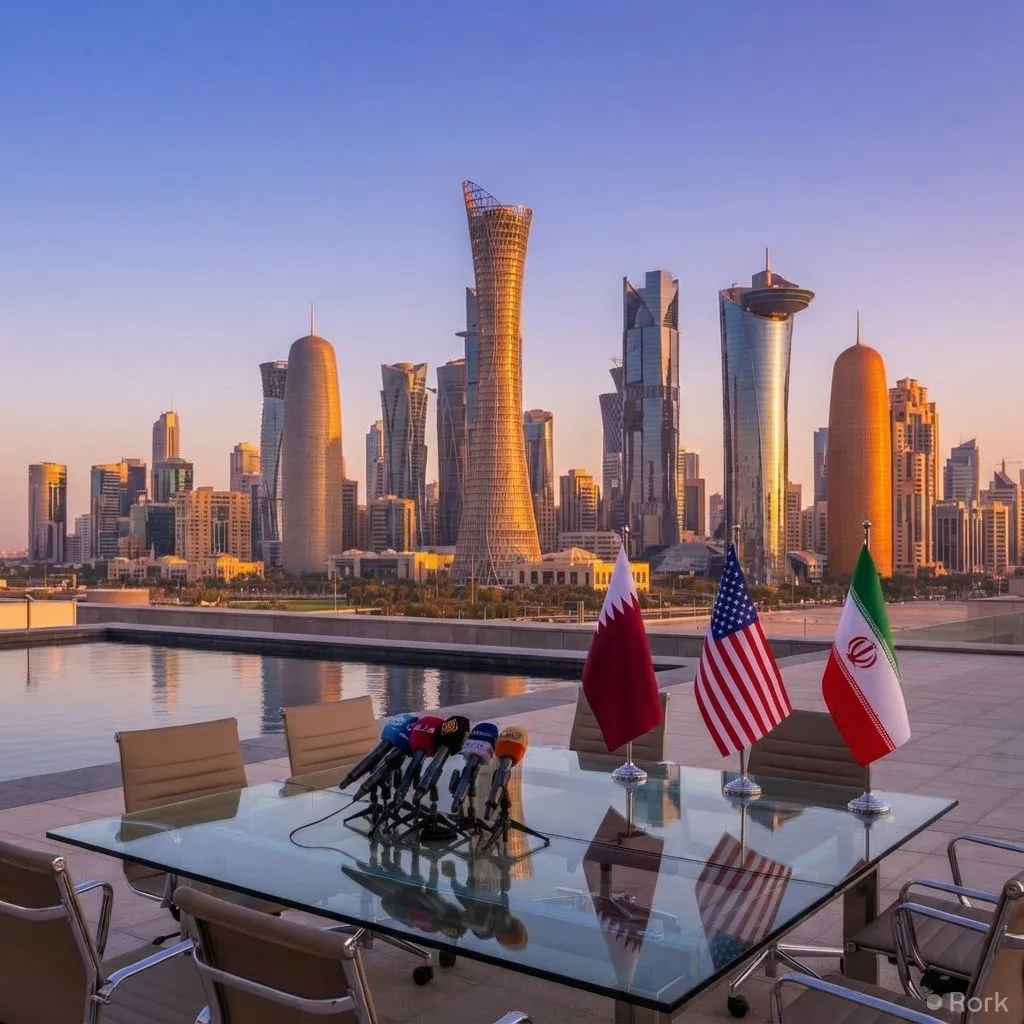
Doha’s foreign ministry announced on Tuesday that Qatar is intensifying its diplomatic push to bridge the widening gulf between Washington and Tehran, hoping to lock in a cease‑fire arrangement before the Gaza conflict spirals further.
Background
Eight months after the outbreak of the Gaza war, the United States and Iran remain at odds over the core terms of any cease‑fire. Washington has signaled a willingness to ease some sanctions and release frozen Iranian funds, while Tehran demands a broader withdrawal of Israeli forces and guarantees for the Palestinian leadership. Former President Donald Trump has repeatedly asserted that the United States has offered Iran “nothing” to end the fighting, a claim that underscores the deep mistrust still prevalent on both sides.
Qatar, which hosts the Al‑Ula peace talks and has historically acted as a conduit between rival Middle‑East powers, has now placed its own diplomatic capital on the line. The Qatari foreign ministry said the latest initiative aims to produce a “tangible outcome” before the conflict escalates further, echoing earlier Doha‑led attempts that yielded temporary humanitarian pauses but failed to secure a lasting settlement.
What it means for Pakistan
A breakthrough in U.S.–Iran talks could dampen the regional volatility that has reverberated across South Asia. Pakistan’s security establishment closely monitors any escalation that might spill over into Afghanistan or affect the maritime routes through the Arabian Sea, where a surge in naval posturing could threaten the flow of oil and gas that powers Pakistan’s energy‑intensive industries.
Moreover, a cease‑fire would likely ease the humanitarian burden on Pakistani NGOs and the government, which have been channeling aid to Gaza through Qatar‑run corridors. Reduced hostilities could also open space for Pakistani businesses to engage more freely with Gulf markets that have been wary of the conflict’s impact on trade and investment.
What happens next
Qatar plans to convene a fresh round of talks in the coming weeks, inviting senior U.S. and Iranian officials alongside representatives from Egypt, the United Nations and the European Union. Analysts expect the United States to put forward a limited sanctions waiver coupled with a modest release of Iranian oil revenues, while Tehran will push for firm guarantees on the cessation of Israeli air strikes and the lifting of the blockade on Gaza.
For Pakistan, the key will be to watch how the negotiations evolve and to position itself as a constructive partner—leveraging its long‑standing ties with both Doha and Tehran. Islamabad may seek to mediate ancillary issues such as the safe return of Pakistani workers from the conflict zone and the coordination of humanitarian shipments, thereby reinforcing its role as a stabilising actor in the broader Middle‑East landscape.