
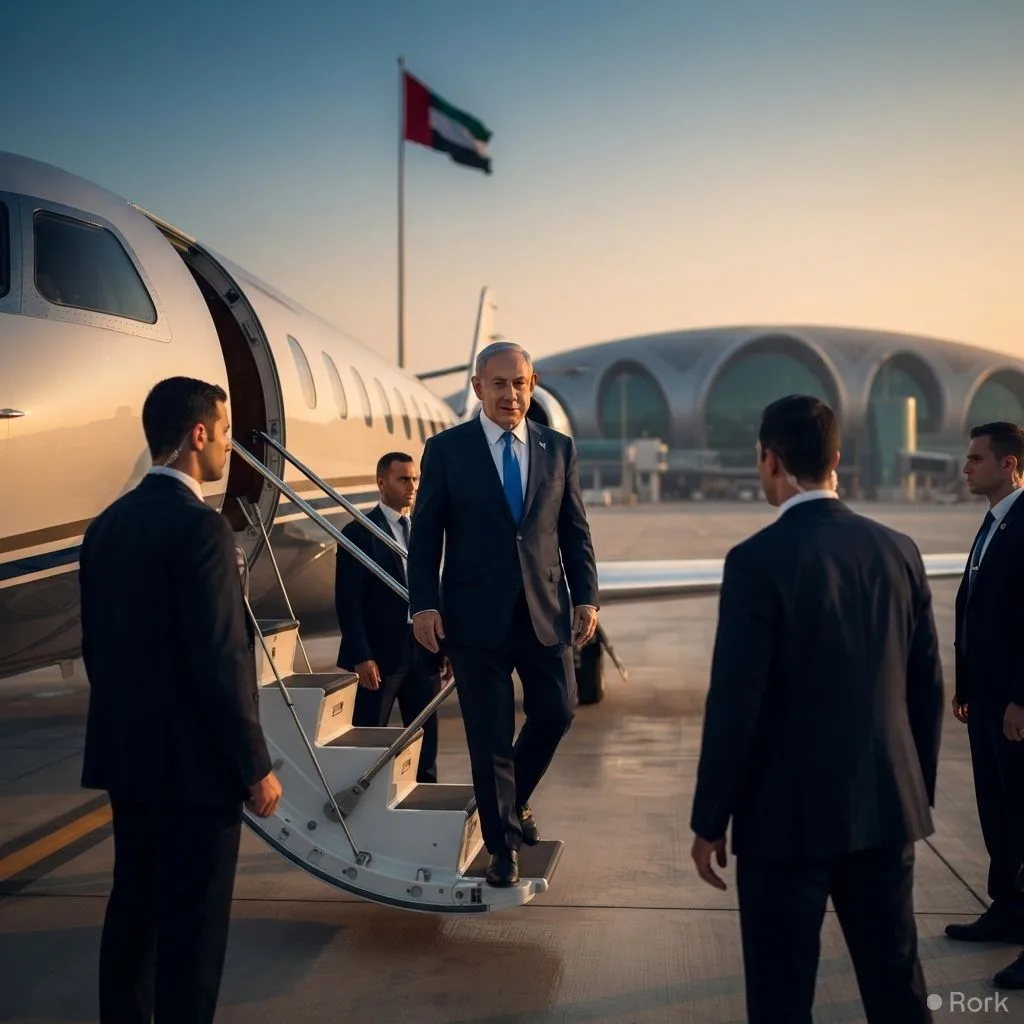
Israeli Prime Minister Benjamin Netanyahu made an unannounced trip to Abu Dhabi on Tuesday, meeting senior officials of the United Arab Emirates, while both governments have so far declined to comment on the purpose or outcomes of the encounter. The visit comes amid renewed debate over earlier reports that the UAE had warned Israel of a possible Hamas offensive before the October 7 attacks that sparked the current war in Gaza.
Local media outlets first disclosed the surprise stop, noting that Netanyahu’s itinerary included a brief stay in the Emirati capital after a series of diplomatic engagements in the region. No official press releases have been issued by either side, and details of any agreements or discussions remain speculative. The timing of the visit is notable, as it coincides with a resurgence of claims that Abu Dhabi had alerted Jerusalem to intelligence indicating an imminent Hamas strike, a claim that has been contested by Israeli officials since the war began.
The controversy over the alleged pre‑Oct 7 warning has resurfaced after a senior UAE diplomat allegedly told journalists in early September that Emirati intelligence services had shared threat assessments with Israel in the weeks leading up to the Hamas onslaught. Israeli authorities have neither confirmed nor denied the allegation, and the lack of an official response has fueled further speculation in regional media circles.
The meeting follows the historic Abraham Accords of 2020, which opened formal diplomatic channels and security cooperation between Israel and several Gulf states, including the UAE. Over the past six years, the two countries have deepened intelligence collaboration, particularly concerning Iranian influence and extremist groups. Analysts suggest that Netanyahu’s unexpected visit could be an effort to reaffirm or recalibrate that partnership amid the ongoing conflict and the mounting pressure on Israel’s diplomatic standing.
For Pakistan, the development underscores the shifting dynamics in South‑West Asia, where the UAE has emerged as a key economic partner and a conduit for regional investment. Islamabad closely monitors any changes in Israel‑UAE ties, as they may affect Pakistan’s own diplomatic balancing act with Gulf states, its stance on the Palestinian issue, and the broader security environment that influences trade routes and expatriate communities across the Gulf. Additionally, the potential sharing of intelligence related to Hamas could have implications for Pakistan’s counter‑terrorism cooperation with regional allies.
Observers note that the lack of public statements from both Jerusalem and Abu Dhabi may be a deliberate attempt to keep sensitive discussions off the record, especially given the heightened scrutiny of intelligence exchanges after the October 7 tragedy. As the war in Gaza continues to shape regional geopolitics, Netanyahu’s surprise appearance in the UAE is likely to be examined closely by policymakers in Islamabad and beyond, who are assessing how evolving alliances may impact South Asian interests in a volatile neighbourhood.