
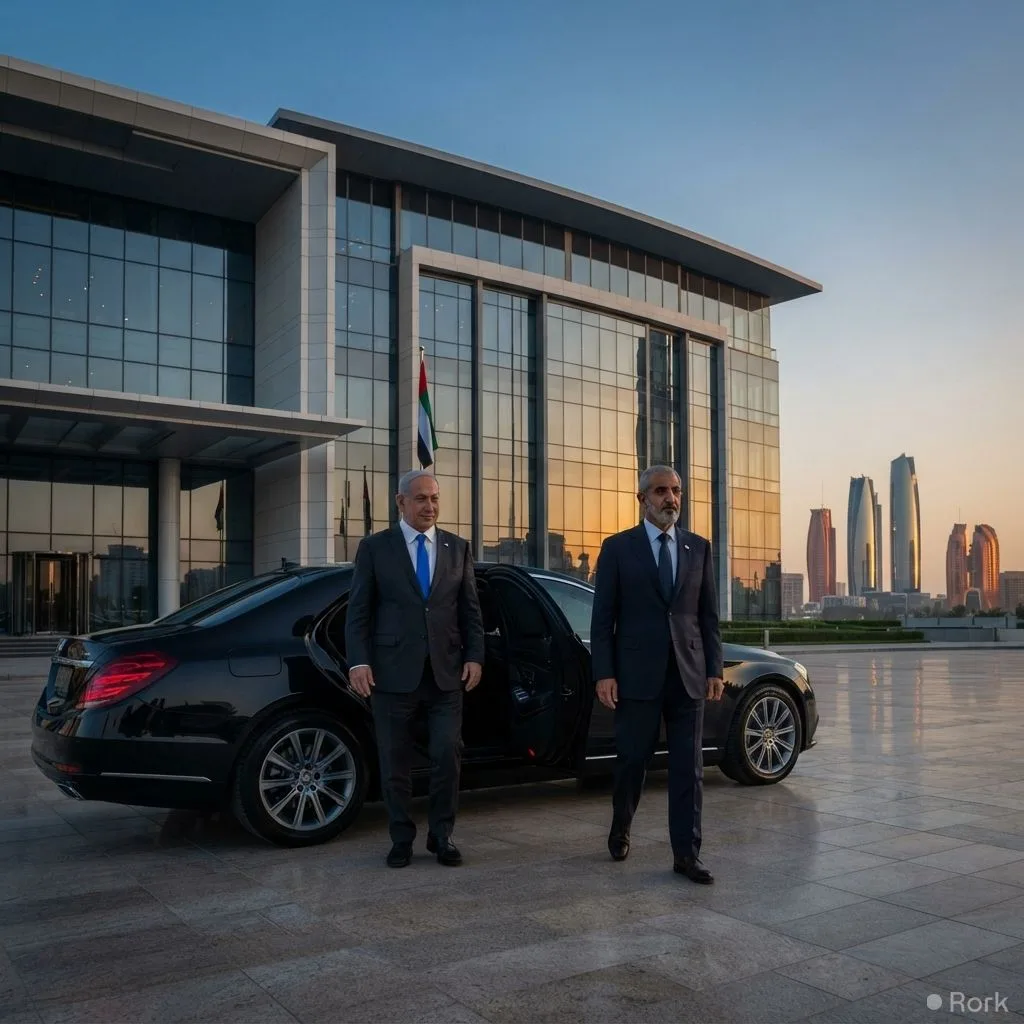
The Middle East’s diplomatic map has been redrawn repeatedly since the 2020 Abraham Accords, with Gulf states gradually warming to Jerusalem after years of estrangement. Against that backdrop, an unannounced flight landed in Abu Dhabi on Sunday, carrying Israel’s prime minister for a tightly‑kept encounter with the United Arab Emirates’ president.
Israeli Prime Minister Benjamin Netanyahu met Sheikh Mohamed bin Zayed Al Nahyan at the presidential palace in Abu Dhabi. Both leaders emphasized the need for coordinated security measures against shared threats, notably Iran’s growing regional influence, and explored avenues to expand economic collaboration in technology, renewable energy and trade. While no joint communiqué was issued, sources close to the talks said the conversation was “constructive” and signalled a willingness to move beyond the formalities of the Accords.
The rendezvous builds on a series of recent high‑level exchanges, including a joint Israeli‑UAE delegation that toured the Emirates’ tech hubs in March and a new bilateral agreement on water desalination research signed last month. Analysts note that the secrecy of the visit reflects the delicate balance both governments must maintain—balancing domestic constituencies that remain skeptical of deeper ties while capitalising on strategic convergence.
For Pakistan, the development carries several implications. The burgeoning Israel‑UAE partnership could reshape regional trade routes, potentially affecting Pakistani exporters of textiles and agricultural products who rely on Gulf markets. Moreover, Islamabad’s own diplomatic calculus regarding Israel—especially in the context of its relationships with Arab states and the broader Muslim world—may be pressured to adapt as Gulf‑Israeli cooperation deepens. Security experts also warn that a tighter Israel‑UAE front could influence the calculus of militant groups operating along Pakistan’s western frontier, prompting a reassessment of counter‑terrorism strategies.
Observers in Washington and Doha view the meeting as another indicator that the Gulf’s normalization trajectory is moving from symbolic gestures to substantive, issue‑by‑issue cooperation. Whether this discreet summit will translate into formal agreements remains to be seen, but it undeniably underscores a growing momentum toward a more integrated and strategically aligned Middle East.