
Key points
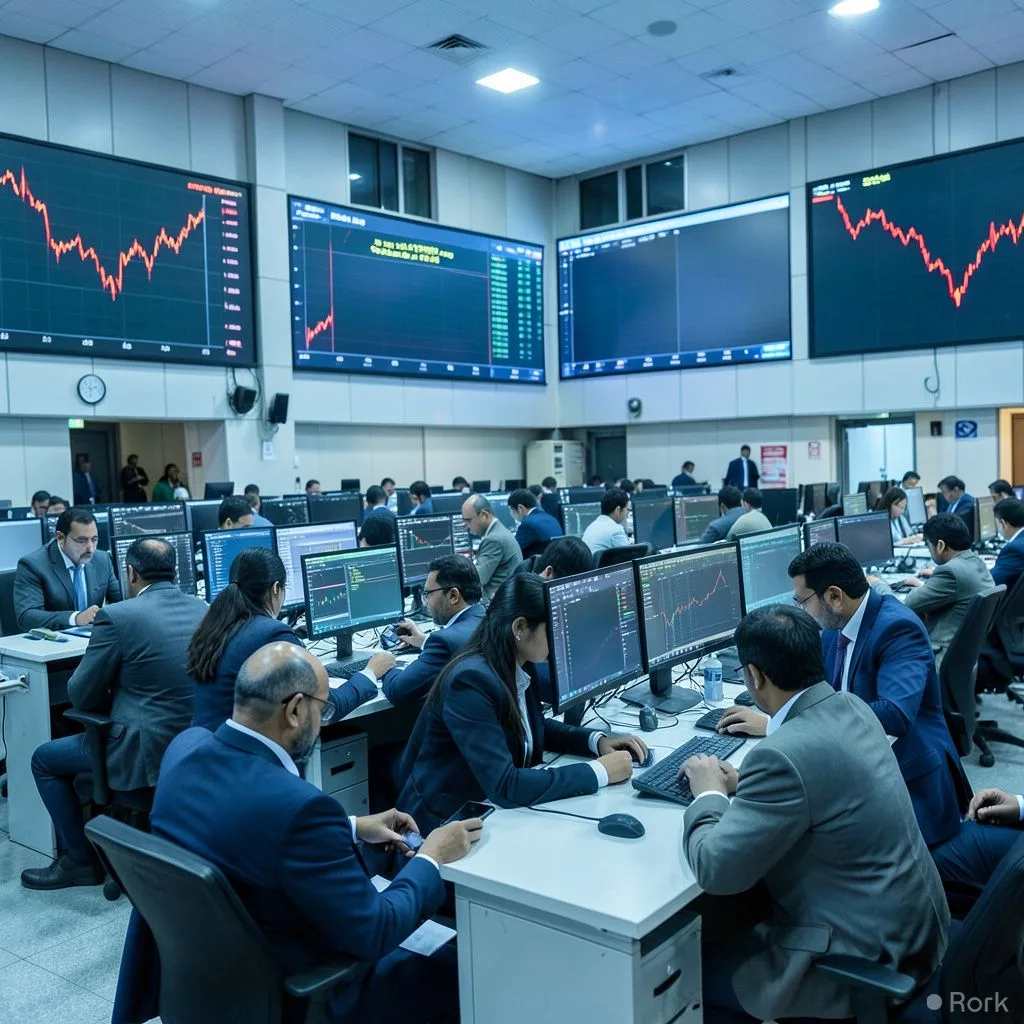
- The KSE‑100 index dropped 1,445.12 points, closing at 165,644.15, a 0.86 % decline in intraday trading.
- The sell‑off intensified after the federal government imposed governor rule in Khyber Pakhtunkhwa.
- Market participants shifted toward defensive assets, raising concerns about liquidity in major sectors.
- Analysts warn that heightened political risk could keep the market under pressure until a clear policy direction emerges.
The benchmark KSE‑100 slipped sharply on Monday, with the index sliding more than 1,400 points by early afternoon. At roughly 14:10 hrs the figure stood at 165,644.15, marking a near‑one‑percent fall from the previous session’s level. The plunge was driven by a wave of selling that accelerated after Islamabad announced the imposition of governor rule in Khyber Pakhtunkhwa, a move that suspended the provincial assembly and transferred executive powers to a centrally appointed governor.
Investors reacted swiftly, moving capital out of equities and into safer havens such as government bonds and foreign currency. The shift has already strained trading volumes in several heavyweight sectors, including banking, cement and energy, where liquidity is now thinner than usual. Domestic institutional investors, notably pension funds and mutual‑fund managers, are reassessing exposure to mitigate further downside risk.
Market analysts attribute the drop to a spike in perceived political uncertainty. “The governor‑rule decision sent a clear signal that the political environment is volatile, prompting market participants to price in higher risk premiums,” said a senior analyst at a leading brokerage house. The sentiment is expected to linger, especially if the provincial administration remains under federal control for an extended period.
The episode underscores how regional political developments can quickly reverberate across Pakistan’s financial markets, affecting not only local traders but also foreign investors tracking the country’s equity landscape. Continued monitoring of policy cues from Islamabad and the provincial administration will be crucial for gauging whether the market can recover or if further corrections are imminent.