
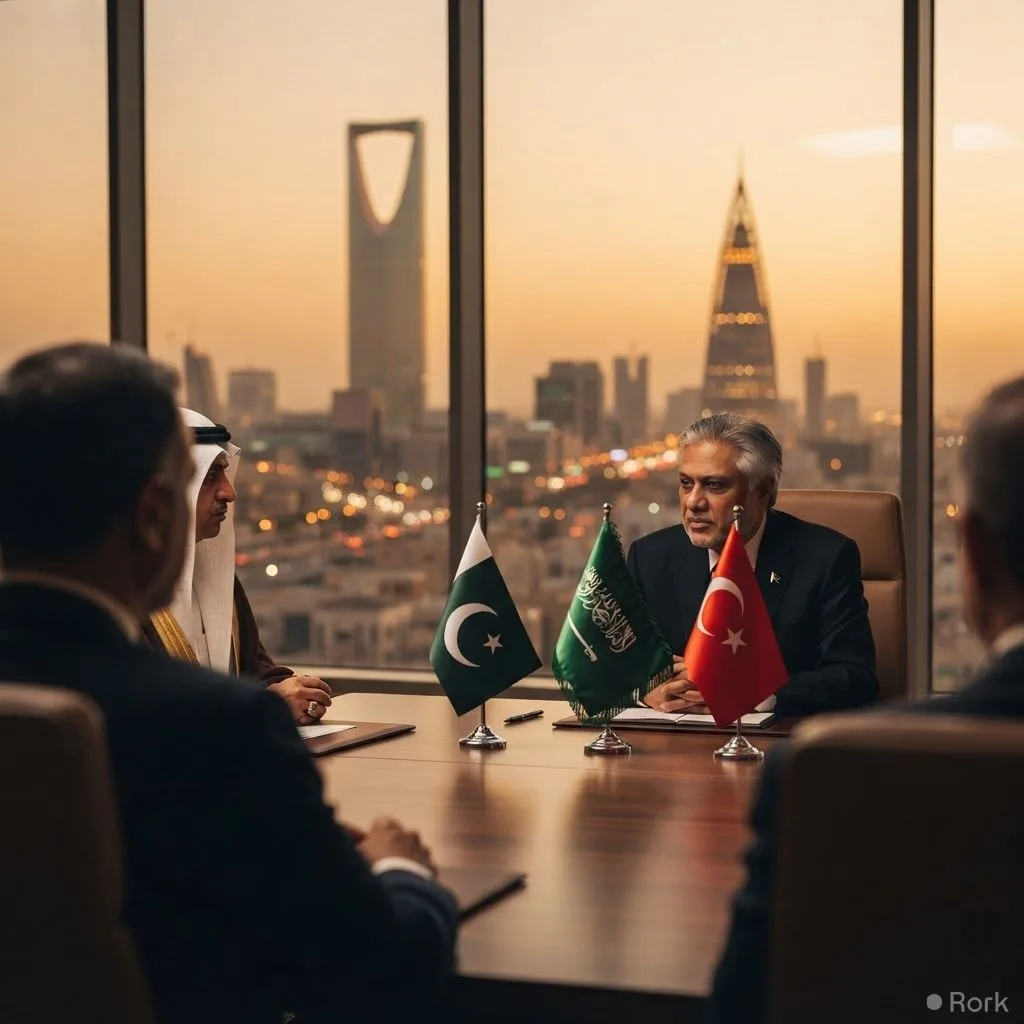
Deputy Prime Minister Ishaq Dar will head Pakistan’s high‑level delegation to Riyadh this week.
Pakistan’s deputy prime minister and foreign minister, Ishaq Dar, together with defence minister Khawaja Muhammad Asif and Chief of Defence Forces Field Marshal, are traveling to the Saudi capital for talks with Saudi and Turkish counterparts under the trilateral “Makkah Defence Pact.” The meeting, scheduled for early October, brings together the senior defence and foreign policy teams of the three nations to cement a framework that was first inked two years ago.
The Makkah Defence Pact, signed in 2024, is a strategic security accord that pledges deeper military cooperation among Pakistan, Saudi Arabia and Turkey. It was conceived to provide a coordinated response to shared security challenges—ranging from maritime threats in the Arabian Sea to the rise of extremist groups in the region—and to institutionalise regular joint exercises, intelligence exchanges, and defence procurement collaborations. Since its inception, the pact has already seen limited joint drills and the establishment of a shared intelligence liaison office in Riyadh.
During the Riyadh summit, officials are expected to flesh out concrete initiatives, including a series of multinational training programmes for army and air‑force units, the creation of a joint command centre for rapid crisis response, and the negotiation of new arms‑sale agreements that could see Pakistani defence firms supplying equipment to Saudi and Turkish forces. For Pakistan, the talks offer a chance to revitalise its defence export market, gain access to advanced Turkish technology, and secure Saudi financial backing for indigenous military projects—factors that could bolster the country’s defence budget and create jobs in the domestic arms industry.
The gathering also reflects shifting geopolitics in the Gulf and South Asia. As Iran expands its regional influence and the conflict in Yemen drags on, Saudi Arabia is keen to diversify its security partners beyond traditional Western allies. Turkey, meanwhile, seeks to consolidate its role as a bridge between the Islamic world and NATO. By deepening ties through the Makkah pact, Pakistan positions itself as a pivotal security partner capable of balancing these competing interests, while simultaneously reinforcing its own strategic relevance on the global stage.