
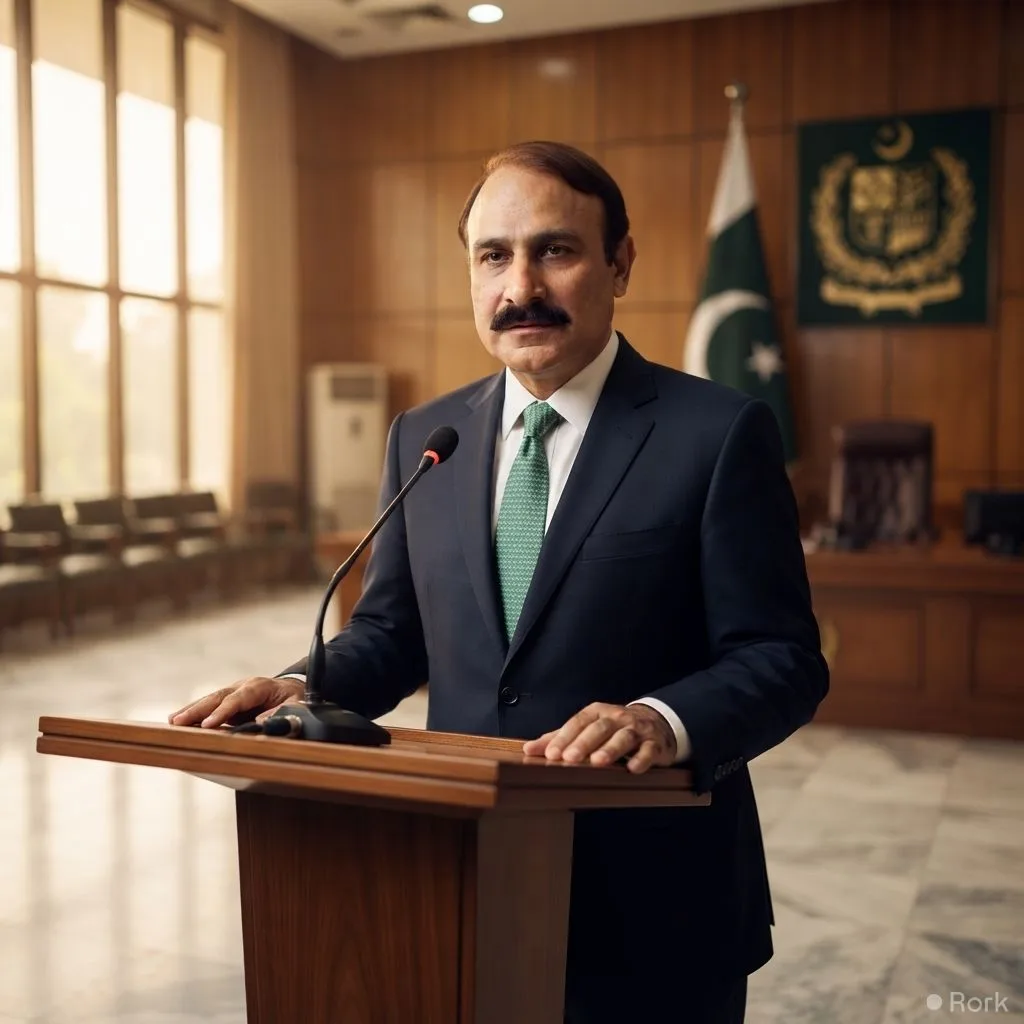
Parliamentary Affairs Minister Tariq Fazal warned on Wednesday that the Khyber Pakhtunkhwa (KP) administration is refusing to align with federal anti‑terrorism initiatives, a stance he said could compel the centre to explore emergency measures given the deteriorating security climate. Speaking in Islamabad, Fazal asserted that the province’s lack of cooperation is undermining the state’s ability to conduct coordinated operations against militant groups that have intensified their activities across the north‑west frontier.
Fazal’s remarks came amid heightened concerns over a series of recent attacks in KP, where insurgents have targeted security forces and civilian infrastructure, raising the death toll to over 150 in the past month alone. He emphasized that a unified response from both federal and provincial agencies is essential to halt the surge, noting that disjointed efforts have already hampered intelligence sharing and rapid deployment of resources.
The minister also criticised provincial political actors, accusing them of placing partisan interests above national security. He singled out opposition leaders in the province, suggesting they are exploiting the crisis to further their own agendas and to undermine the federal government’s anti‑terrorism strategy. Fazal specifically mentioned that certain factions are “prioritising politics over the country’s safety,” a comment that implicitly targets the rival Pakistan Tehreek‑e‑Insaf (PTI) and its leadership, including former Prime Minister Imran Khan, who continue to wield considerable influence in KP.
In response, former Interior Minister Chaudhry Nisar Ali Khan, speaking to reporters, echoed the minister’s concerns and hinted that the federal government is reviewing the legal framework for an emergency declaration if the province does not promptly cooperate. While no formal decision has been announced, the prospect of invoking emergency powers under Article 232 of the Constitution would grant the centre sweeping authority to direct provincial law‑enforcement agencies and impose curfews, measures that have historically sparked debate over provincial autonomy.
Analysts note that the current tension reflects a broader pattern of strained centre‑province relations, especially in regions grappling with insurgency. The KP government, led by Chief Minister Mahmood Khan, has previously highlighted resource constraints and alleged overreach by federal agencies, arguing that a collaborative approach rather than coercion would yield better results. However, Fazal’s statements signal a hardening federal stance, suggesting that the central government may be prepared to bypass provincial objections to safeguard national security.
If emergency provisions are activated, the immediate impact would be felt by residents of KP’s major districts, including Peshawar, Swat and Buner, where curfews and increased military patrols could disrupt daily life but potentially curb militant movement. Moreover, the move could set a precedent for future federal‑provincial interactions in security matters, influencing how other troubled provinces, such as Balochistan and Sindh, coordinate with Islamabad.
The minister concluded by urging provincial officials to “realign immediately” with federal directives, emphasizing that the nation’s safety cannot tolerate political infighting. He called for an urgent meeting between federal and KP authorities to devise a joint operational plan, stressing that the window for diplomatic resolution is narrowing as terrorist elements exploit the discord.