
Key points:
- The United States has pulled every B‑1 bomber that was forward‑deployed at RAF Fairford in England.
- A security breach near the airfield forced the evacuation of 85 residential houses as a precautionary measure.
- No injuries or fatalities have been reported; the aircraft are being relocated to other U.S. bases.
- The withdrawal occurs against a backdrop of rising tension over the nearby Iranian operations hub, prompting a reassessment of forward‑deployed U.S. assets.
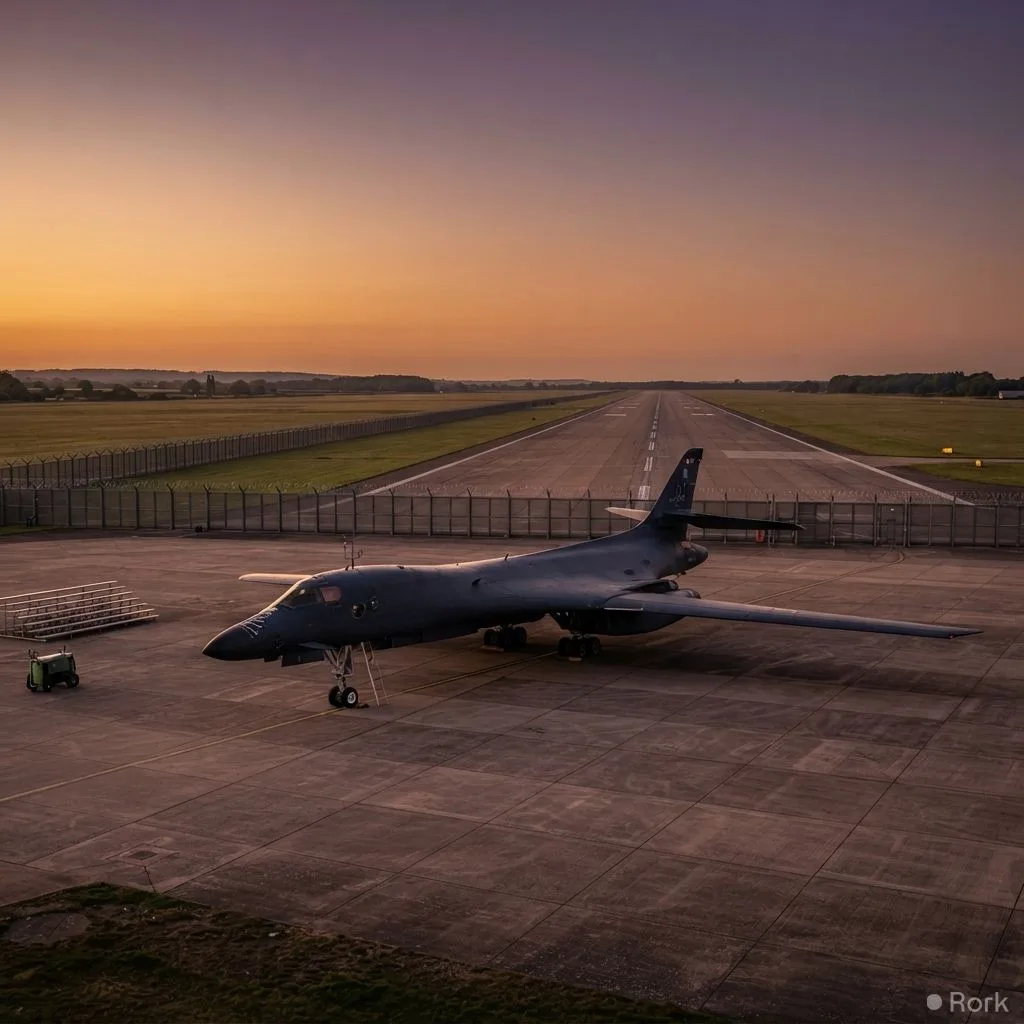
The Pentagon confirmed on Sunday that the last of the B‑1 “Lancer” strategic bombers stationed at Royal Air Force Fairford has been flown back to U.S. soil. The aircraft had been part of a rotating deployment meant to demonstrate American airpower and to provide rapid strike capability in the region. Their removal follows a security incident discovered on the perimeter of the base, which prompted British authorities to clear 85 homes in the surrounding village while investigations were underway.
Officials from both Washington and London described the incident as a “potential breach” but stopped short of detailing its nature, citing operational security. While the exact cause remains classified, the swift evacuation underscores the sensitivity of hosting high‑value assets on foreign soil, especially when they sit close to a base that supports U.S. and allied operations directed at Iran. No casualties have been reported, and the evacuated residents are expected to return once the site is declared safe.
The decision to pull the bombers reflects a broader recalibration of U.S. force posture in Europe as geopolitical frictions with Tehran intensify. Analysts note that the presence of B‑1s at Fairford was a visible signal of deterrence; their removal may be read as a temporary de‑escalation step while diplomatic channels remain active. Nonetheless, the United Kingdom has reaffirmed its commitment to the U.S. partnership, emphasizing that the base will continue to host other aircraft and support missions in the Middle East.
For Pakistan, the development carries several indirect implications. Islamabad closely monitors U.S. moves against Iran, given the historic ties and shared border concerns. A shift in American forward deployment could influence the strategic calculations of Tehran, which in turn affects Pakistan’s own security calculus along its western frontier. Moreover, the sizeable Pakistani diaspora in the United Kingdom may watch the episode closely, as any escalation or de‑escalation in Europe‑Middle East dynamics can ripple through community sentiments and bilateral discussions between Islamabad and London.